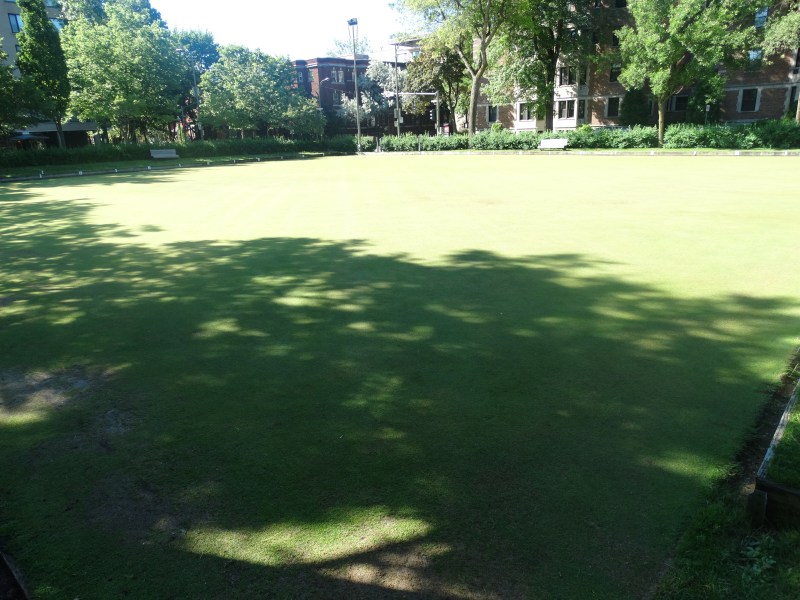
Westmount Lawn Bowling Club.
Westmount Lawn Bowling Club.
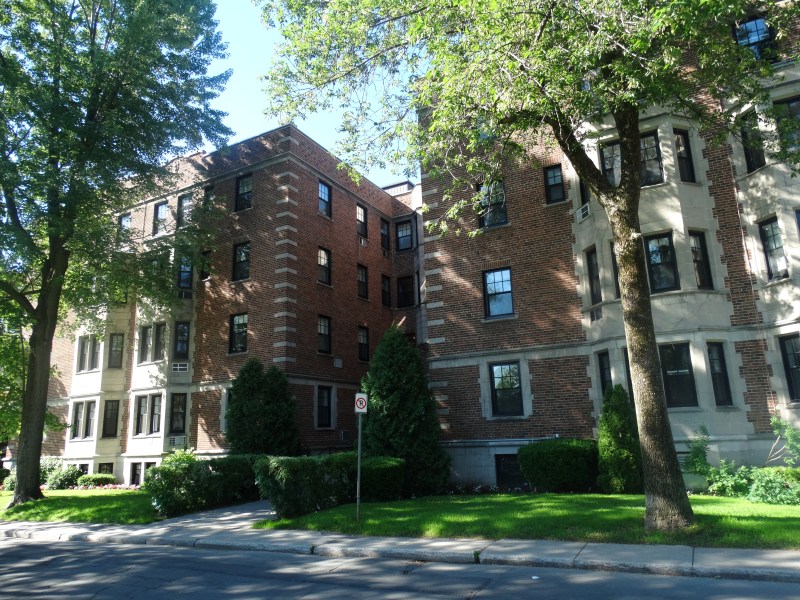
Heather Curling Rink (1897)
From: http://www.westmount.org/page.cfm?Section_ID=2&Menu_Item_ID=8&Menu_Item_Sub=16
“Heather Curling Club (1887) on the west side of Kensington above Sherbrooke; relocated to 239 Kensington in 1905.”

Cote St. Antoine Lawn Tennis club (1897)
From: http://www.westmount.org/page.cfm?Section_ID=2&Menu_Item_ID=8&Menu_Item_Sub=16
“Côte St. Antoine Tennis Club (1889) on Kensington Avenue at southwest corner of Sherbrooke until moving to Grey Avenue in 1906.”
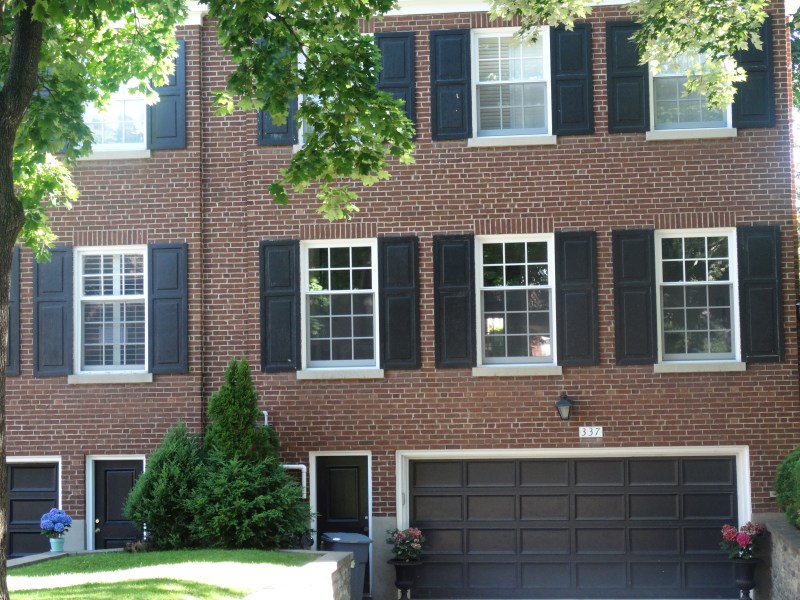
Former site of J. F. Sweeney’s residence.
Colonel James Fielding Sweeny (1897) – formerly Her Majesty’s staff officer of pensioners at Montreal.
From the Westmount News, October 16, 1914:
“Colonel Sweeny, who was born at Alleford Barracks, Brandon, County Cork, in 1833, was appointed ensign of the 12th East Suffolk regiment in 1849, and was stationed in Mauritius from 1850 to 1851, when he sailed for the Cape of Good Hope and served in the Kafir War, for which he received decorations. Returning to England, he was appointed to take charge of a recruiting district until it was discontinued at the close of the Crimean War.
He was then ordered to Hythe, and after receiving a first-class certificate for musketry was sent to the headquarters of the 12th Regiment in Australia as instructor of musketry; also as instructor to the New South Wales Volunteers.
He remained in Australia until 1861, when he was promoted to the 83rd (Dublin) Regiment, with which he served until appointed staff officer of pensions of the Quebec district in 1867, remaining in that office until 1884, when he retired.”
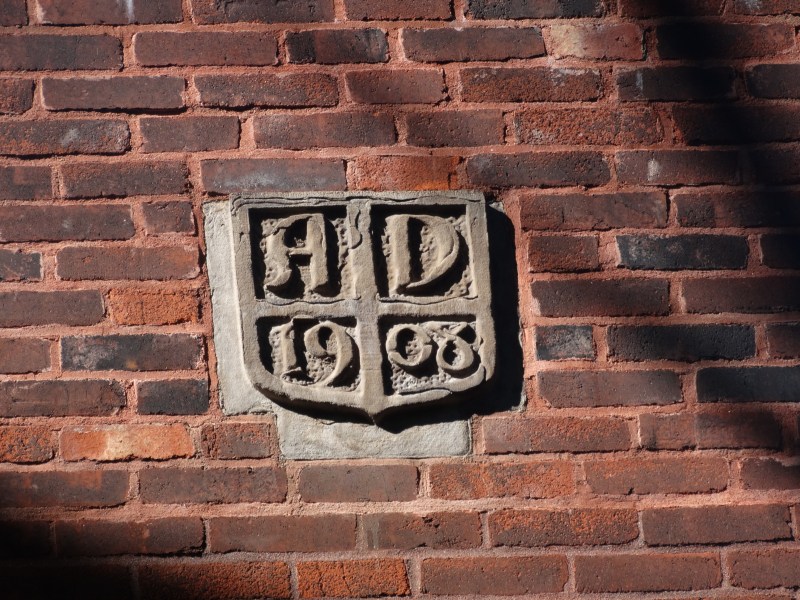
Date marker – Kensington Ave.
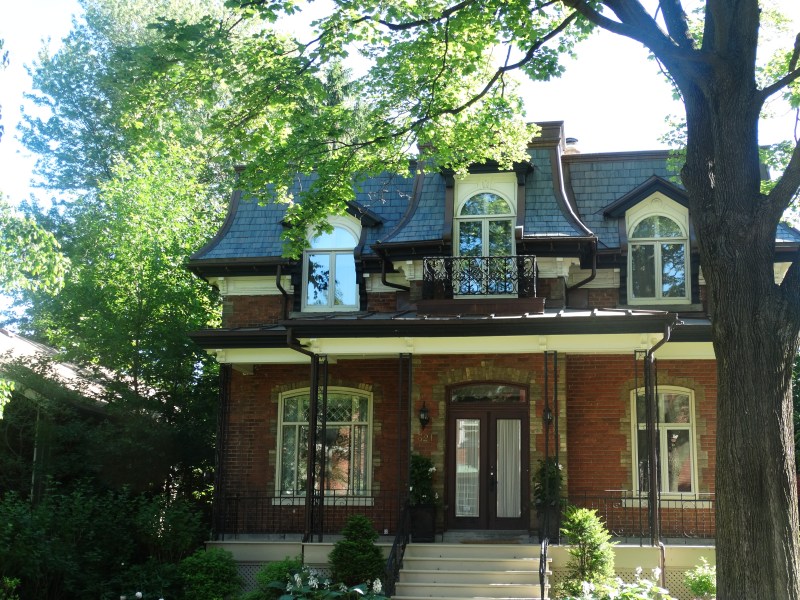
R. C. Holden (1897) – The Ames Holden Co. Limited.
From: http://mtltimes.ca/social-life/james-mccready-co-boot-shoe-mfrs/
“In 1895, James McCready & Company was considered one of Montreal’s major factories, producing 12 000 to 15 000 pairs of boots and shoes for men, women and children per week, which was considerable at the time. In 1906 Arthur Congdon, a wholesale boot and shoe merchant from Winnipeg amalgamated with the James McCready Company. He became Vice-President and General Manager of Ames, Holden, McCready Limited in 1911, and organized Congdon, Marsh Limited (wholesale boots and shoes) in 1914.
In 1915, Ames, Holden, McCready Ltd., then being Canada’s largest shoe manufacturers, received an order from the Government for footwear for officers and soldiers here in Canada and in England. Within thirty-three days they supplied 32,217 pairs of leather ankle boots and 30,000 pairs of canvas shoes, the largest quantity of footwear supplied by any manufacturer.
An article in the Montreal Gazette, Saturday, May 15, 1915 stated that ”these boots were worn by our soldiers on active service, and that they were subjected to the most severe usage. They travelled over rough roads, they waded through mud and slush, they were soaked by the never-ceasing rains of an abnormally wet English winter and, yet, THEY STOOD THE TEST””
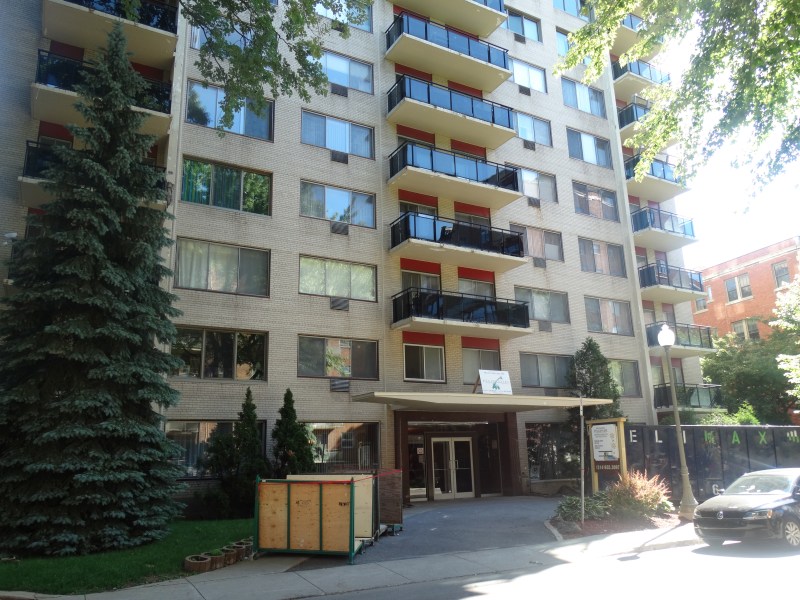
Former site of the Heather Curling Club (1905).

Gargoyles over the former Bank of Nova Scotia at Green & St. Catherine.
Gargoyle origins from Wikipedia:
“A French legend that sprang up around the name of St. Romanus (“Romain”) (AD 631–641), the former chancellor of the Merovingian king Clotaire II who was made bishop of Rouen, relates how he delivered the country around Rouen from a monster called Gargouille or Goji. La Gargouille is said to have been the typical dragon with batlike wings, a long neck, and the ability to breathe fire from its mouth.
There are multiple versions of the story, either that St. Romanus subdued the creature with a crucifix, or he captured the creature with the help of the only volunteer, a condemned man. In each, the monster is led back to Rouen and burned, but its head and neck would not burn due to being tempered by its own fire breath.
The head was then mounted on the walls of the newly built church to scare off evil spirits, and used for protection. In commemoration of St. Romain, the Archbishops of Rouen were granted the right to set a prisoner free on the day that the reliquary of the saint was carried in procession.”
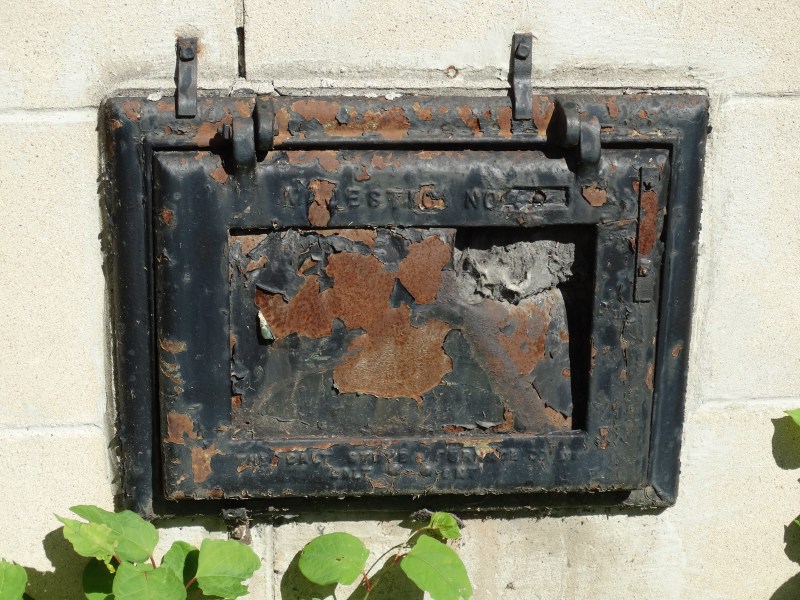
Old coal chute – St. Catherine Street near Bethune.
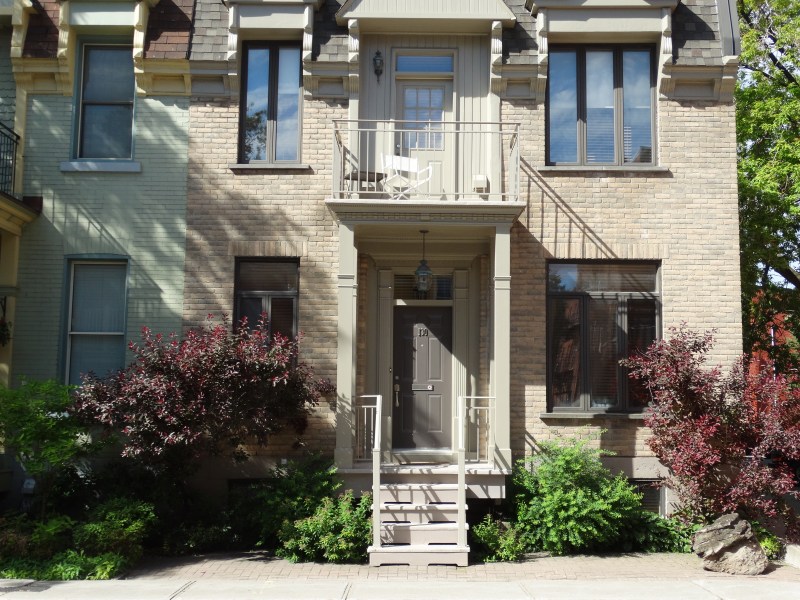
W. J. Lapham (1897) – Lapham Brothers, Builders and Turning (lathe operations) located on 1 St. Philip Street.
 Westmount Overlooked