
H. J. Silver (1897) – Principal, Dufferin School.
H. J. Silver (1897) – Principal, Dufferin School.
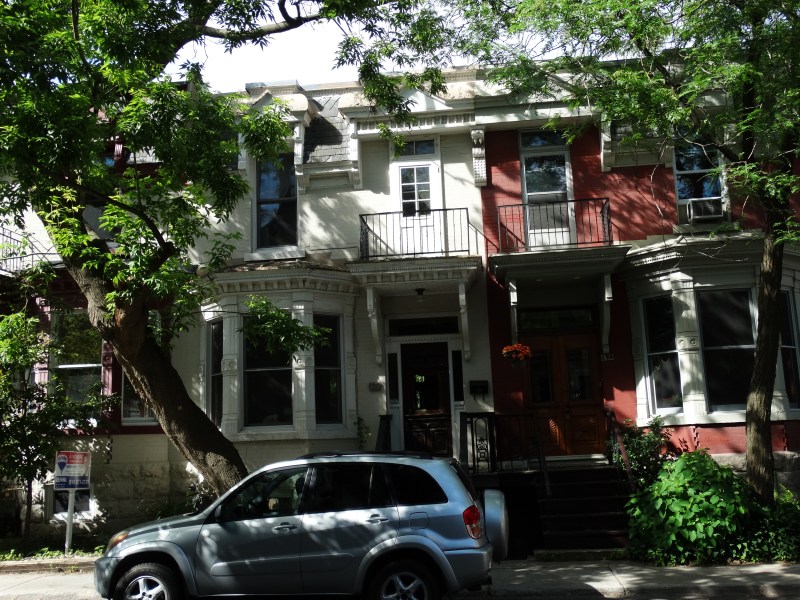
Gordon Fletcher (1897) – Ticket agent, Grand Trunk Railway.

Alfred Minister (1897) – Superintendent, Thompson Shoe Factory.
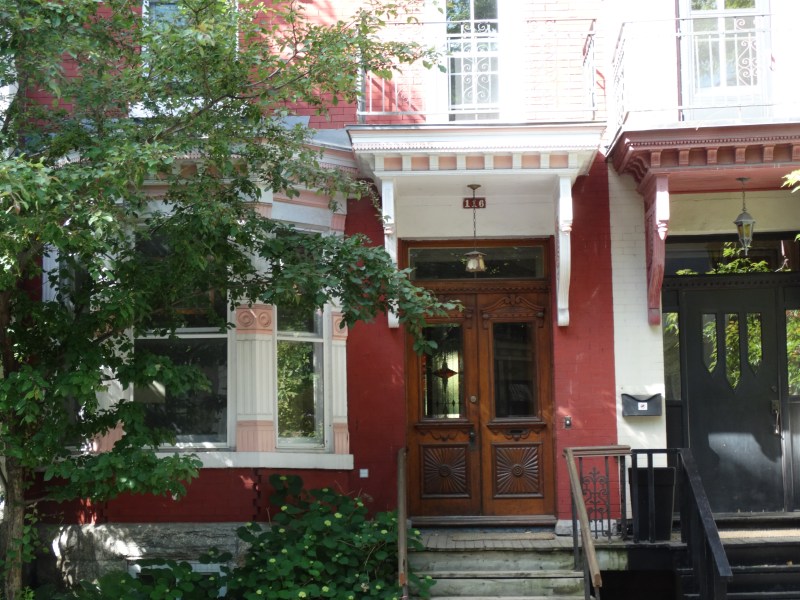
S. H. Stone (1897) – Agent, St. Henri Depot.
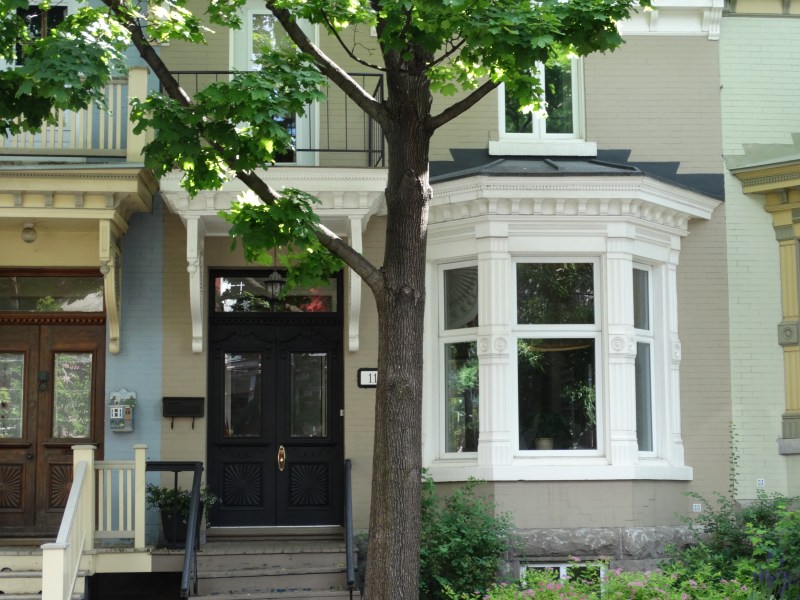
H. W. Aird (1897) – Treasurer of the Canada Paint Company.
Advertisement from the Monetary Times, April 24, 1903:
“Dry colors and coach painting materials of every description are manufactured in Montreal by this company. The waters of the Lachine Canal are harnessed to powerful turbines; steam and electricity also being employed.
The most extensive oxide and graphite mines for the production of paints in the Dominion of Canada are owned by the Canada Paint Company. One branch of the company is entirely devoted to grinding and maturing White lead, and amongst their brands may be mentioned the “Painters’ Perfect” white lead, which is beautifully soft and fine in the grain. It mixes well with linseed oil, forming a creamy, smooth paint of great covering power and undoubted durability.”
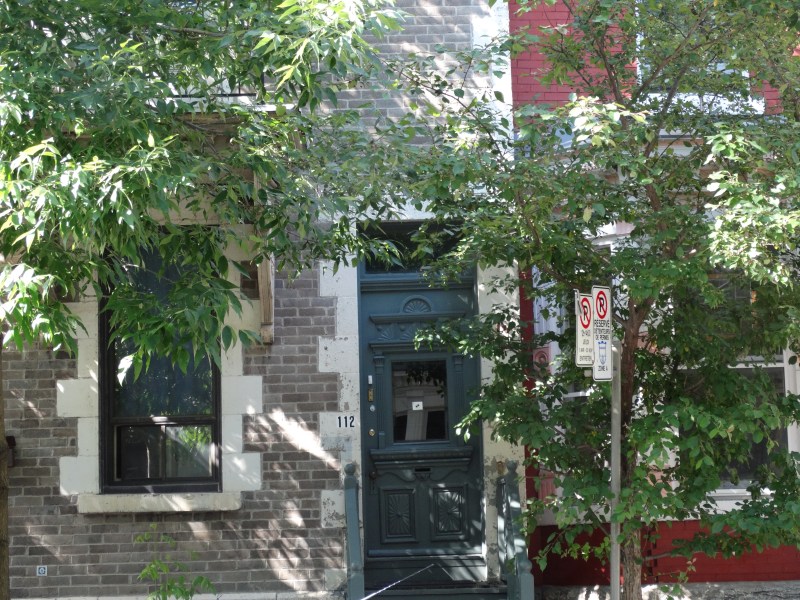
Hugh B. Cowper (1897) – Wright and Cowper Co. Bicycle and accessories sales located at 2759 St Catherine Street.
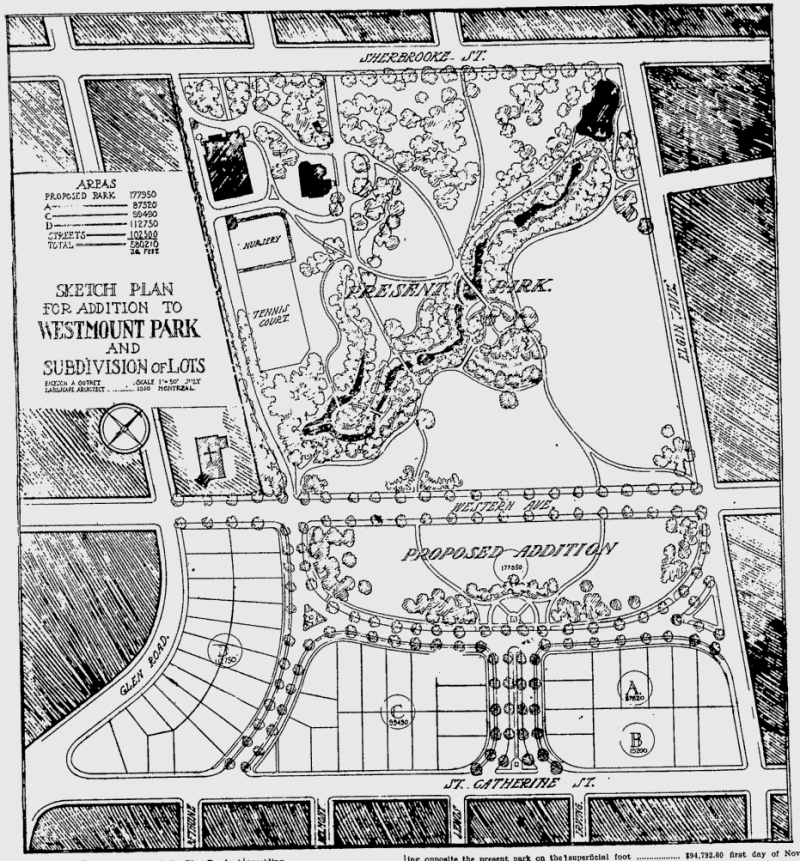
In the process of researching various, Westmount related, topics a newspaper a headline “Westmount Will Have One Of The Finest Laid Out Parks on the Continent” caught my attention.
The article that followed was in the Westmount News August 5, 1910. It provided details of a new Park Extension By-Law (221) that was passed by City Council. The City was taking a $300,000 loan to procure 5 additional acres for the purpose of extending the current park. A large portion of this land was from “Dame Margaret Smith et. al.” and the Estate of William Smith. This comprised the area between Western Avenue (now Boulevard De Maisonneuve) and St. Catherine Street, the Glen Road, Lansdowne Avenue and bordering Elgin Avenue (now Melville Avenue).
The City’s landscape architect, R. A. Outhet, proposed two crescent driveways joining Western Avenue: one from Elgin Ave. and the other following the path of Glen Road.
In addition, a boulevard entrance to the park would connect from St. Catherine Street “giving a stately entrance to the park”. Council stated that this would “increase the beautification of the city which so far has been laid out too much of straight lines”.
The By-Law also provided power to Council to sell land fronting St. Catherine St. and Lansdowne Ave. to pay for the park extension.
One can only speculate what the causes were to abandon this 100 year-old vision and create the park’s current landscape and configuration.
On another note, the same 1910 edition of the Westmount News had the following item:
“The council is now considering a proposal to erect a Museum, towards which substantial support has been generously promised by Mr. David Ross McCord, K.C., the well-known antiquarian of Temple Grove, whose collection of historic relics is the best and most complete in the continent.”
For some reason, eleven years later, David McCord donated his entire collection elsewhere forming the McCord National Museum located in a building provided by McGill University. The museum, today, is known as the McCord Museum and located at 690 Sherbrooke Street West.
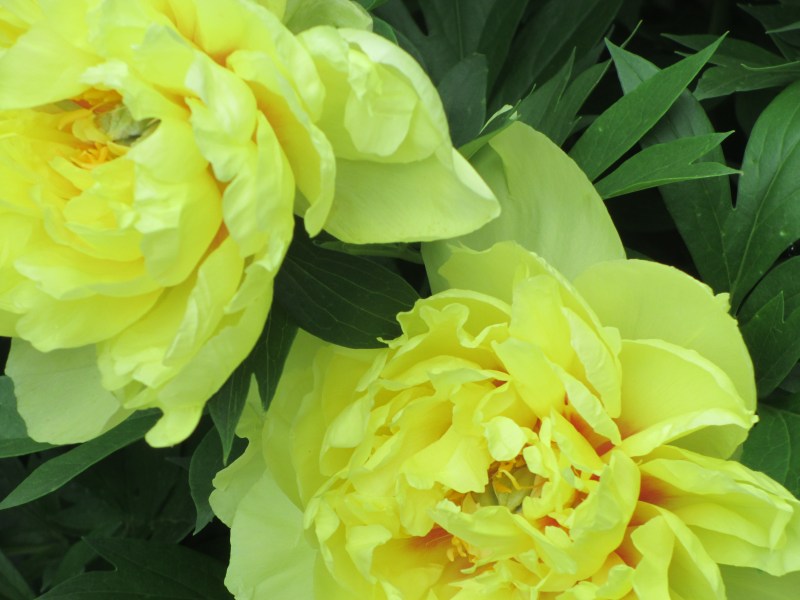
Yellow peonies (Paeonia ludlowii) growing in a garden on Claremont Ave.
From Wikipedia:
“The peony is named after Paeon (also spelled Paean), a student of Asclepius, the Greek god of medicine and healing. Asclepius became jealous of his pupil; Zeus saved Paeon from the wrath of Asclepius by turning him into the peony flower”.

Centennial monument in Westmount Park.
From http://www.westmount.org/page.cfm?Section_ID=2&Menu_Item_ID=23&Menu_Item_Sub=318
“The commemorative monument was built in 1967 by the 3rd Field Engineer Regiment – a reserve force unit of the Royal Canadian Engineers – as part of the centennial celebrations, to mark the long association of the local unit with the City of Westmount.
Located in Westmount Park, near the corner of Melville and Sherbrooke, the monument consists of a 50-foot aluminum flagpole and a semi-circle of 12 stone panels. Encased on the panels are the coat of arms of the ten Canadian provinces and two territories, which existed at the time of construction.”
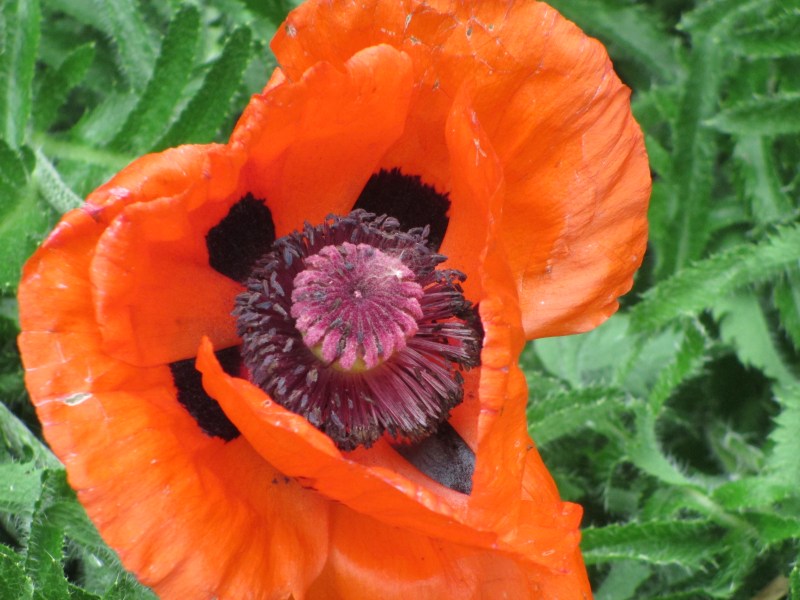
Patch of poppies (Papaveroideae) on Lorraine Ave.
From Wikipedia:
“Poppies have long been used as a symbol of sleep, peace, and death: Sleep because of the opium extracted from them, and death because of the common blood-red color of the red poppy in particular. In Greek and Roman myths, poppies were used as offerings to the dead.
Poppies used as emblems on tombstones symbolize eternal sleep. This symbolism was evoked in the children’s novel The Wonderful Wizard of Oz, in which a magical poppy field threatened to make the protagonists sleep forever.”
 Westmount Overlooked