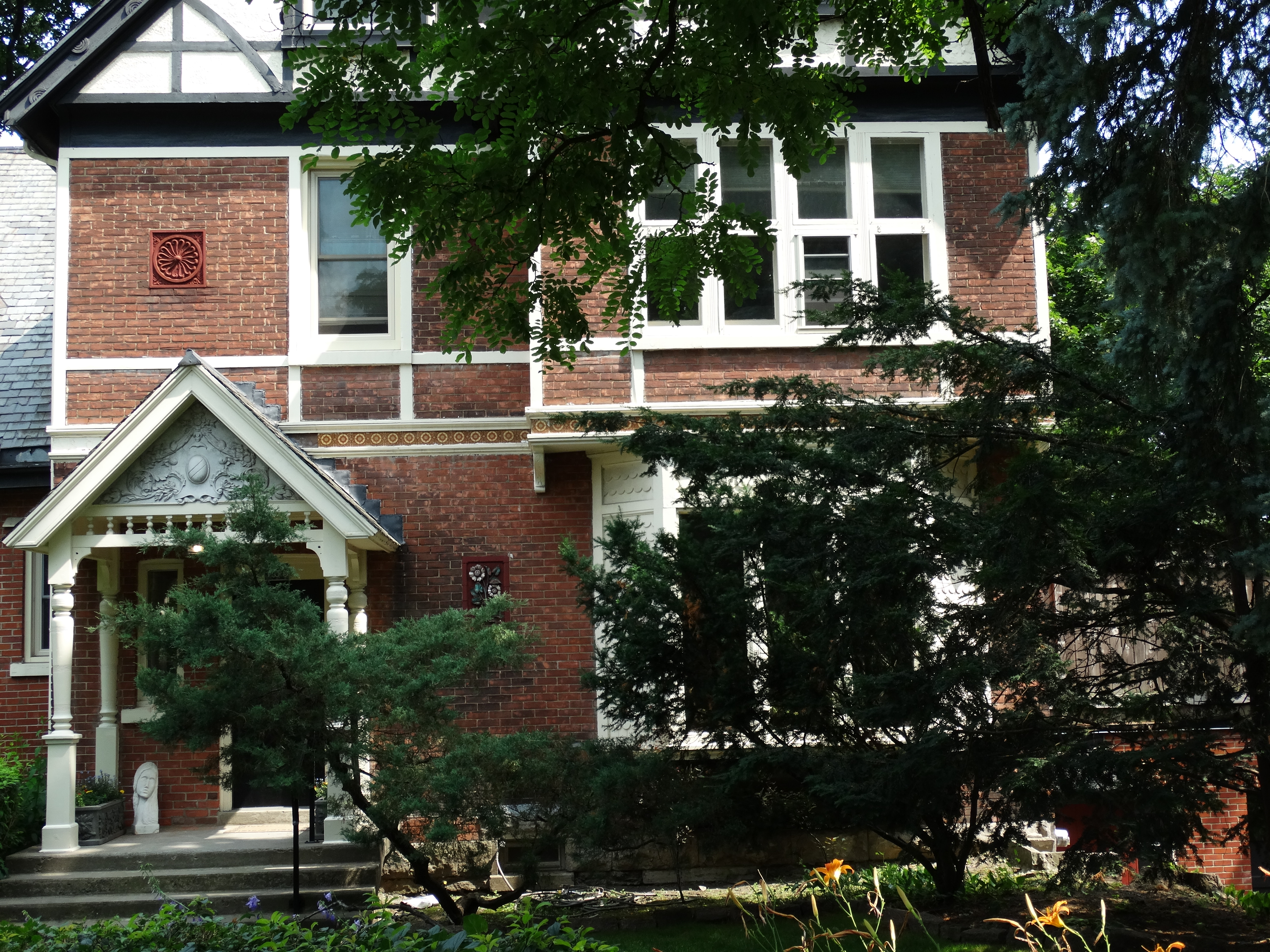
E. J. Maxwell, E. J. Maxwell & Company (1897). Specialty wood merchant & grandfather of Edward and William Maxwell (architects).
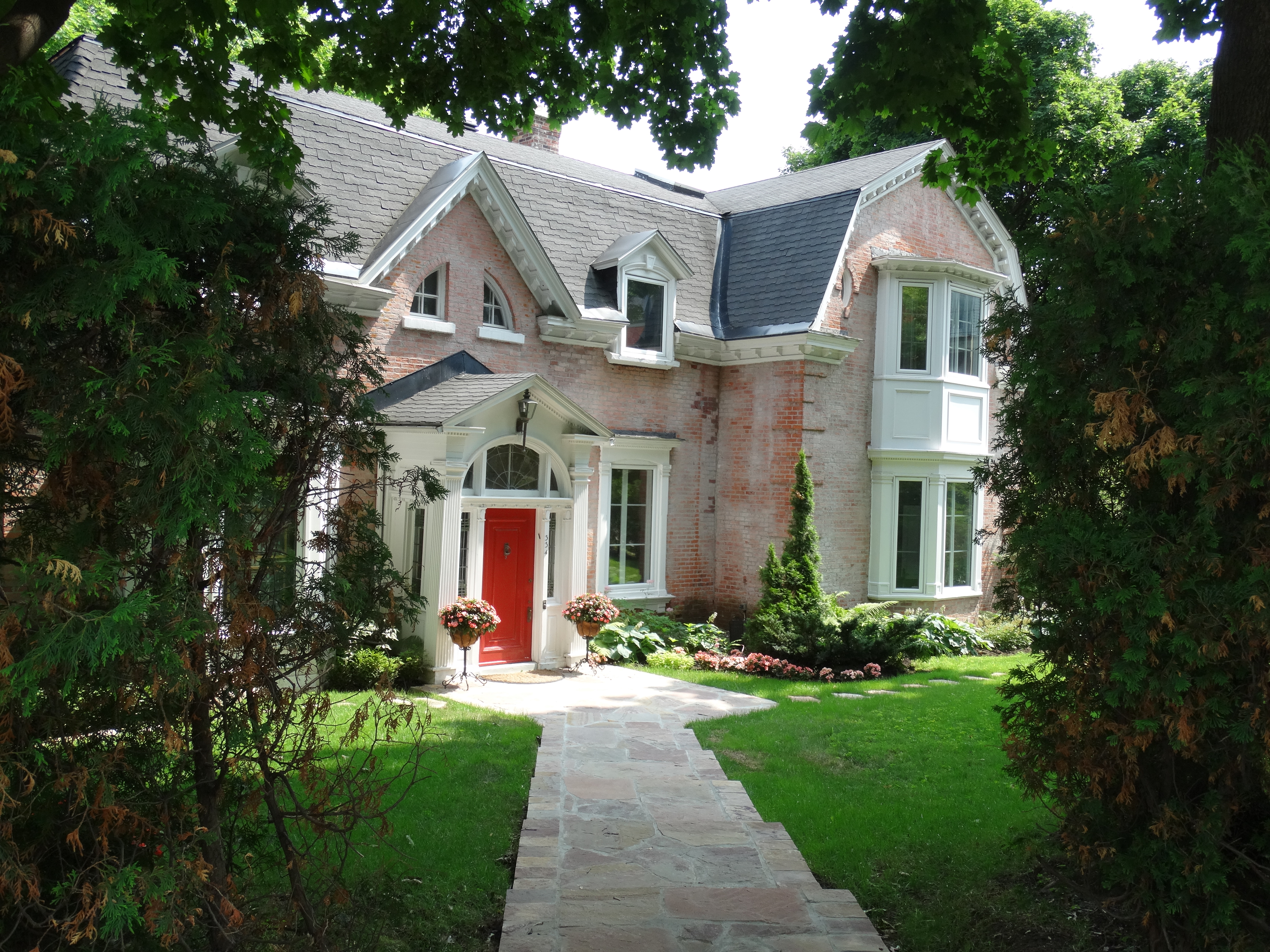
Interestingly, the house is currently “connected” on the west side to another smaller house without a civic number. I suspect that was formerly 184 Cote St Antoine – home of Edward Maxwell (1897).
From: http://cac.mcgill.ca/maxwells/edbio2.htm
“The store Edward Maxwell designed for Henry Birks and Sons on St. Catherine Street in Montreal, using imported stone with Bramante-like compositional rhythms and featuring a rich but economical cornice and a splendid arched entrance, could be taken for a Boston design.
Opened or closed, the gate-like iron-studded doors call attention to the treasures within and after nearly a hundred years of exposure still impress the passing crowd.
An office building and exchange facility for the Bell Telephone Company of Canada on Notre Dame Street in Montreal again showed planning skill and ornamental features learned in Boston, which also appeared in a building further west on the same street that he designed for the Merchants Bank of Halifax. While not an important commission among Montreal banks, it was a good beginning as the Halifax bank was soon to emerge as the Royal Bank of Canada.
No building shows more clearly what Edward Maxwell had absorbed from Richardson’s work than his addition to Windsor Station in Montreal.
Originally designed by Bruce Price in the popular Richardsonian manner, Maxwell extended the structure westward along Lagauchetière Street with confidence and style. The idea of repeating the front of Price’s original building as a terminal pavilion for a great new façade was a brilliant concept which lost nothing in its development. The whole centre part at ground level was treated as a broad carriage entrance protected by a projecting arcade of five huge low arches. The entrance wall behind and above the porch was the link between the pavilions and was composed of eleven bays arcaded in the manner of the original building and later capped by five gables, which effectively preserved the rhythmic pattern of one over three by being five over eleven.
Maxwell’s first major domestic commission in Montreal was a house for Vincent Meredith, general manager and subsequently president and chairman of the Bank of Montreal. It began when he was supervising the Board of Trade Building.
A diary entry for 7 January 1892 notes that Mr. and Mrs. Meredith called about a house. It materialized as a Queen Anne design in red brick with a strong feeling for materials and the crafts.
Nothing quite like it had been seen in Montreal. Moreover, the house had an unusual site facing north well below street level yet with a spectacular exposure to sun and view at the rear. He handled these circumstances skilfully and with the help of the younger Olmsted, a familiar collaborator in the office of his former employers, produced a setting of extraordinary naturalness.”







 Westmount Overlooked