
Black locust (Robinia pseudoacacia).
From Wikipedia:
“In South Africa it is regarded as a weed because of its habit of freely suckering from roots near the surface and aggravated by cutting of the main stem.”
Black locust (Robinia pseudoacacia).
From Wikipedia:
“In South Africa it is regarded as a weed because of its habit of freely suckering from roots near the surface and aggravated by cutting of the main stem.”

Western Red Cedar (Thuja plicata).
From: http://www.for.gov.bc.ca/hfd/library/documents/treebook/westernredcedar.htm
“The western redcedar has been called “the cornerstone of Northwest Coast aboriginal culture,” and has great spiritual significance. Coastal people used all parts of the tree. They used the wood for dugout canoes, house planks, bentwood boxes, clothing, and many tools such as arrow shafts, masks, and paddles. The inner bark made rope, clothing, and baskets. The long arching branches were twisted into rope and baskets. It was also used for many medicines.”

Lawson cypress (Chamaecyparis lawsoniana).
From Wikipedia:
“It was first discovered (by Euro-Americans) near Port Orford in Oregon and introduced into cultivation in 1854, by collectors working for the Lawson & Son nursery in Edinburgh, Scotland, after whom it was named as Lawson Cypress by the describing botanist Andrew Murray.”
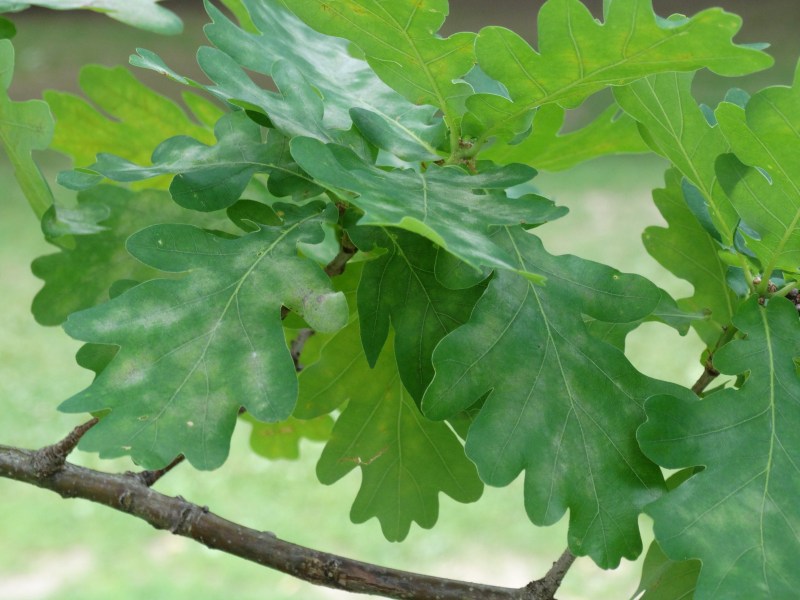
Sessile Oak (Quercus petraea).
From Wikipedia:
“…sessile oak, also known as the Cornish oak or Durmast oak, is a species of oak tree native to most of Europe, into Anatolia and Iran.
Sessile oak has been designated the national tree of Wales, where it is also called Welsh oak. It is also considered the Cornish national tree and is referred to as the Cornish oak.
What was considered to be the oldest tree in the UK was a sessile oak, the Pontfadog Oak. This grew near Chirk in North Wales. It was understood to be over 1,200 years old, an age that was due to regular pollarding for much of its life. The hollow trunk had a girth of 42 feet 5 inches (12.9 m). It was lost in April 2013 when it blew down in high winds.”
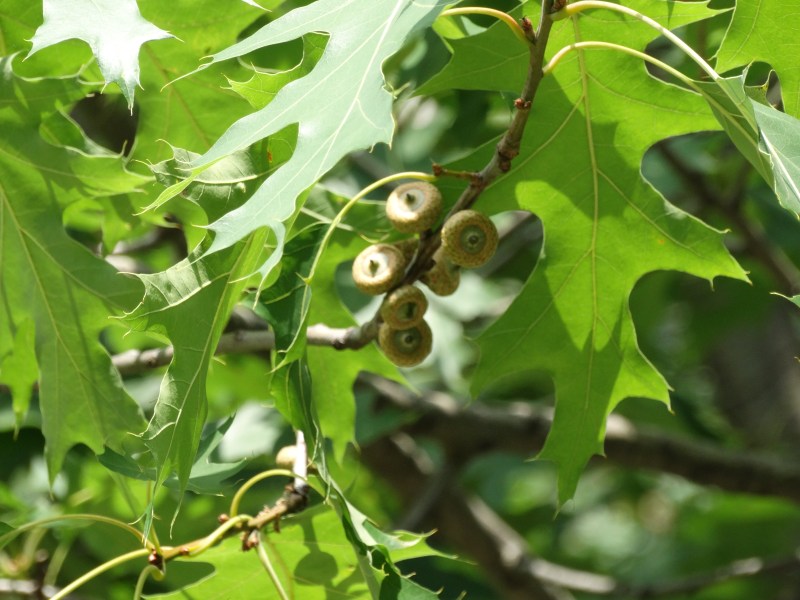
Quercus rubra, commonly called northern red oak or champion oak.
From Wikipedia:
“Under optimal conditions, northern red oak is fast growing and a 10-year-old tree can be 5–6 m (15–20 ft) tall. Trees may live up to 500 years according to the USDA, and a living example of 326 years was noted in 2001 by Orwig et al.”
It is also the provincial tree of Prince Edward Island.

European silver fir (Abies alba).
From Wikipedia:
“Silver Fir is the species first used as a Christmas tree, but has been largely replaced by Nordmann Fir (which has denser, more attractive foliage), Norway Spruce (which is much cheaper to grow), and other species. The wood is moderately soft and white, used for general construction and paper manufacture.”
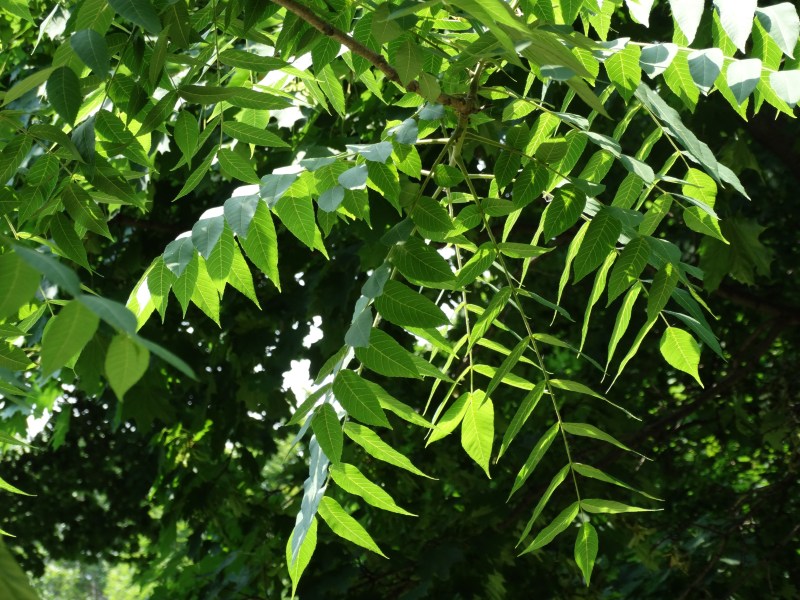
Shellbark Hickory (Carya laciniosa).
From Wikipedia:
“Shellbark hickory nuts are used for food by ducks, quail, wild turkeys, squirrels, chipmunks, deer, foxes, raccoons, and white-footed mice. A few plantations of shellbark hickory have been established for nut production, but the nuts are difficult to crack, though the kernel is sweet. The wood is used for furniture, tool handles, sporting goods, veneer, fuelwood, and charcoal.”
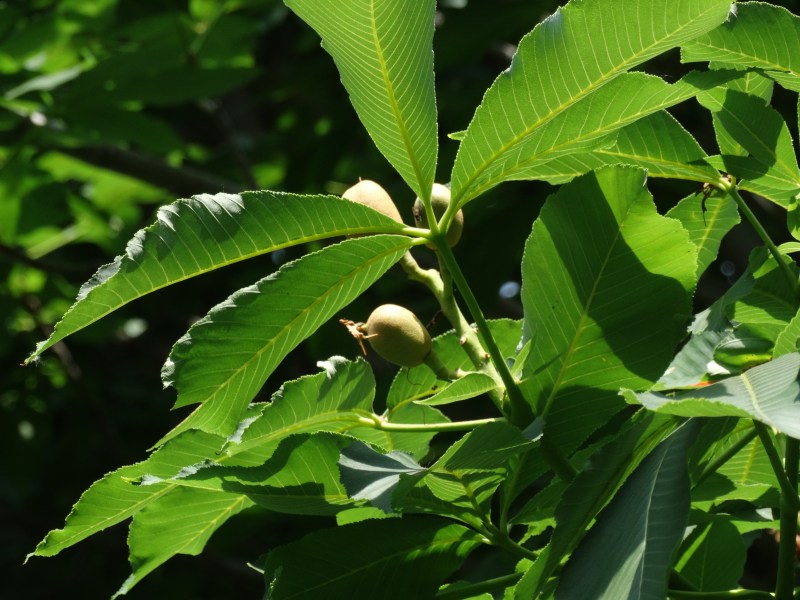
Horse-Chestnut (Aesculus hippocastanum).
From Wikipedia:
“In Britain and Ireland, the nuts are used for the popular children’s game conkers. During the First World War, there was a campaign to ask for everyone (including children) to collect horse-chestnuts and donate them to the government. The conkers were used as a source of starch for the fermentation via the Clostridium acetobutylicum method devised by Chaim Weizmann to produce acetone.”
“The common name “horse-chestnut” (often unhyphenated) is reported as having originated from the erroneous belief that the tree was a kind of chestnut (though in fact only distantly related), together with the observation that eating the fruit cured horses of chest complaints[ despite this plant being poisonous to horses.”
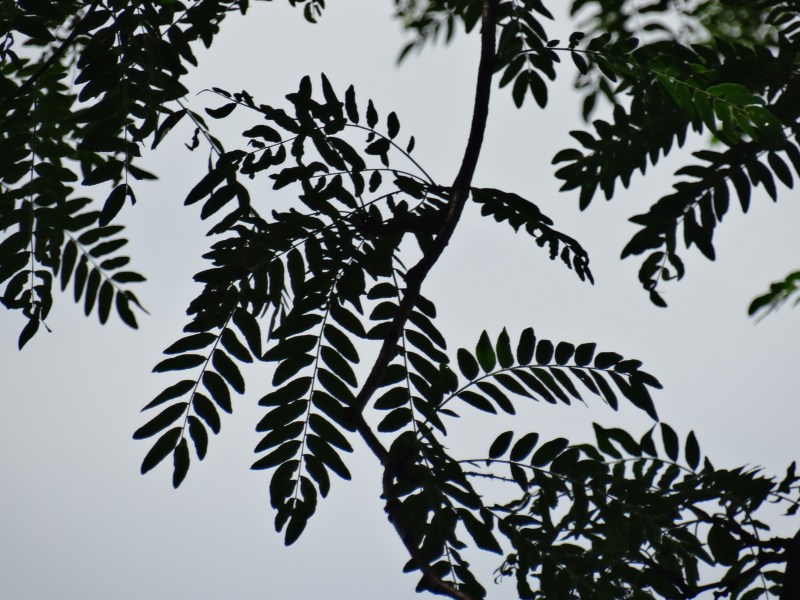
Thornless Honeylocust (Gleditsia triacanthos inermis)
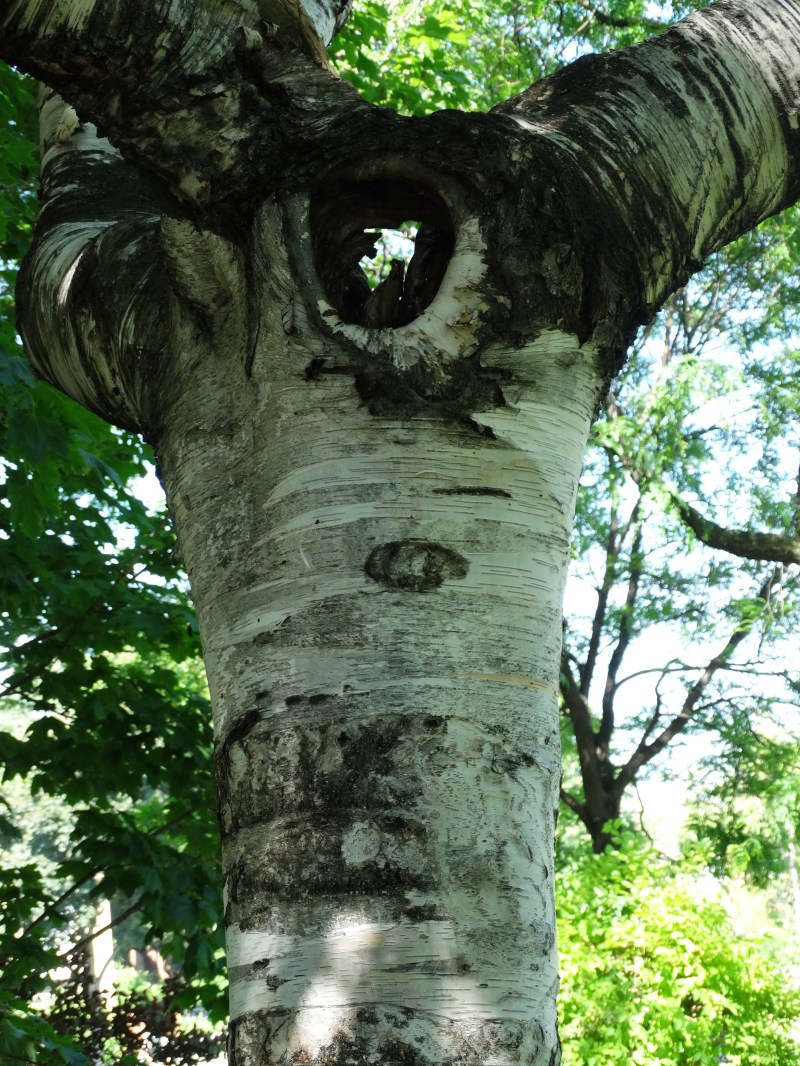
Paper Birch, also known as White Birch and Canoe Birch (Betula papyrifera).
From Wikipedia:
“While a paper birch does not have a very high overall economic value, it is used in furniture, flooring, popsicle sticks and oriented strand board.
The sap is boiled down to produce birch syrup. Panels of bark can be fitted or sewn together to make cartons and boxes (a birchbark box is called a wiigwaasi-makakin the Anishinaabe language).
The bark is also used to create a durable waterproof layer in the construction of sod-roofed houses.”
 Westmount Overlooked