A walk through Westmount’s (almost) new recreation center – also called the WRC.
Those of us “of a certain age” still refer to it as the “arena”!
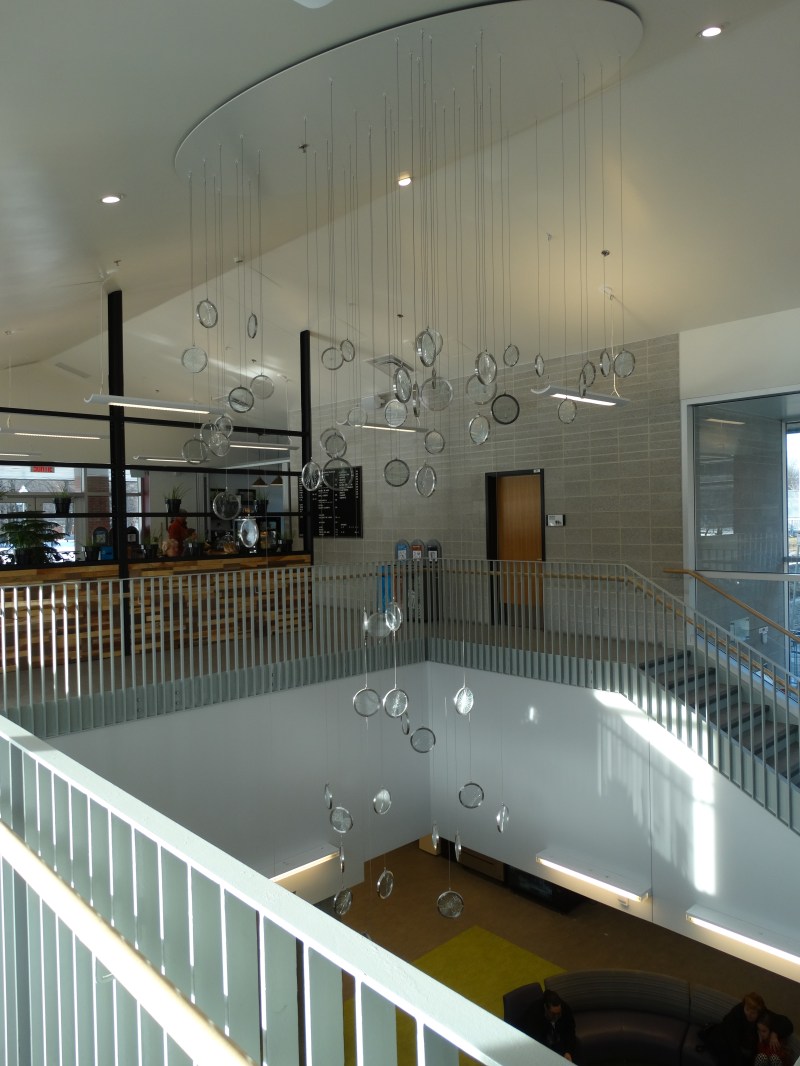
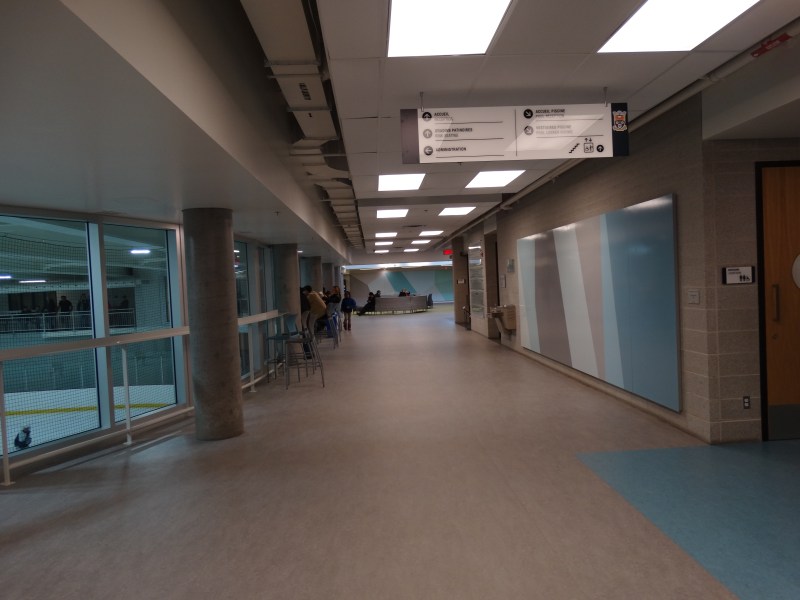


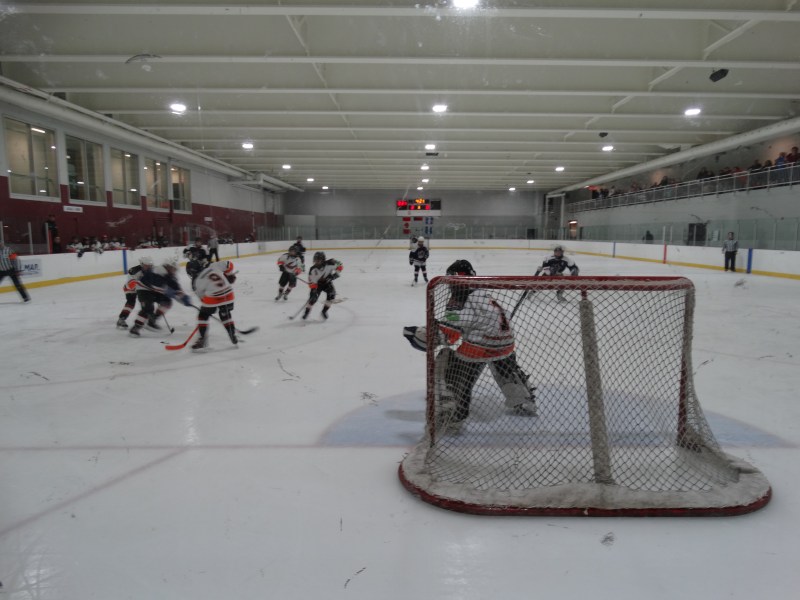
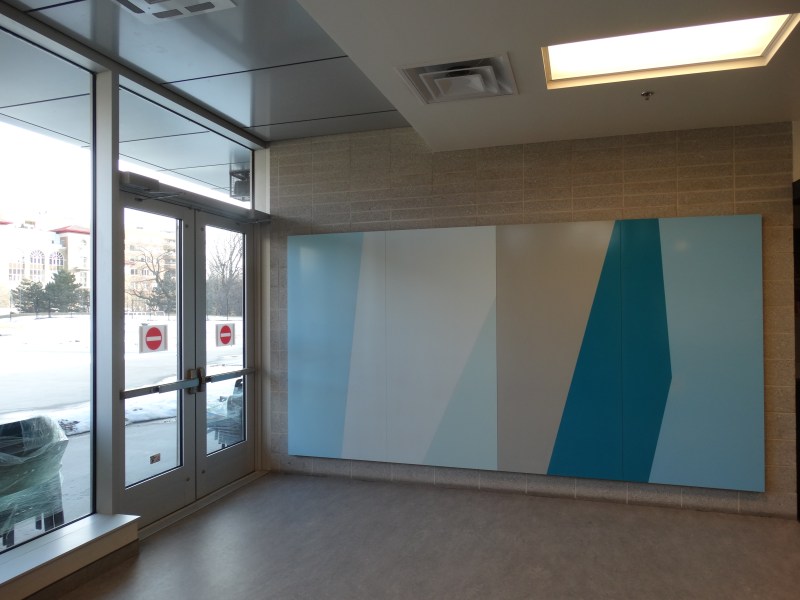

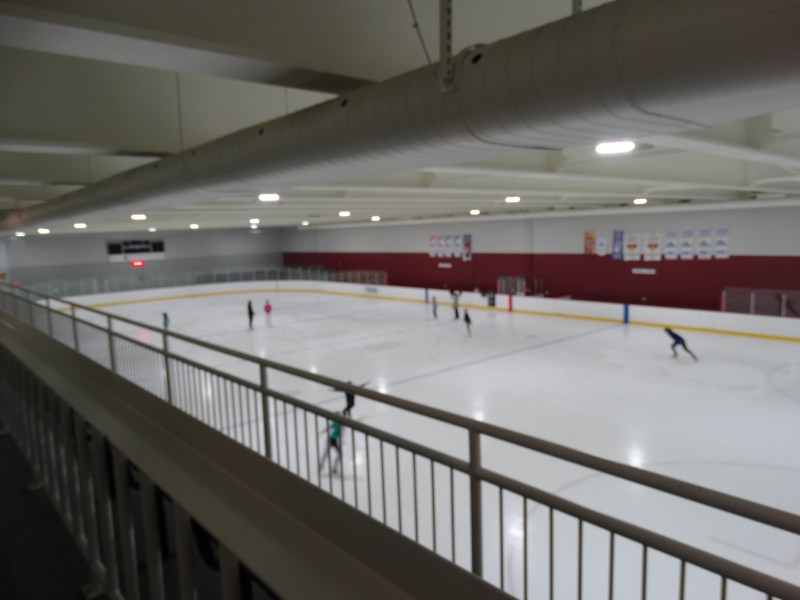
A walk through Westmount’s (almost) new recreation center – also called the WRC.
Those of us “of a certain age” still refer to it as the “arena”!
Westmount is (finally) replacing its parking meters. We no longer have to look for change, nor overpay if you don’t have the correct coins! (Did you know they accept U.S. change but will not register the time on the display?) The new system is termed “pay-by-plate”. The time paid for parking is based on one’s license plate – pay for an hour, in one location, and stay 15 minutes – you still have 45 minutes to park elsewhere else without repaying!
There are several “demo units” throughout the city to allow residents to “kick the tires”!

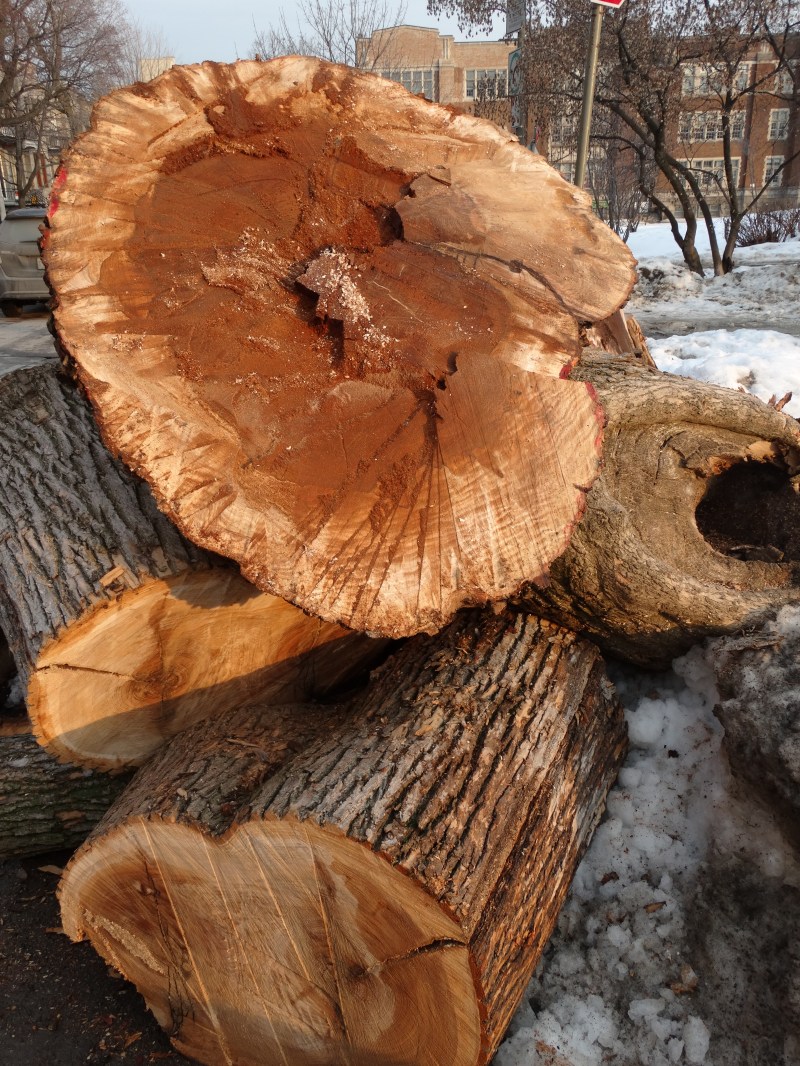
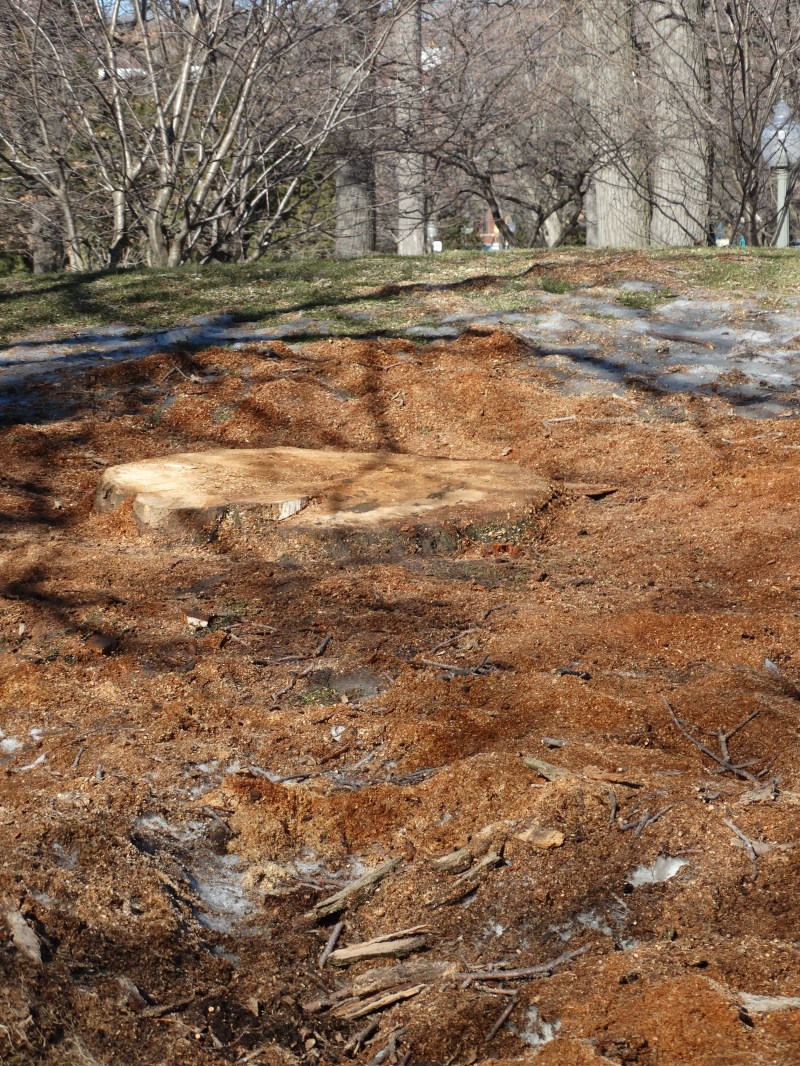 Trees, do have a lifespan; however, unlike us, they should last for several centuries. Growing in an urban environment will reduce their lifespan – this 100+ year old Lime (I think!) was recently cut down for safety reasons. At the risk of sounding anthropomorphic, one can only image the lost stories, that that should have been told, that had occurred beneath its boughs.

A beautiful Saturday morning – almost “spring-like” with the warm sun.
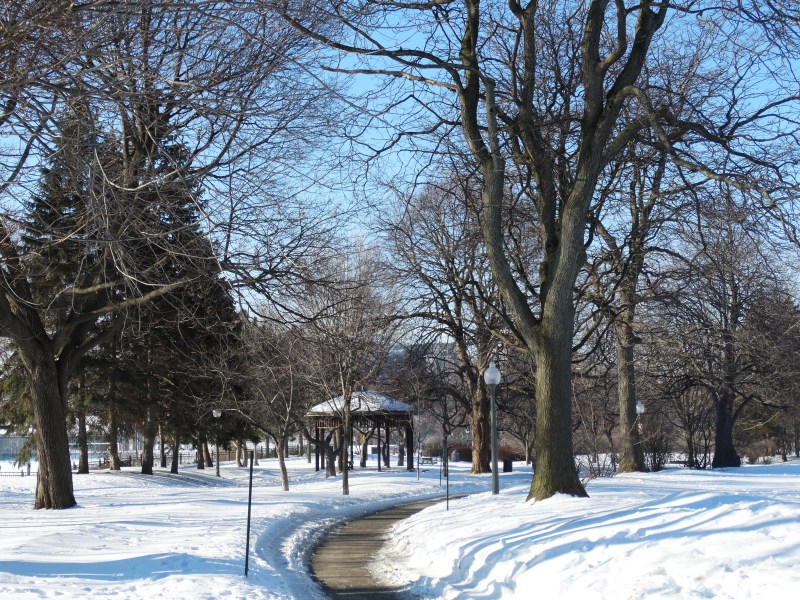
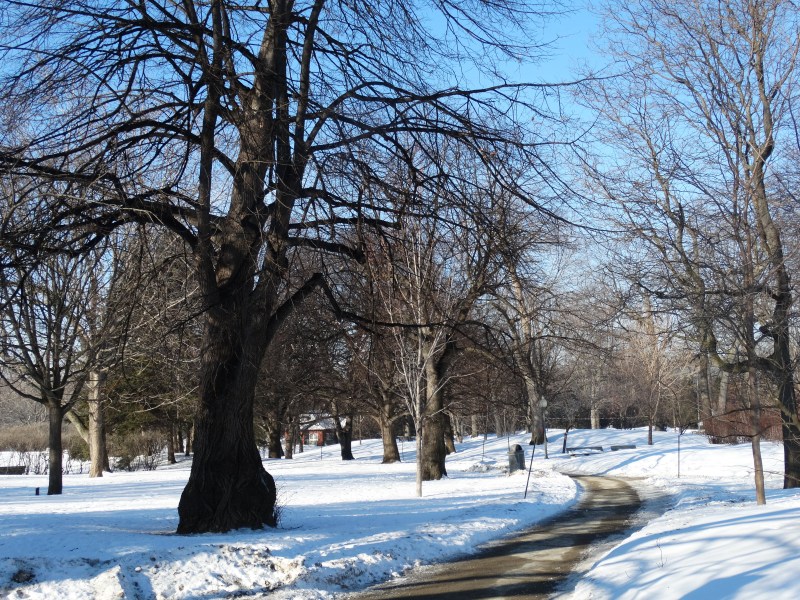
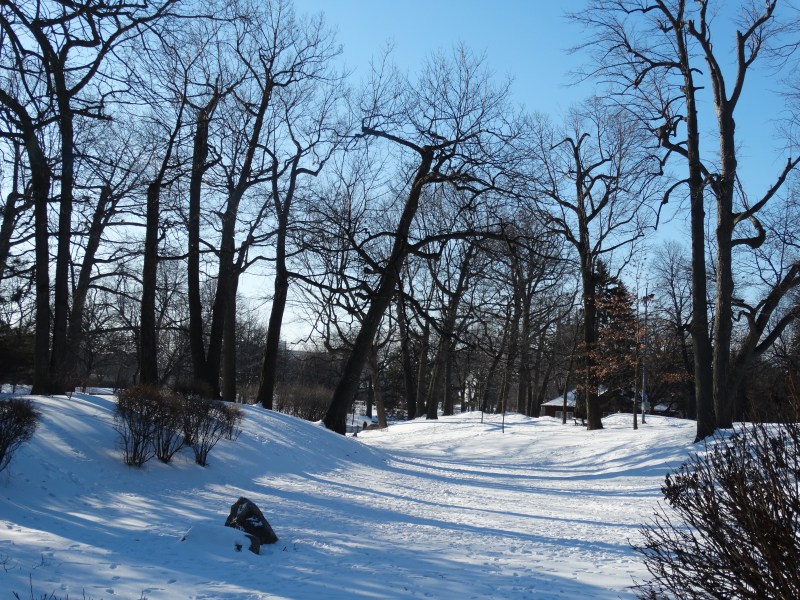
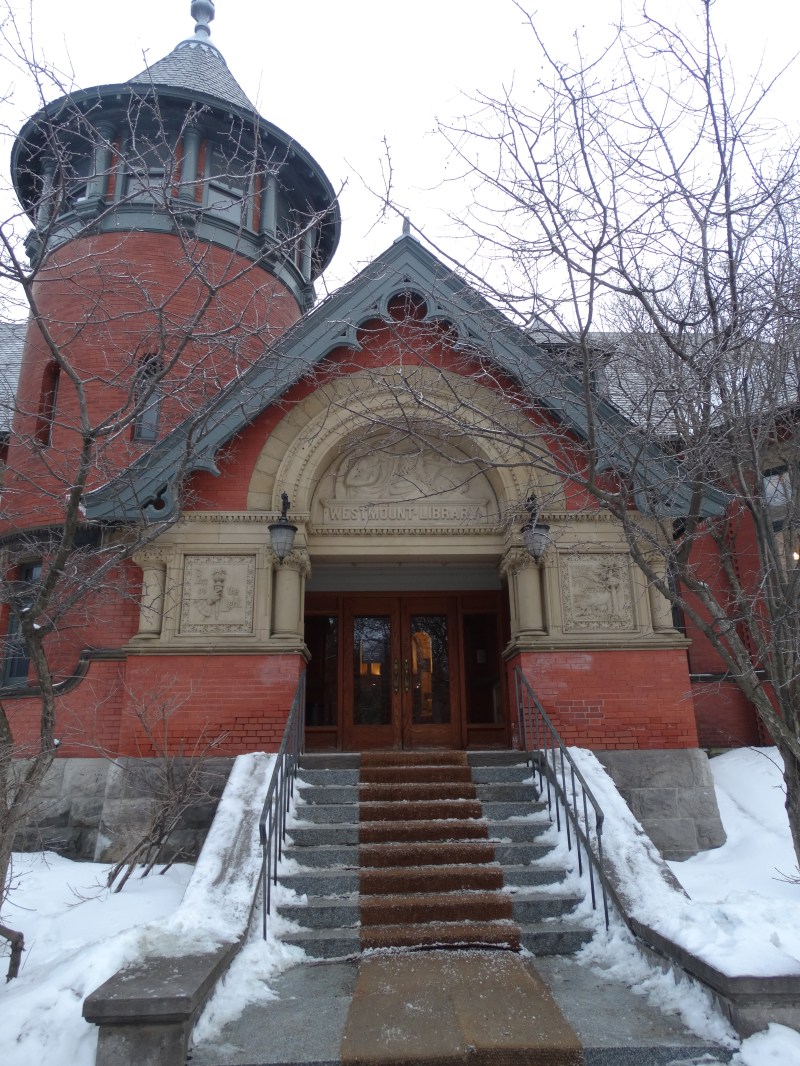
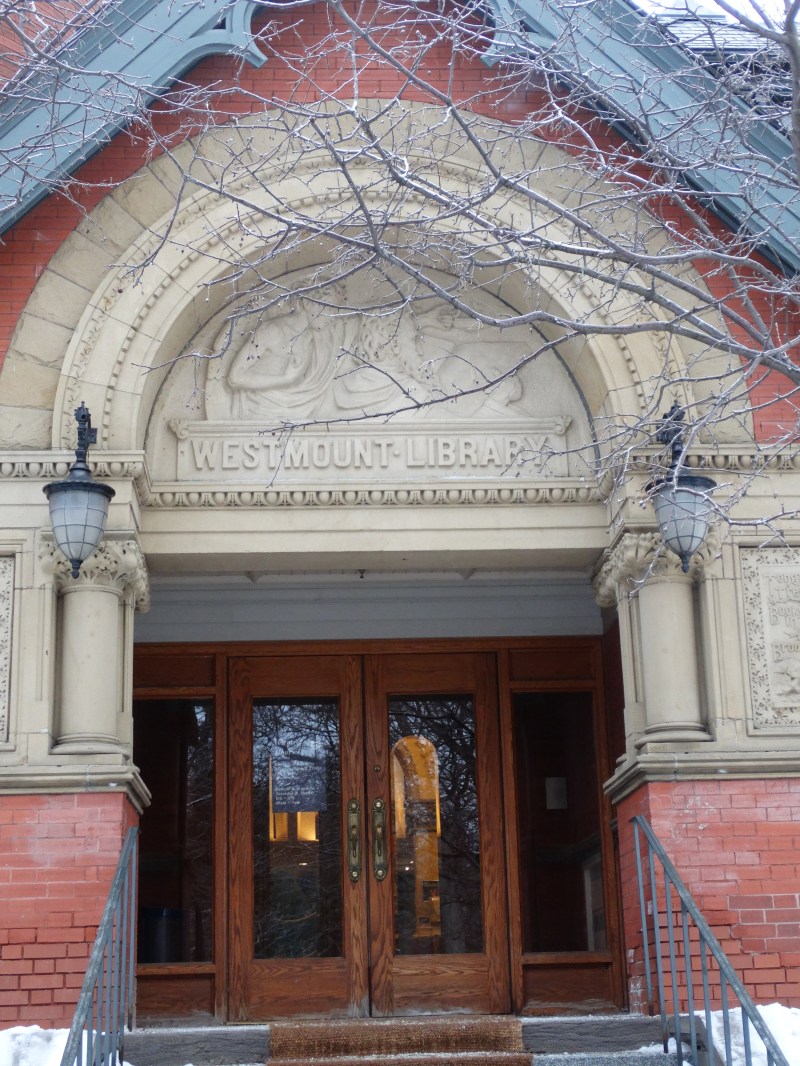
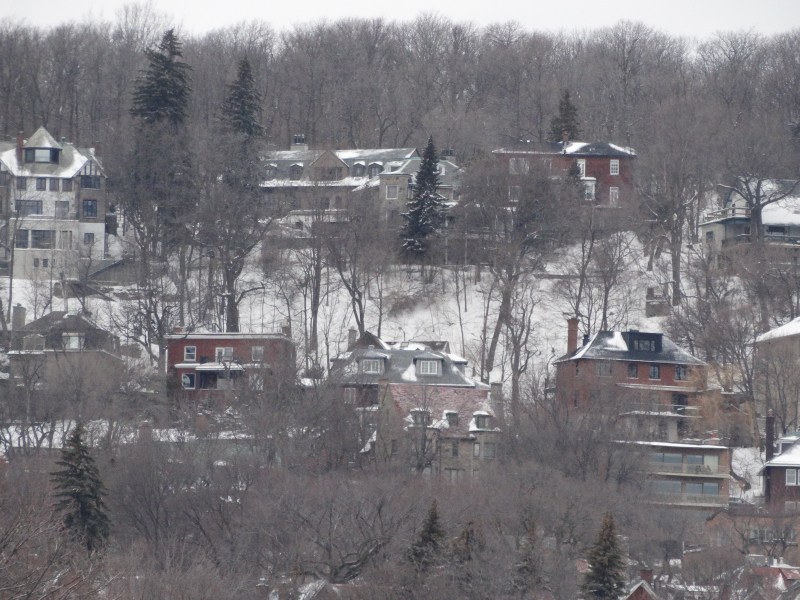


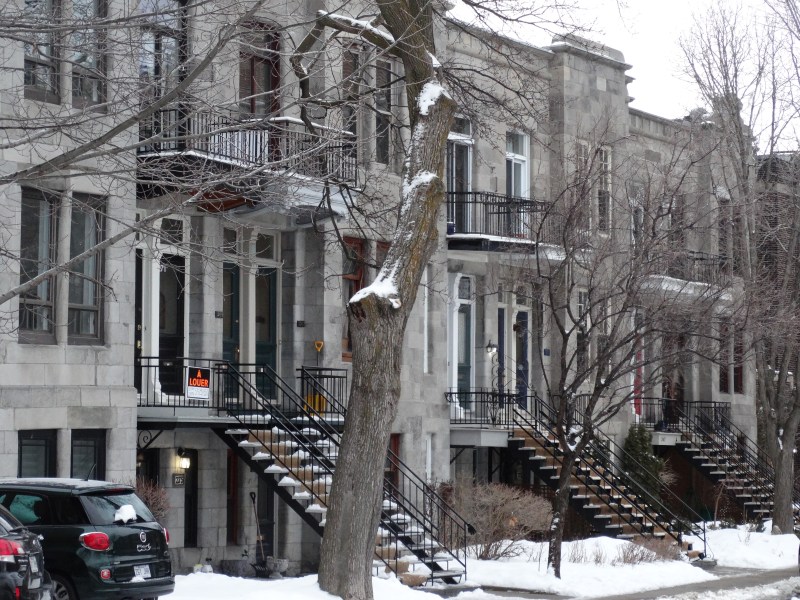
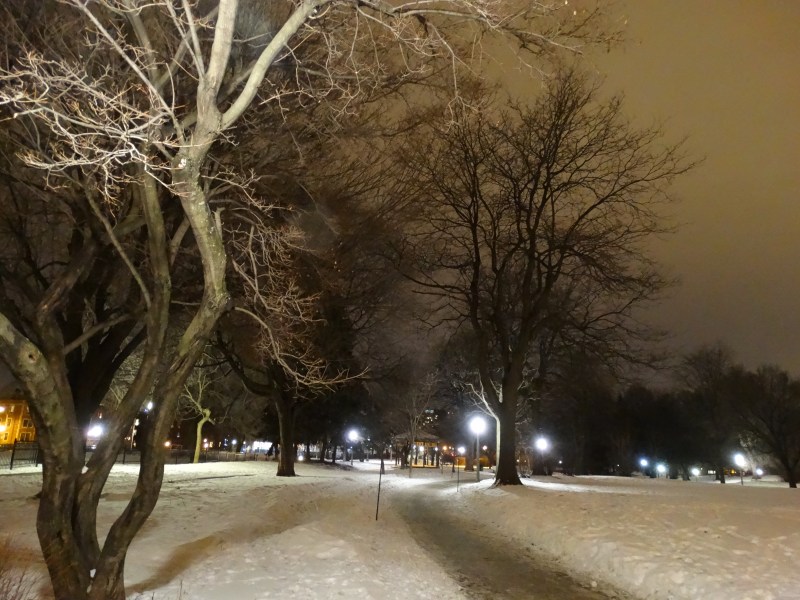
A winter walk through Westmount Park ending at Melville Avenue.
One of Westmount Park’s paths on a early February morning.

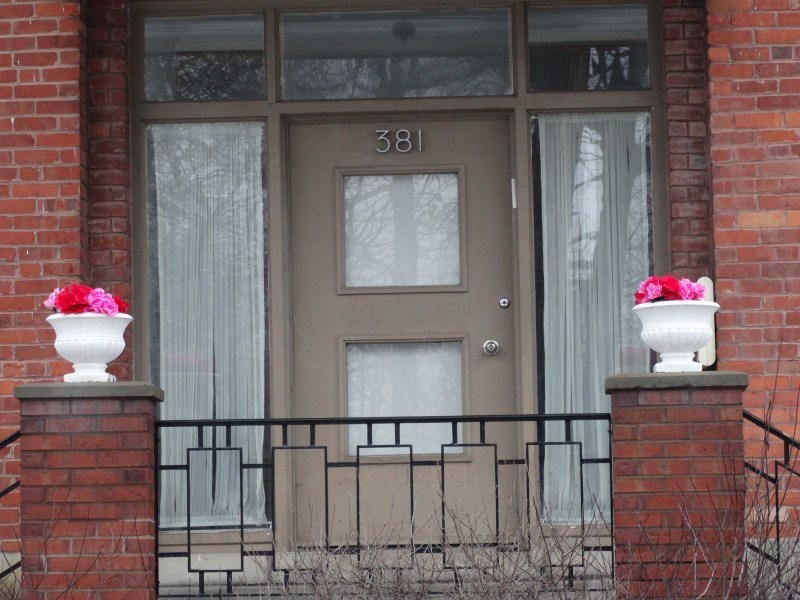
A splash of colours, outside a house, on a grey winter morning.
 A mauve and purple sun rise as we left for our morning “dog walk”.
A version of this article appeared in the Westmount Independent – April 29, 2016
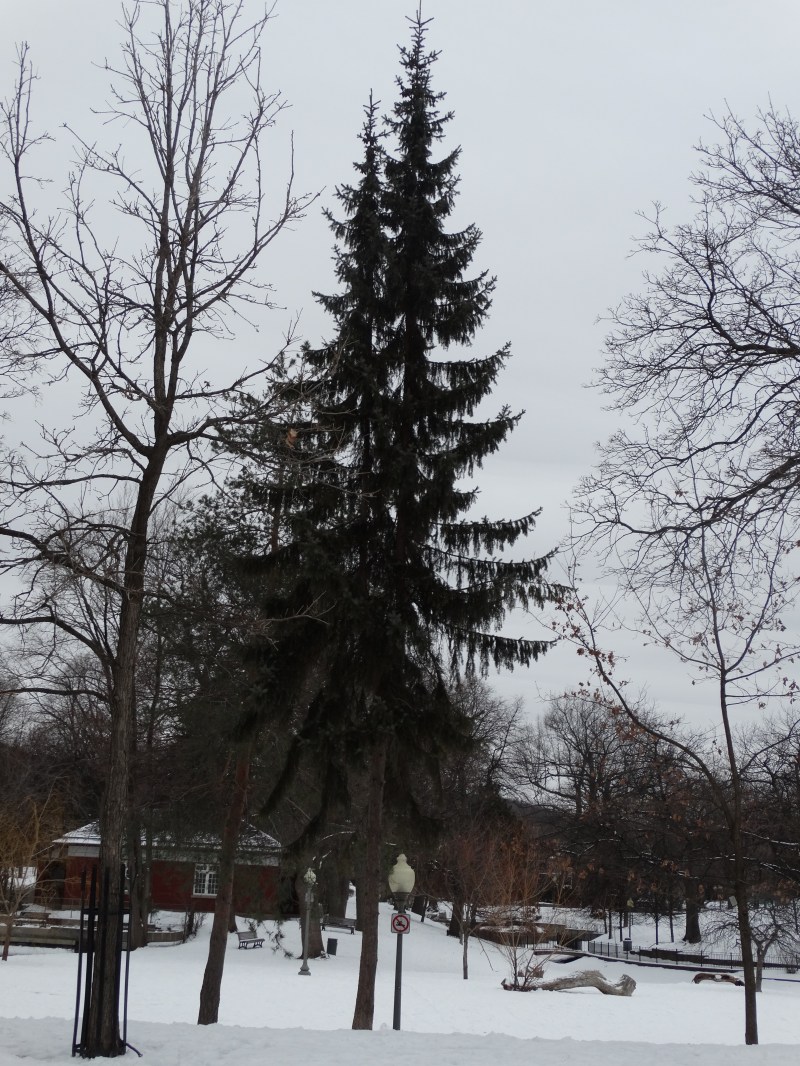
There is quite a remarkable solitary spruce growing in Westmount Park near the lagoon’s western portion. One can easily identify it as a spruce by its short sharp needles that are not flat in appearance. Specifically, this is a Brewer Spruce (Picea breweriana) also known as Weeping spruce a name that describes its distinctive beautiful dropping branches. It was first discovered by William Henry Brewer, from Yale University, in the late 1800s
It has been described as “one of the most attractive conifers in the world”. In fact, it is also one of the rarest spruces – its rarity comprises an interesting story.
The species (now termed a “relict”) flourished in the Arcto-Tertiary forests that extended from the south-west coast of North America to the arctic regions. This massive forest began to retreat when tectonic plate movements and volcanic activity occurred during the Pliocene era (10 million years ago) forming the Sierra Nevada and Cascade mountain range. A further retreat of the forest occurred during the Pleistocene era (1 million years ago) when the glacial ice sheets covered most of North America.
One area; however, was unaffected by these massive geological and climatic changes: the Siskiyou mountains within the current Klamath-Siskiyou region that today straddles the border between California and Oregon. It is within in this protected region, the Brewer’s Spruce, and 30 other conifer species, found nowhere else in this world, still persist to this very day.
The next time, when you walk by this particular tree– think of the time span it represents and how that it is currently measured in human terms. The best description I have found is by Rachel Sussman while describing her book The Oldest Living Things in the World :
“One of my primary goals with this work was to create a little jolt of recognition at the shallowness of human timekeeping and the blink that is a human lifespan. Does our understanding of time have to be tethered to our physiological experience of it? I don’t think so. Deep time is like deep water: We are constantly brought back to the surface, pulled by the wants and needs of the moment.”
Another brisk evening walk through Westmount Park.
 Westmount Overlooked