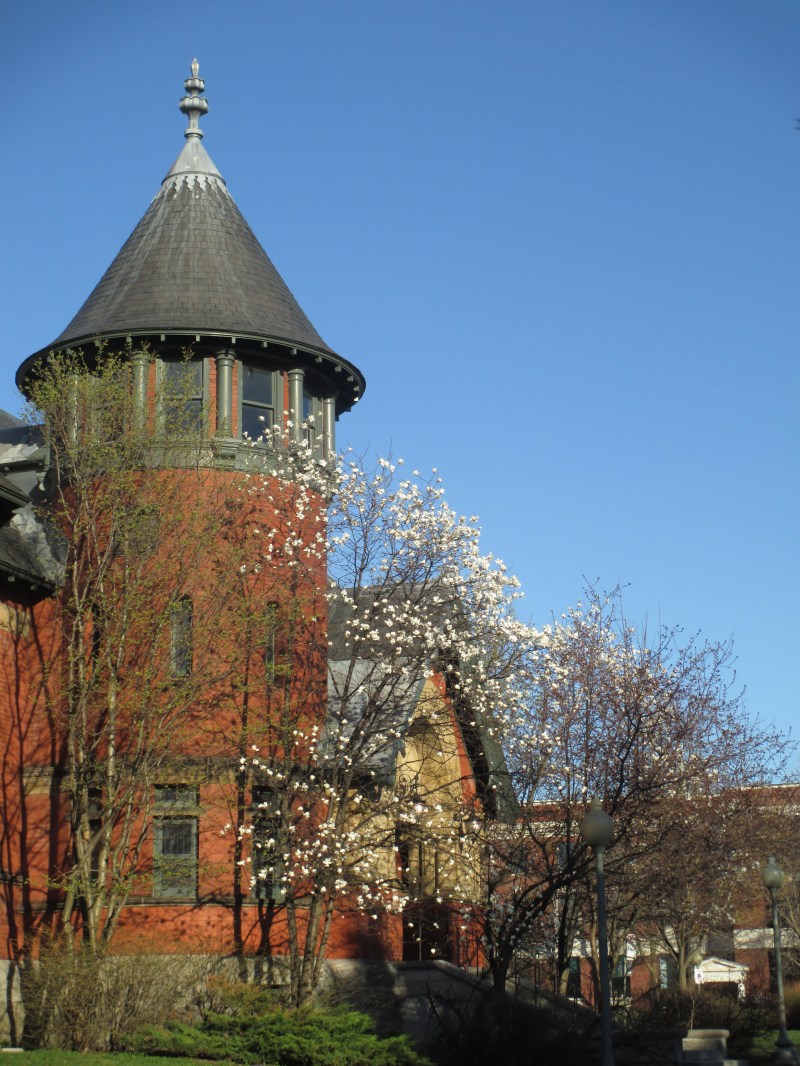
A closer look at one, “better preserved”, on St. Catherine at Lansdowne Ave.

A closer look at one, “better preserved”, on St. Catherine at Lansdowne Ave.

Sunset over Westmount Park.
Shown on TWN.
Former fire box, in use for over 75 years and decommissioned in 1987. It appears to have a crown on the top, a Canadian maple leaf in the middle and the letters “City of Westmount” at the bottom. It is located behind the clay tennis courts in Westmount Park.
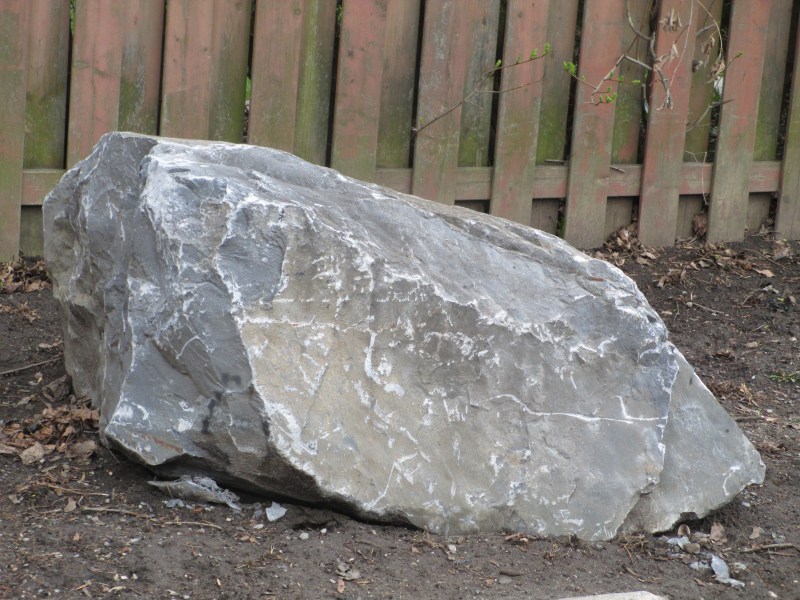
A boulder behind the clay tennis courts in Westmount Park. One wonders about its origin. More are located nearby beside the green houses as well as in the park’s lagoon.
The park, originally, had ravines that were used as landfill by the City of Montreal. Most notably, during the construction period for the downtown Ogilvy department store.

Facing the C.P.R. tracks at the back of the closed Westmount train station.

Dusk over Westmount Park.
Shown on TWN.

Early morning in Westmount Park.

Geodetic survey marker on De Masionneuve at Metcalfe.

Joseph Eveleigh residence (1920).
J. Eveleigh & Company – Manufacturers of trunks and travelling bags (Including: Gladstone, English Kit. Club, Salisbury & Brief).
Their salesroom was located at 245 and 247 St. James Street and the factory at the corner of St. Elizabeth & Vitre Streets.

W. W. Hutchison residence (1910). Eastern manager of the Lake of the Woods Milling Company.
From Wikipedia:
“The Lake of the Woods Milling Company Limited was started May 21, 1887 to take advantage of the new railway and western grain production.
Formed by a team from the board of Canadian Pacific Railway, including George Stephen, 1st Baron Mount Stephen, William Cornelius Van Horne and James Ross, the headquarters were in Montreal, while the milling operations were based in Keewatin, Ontario. The location provided transportation via the CPR, access to raw product, and water-power from the Winnipeg River.
The first mill was completed in 1888 with vice-president John Mather overseeing construction and funded by an initial corporate capitalization of $300,000. Its peak production turned a daily 62,000 bushels of wheat into 10,000 barrels of flour.
The flour was marketed under the name Five Roses, which became a world famous brand. In 1913, Lake of the Woods released the first edition of the Five Roses Cook Book, which is still in production to this day.
The mill operated in Keewatin for 79 years, closing in 1967. At the height of its production, it was possibly the largest flour mill in the British Commonwealth.”