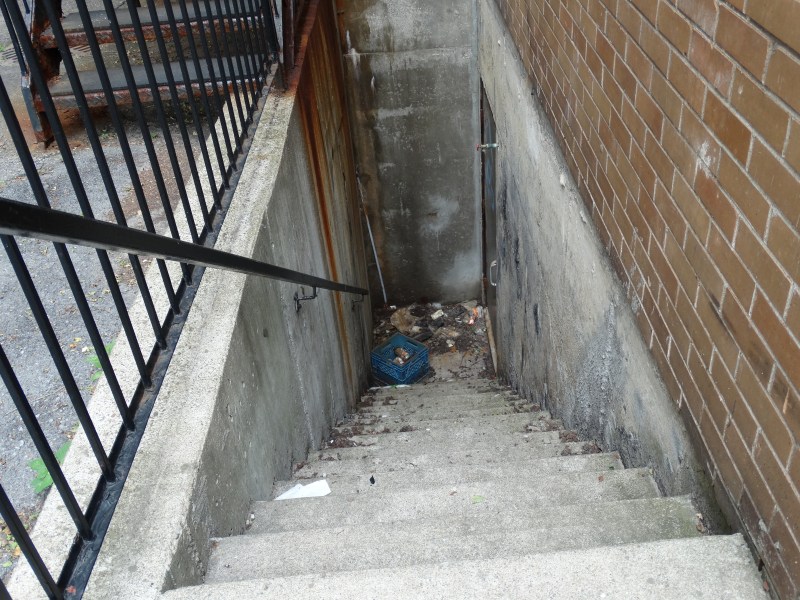
Stairs behind a building on Greene Avenue & Saint Catherine Street.
Stairs behind a building on Greene Avenue & Saint Catherine Street.
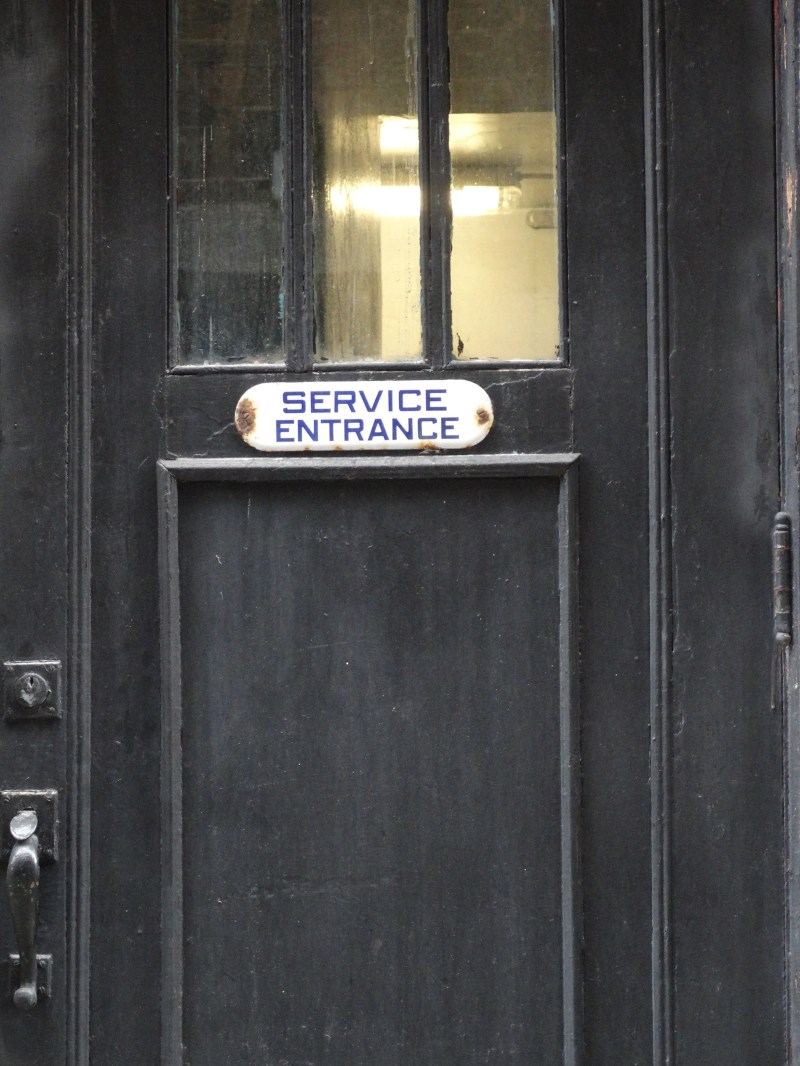
Nice old sign on a door behind Greene Avenue & Saint Catherine Street.
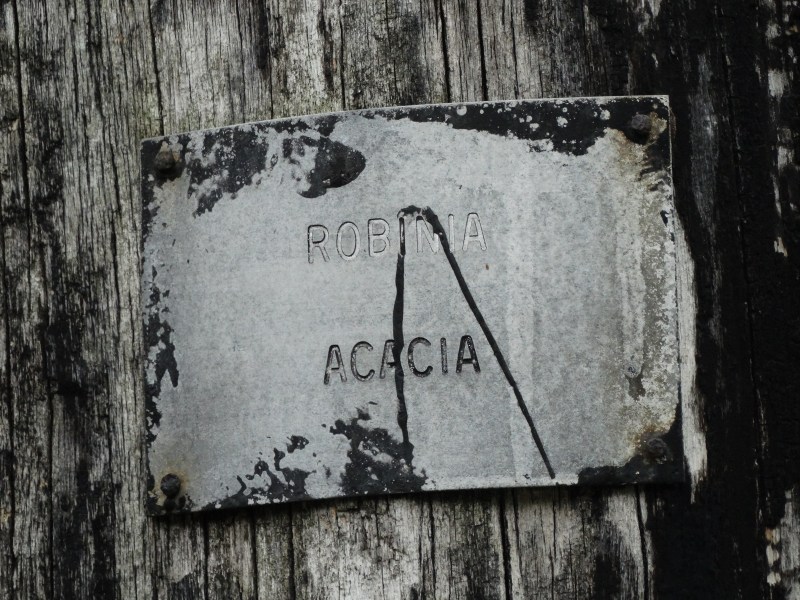
Many years ago, the trees in Westmount’s parks had their species’ names nailed into the bark.
From the Montreal Gazette, April 14, 1920:
“Alderman Scott, Park Commissioner…said that it had
been decided to place metal tags on the different kinds of
shrubbery in the parks and also signs on trees denoting the
common name as well as the botanical name.”
Over time, vandalism caused the removal of these plaques. I was fortunate to find one, still extant, in King George Park.
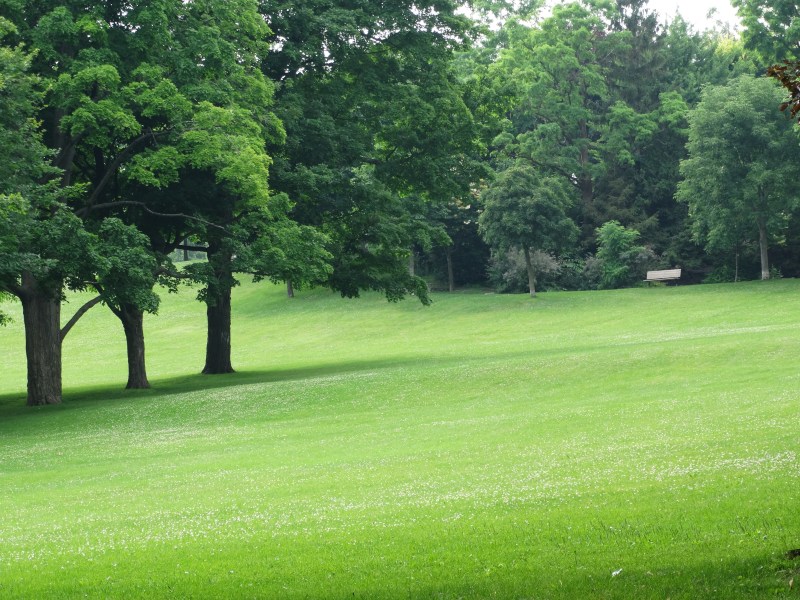
The colour of the grass, in this park, never ceases to amaze me!

Overlooked plaque, presented to the the City of Westmount during the International Year of Peace recognized by the the United Nations in 1986.

A former “stream” – currently dry. I recall the City filling this stream with goldfish over the summer months.
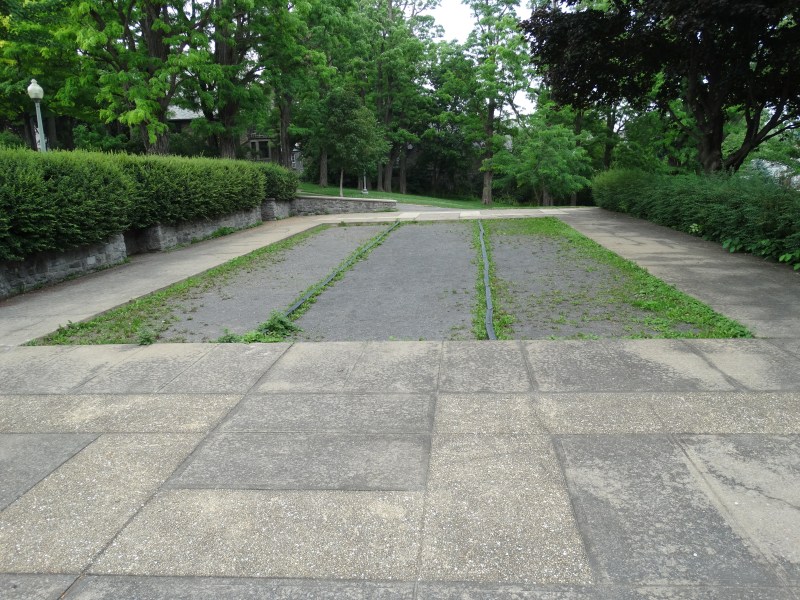
Former model yacht sailing pond – its current use seems uncertain.

Limestone facade outside the former Bell Canada telephone exchange building on the corner of Sherbrooke & Metcalfe Streets.
One can see the shells; however, pollution & acid rain are slowly causing the stone to erode.

Camping in the park during Canada Day. I wonder how many of us understand the holiday’s full origins.
From Wikipedia:
“Canada Day (French: Fête du Canada) is the national day of Canada, a federal statutory holiday celebrating the anniversary of the July 1, 1867, enactment of the British North America Act, 1867 (today called the Constitution Act, 1867), which united three colonies into a single country called The Dominion of Canada within the British Empire.
Originally called Dominion Day (French: Le Jour de la Confédération), the holiday was renamed in 1982, the year the Canada Act was passed. Canada Day observances take place throughout Canada as well as among Canadians internationally.”

Black locust (Robinia pseudoacacia).
From Wikipedia:
“In South Africa it is regarded as a weed because of its habit of freely suckering from roots near the surface and aggravated by cutting of the main stem.”
 Westmount Overlooked