Image

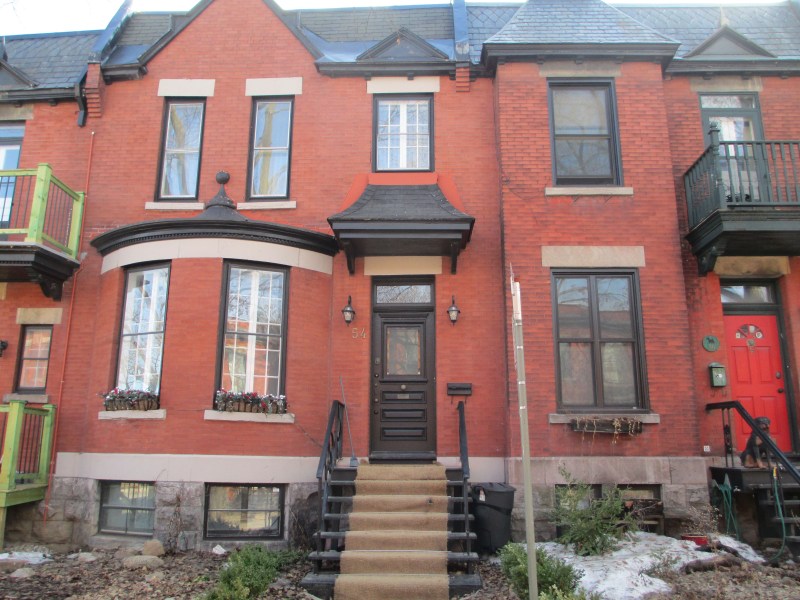
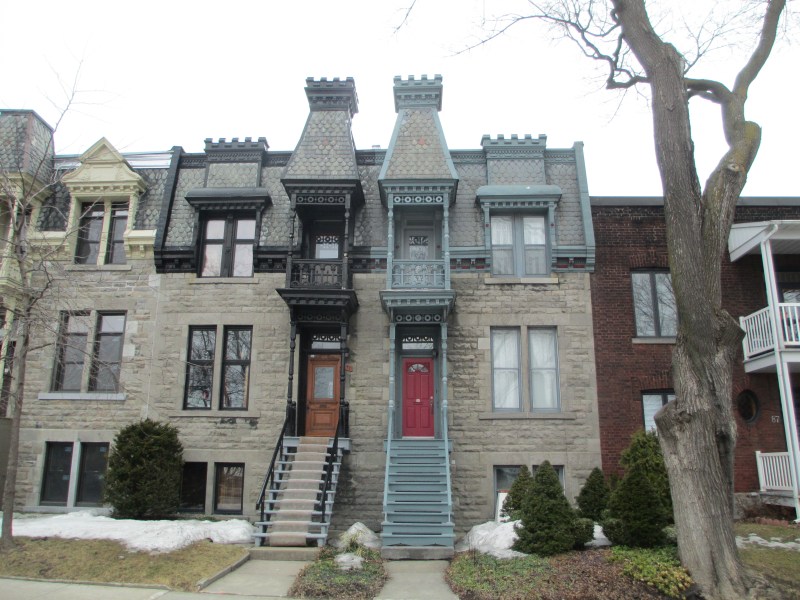
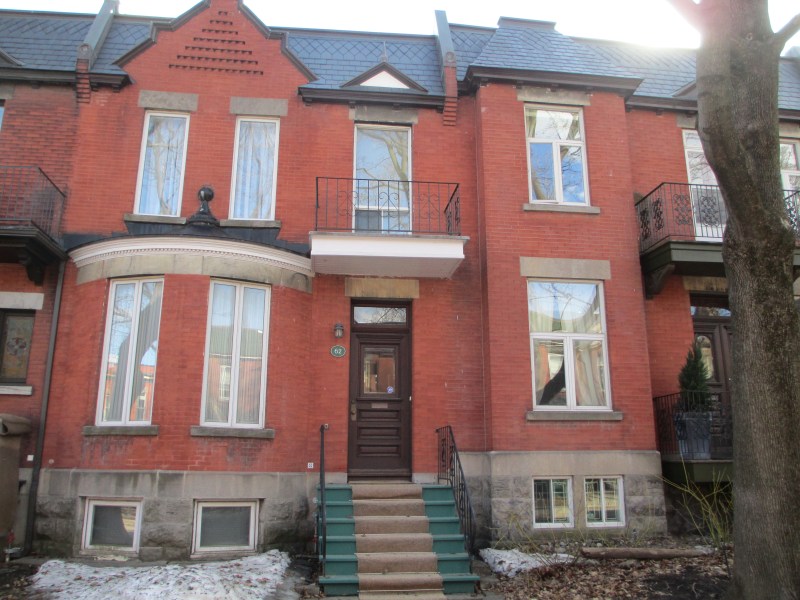
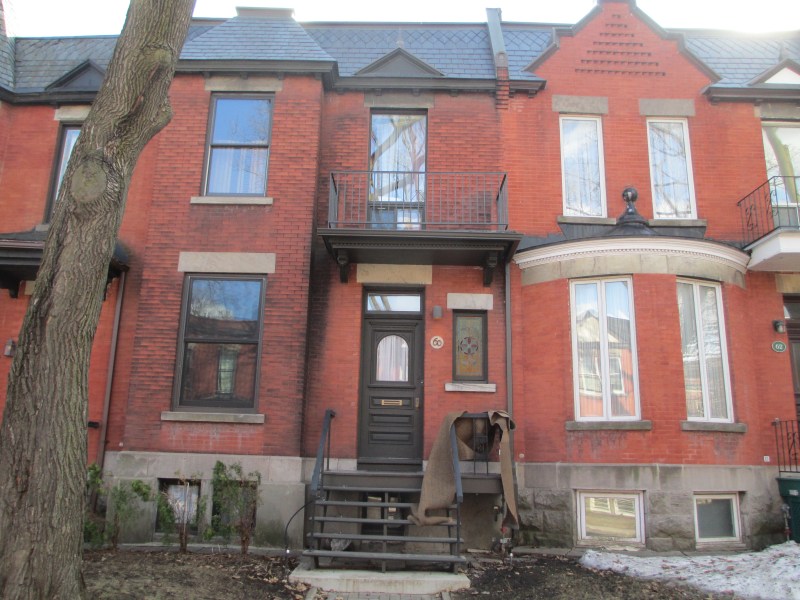
64 Bruce Ave.

64 Bruce Ave.

Frank Lotty, superintendent, Peck, Benny & Company (1897)

Advertisement from the Railways of Canada 1870-1. J. M. Trout & E. Trout:

“Established 1838
Canal
Montreal
Iron Nail and Spike Works
Peck, Benny & Co.,
Manufactures of Railroad Spikes, Ship Spikes, and all descriptions of cut nails, pressed clinch and slate nails.
Office 391 St. Paul Street. Works 61 Mill Street”

http://journals.hil.unb.ca/index.php/MCR/article/view/17516/22462
Technical Advance and Stagnation:
The Case of Nail Production in Nineteenth-Century Montreal
Larry McNally
National Archives of Canada

“A byproduct of the reconstruction of the Lachine Canal across the Island of Montreal in the 1840s was the provision of water power for manufacturing purposes at three sites. Two of them, Canal Basin No. 2 and the Saint-Gabriel Locks, were actually within the limits of the City of Montreal. This was enough to attract nail manufacturers back to the city from the fringes of the island. In 1847, Thomas Peck (1808-1874) opened a nail mill on Canal Basin No. 2.

Also probably in 1859, a second rolling mill was constructed at a cost of $30 000 by Thomas Peck, who had been making nails on the basin since 1847. An 1864 description says that a turbine wheel drove an immense 22-ton balance wheel that transmitted power to the rolling mill itself. Another turbine drove 38 nail machines while a third turbine drove two large spike machines.

Alone in the middle was Thomas Peck & Co. (which became Peck Benny & Co. in 1870), which had a rolling mill but was water-powered. When a Royal Commission looked into the leasing of water power on the Lachine Canal in 1887, the company claimed to be the last water-powered rolling mill in North America. Steam power could easily have been produced by putting boilers on top of their heating furnaces as Pillow Hersey had done, but the company only paid $1750 a year for water power. Converting to steam would have meant boilers, additional coal, engineers, firemen and annual repairs. It is possible that a steam-powered rolling mill was added when the company was restructured as the Peck Rolling Mills Ltd in 1903.

Peck Rolling Mills Ltd, took over the assets of Peck Benny & Co. in 1903. Both Stelco and Peck Rolling Mills continued to produce cut and horse nails well into the twentieth century.”
Image

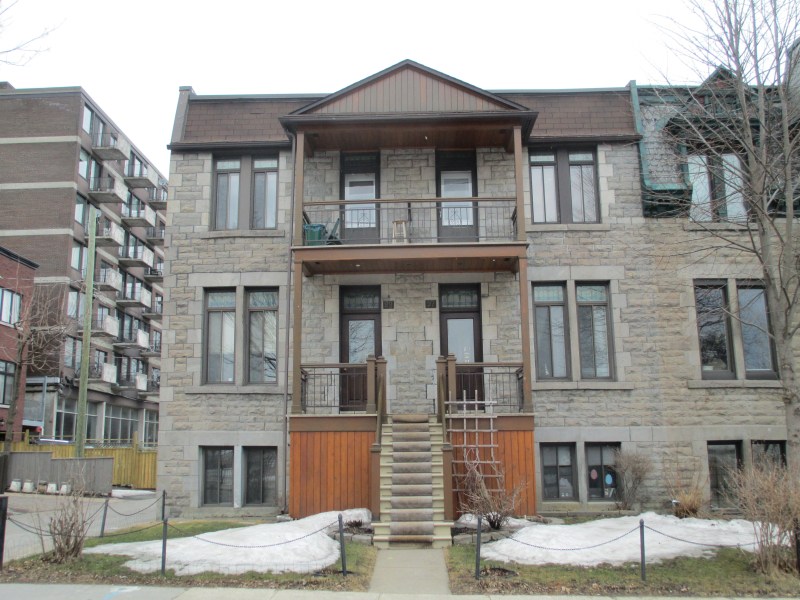
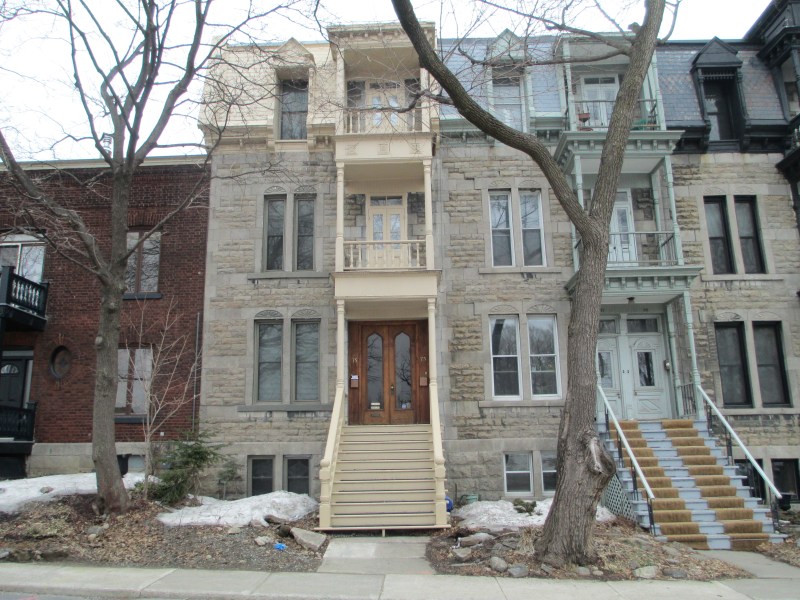
99 Hallowell Ave.

99 Hallowell Ave.

W. J. Wilson residence (1899). Manager C. O. Beauchemin early publishers.

The roof this residence is out of character from the neighbouring homes. It was redone, at some point; perhaps due to fire damage.

This could be the reason that the adjacent homes: 160 Hallowell (John McLeod residence – city weigher (1899) & 158 Hallowell (Roe family residence – G. H. Harrower Co. Ltd. Manufacturers of shirts, collars, cuffs, overalls, whitewear & underwear (1899) were demolished.

Image

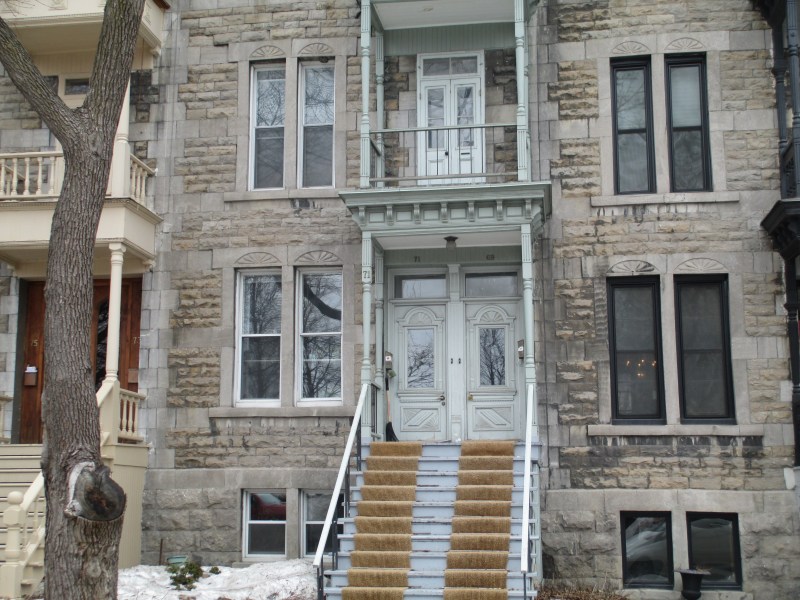
89 Hallowell Ave.

89 Hallowell Ave.

Charles A. Cooley residence (1899). Assistant Superintendent of the Royal Electric Company.

From the Canada Science and Technology Museum:

http://www.sciencetech.technomuses.ca/english/collection/elect4.cfm

“At the end of the 19th century, the Royal Electric Company patterned itself after the American business model of a public electricity system that included invention patents, equipment manufacture and distribution. Founded by Montreal entrepreneurs in 1884, the company concentrated primarily, until the end of the century, on producing and selling arc and incandescent lamps, globes, streetlights, and generators, based on models developed by Edison, Thompson and Houston. In 1886, it also took on lighting the streets of Montreal, first using arc lamps and then, in 1888, incandescent lamps.”

“During this period the Royal Electric Company set up 70 electrical stations across Canada, from Victoria to Charlottetown, to supply arc lamps, and another 145 stations for incandescent lighting. For the production and distribution of electrical equipment, however, the company had to compete with subsidiaries of American firms like Canadian General Electric and Canadian Westinghouse, which set up their plants in 1892 and 1897, respectively.”

“In 1885, the Royal Electric Company set up the first street lighting systems in Charlottetown and St. John’s, Newfoundland. The following year, it created a subsidiary, the Prince Edward Island Electric Company, to provide this service.”

Image

75 Hallowell Ave.

75 Hallowell Ave.

Charles Pierce residence (1899), superintendent of the Sun Life Assurance Company. The company still exists as Sun Life Financial.

From Wikipedia:

“Founded in Montreal, Quebec, as The Sun Insurance Company of Montreal in 1865 by Mathew Hamilton Gault, an Irish immigrant who settled in Montreal in 1842, its operations actually began in 1871. By the end of the 19th century it had expanded to Central and South America, the United States, the United Kingdom, West Indies, Japan, China, India, North Africa and other international markets. During the next five decades, the company grew and prospered, surviving the difficulties of World War I and the large drain on its finances through policy claims arising from the large number of deaths caused by the Great Flu Epidemic of 1918.”

“The company’s original Dominion Square building in Montreal was built in 1918. Capping a Montreal construction boom that began in the 1920s, the company completed construction of the expansion of its headquarters with its new 26-storey headquarters north tower in 1933. Although the head office of the Royal Bank of Canada on St. James Street was taller by several floors, the Sun Life Building was at the time the largest building in terms of square footage anywhere in the British Empire.
In World War II, the British Crown Jewels as well as the gold reserves of several European countries were moved to what is now known as the Old Sun Life Building for safekeeping. The Sun Life Company also reports that this building and its basement was the secret storage location of British securities during World War II.”

Image

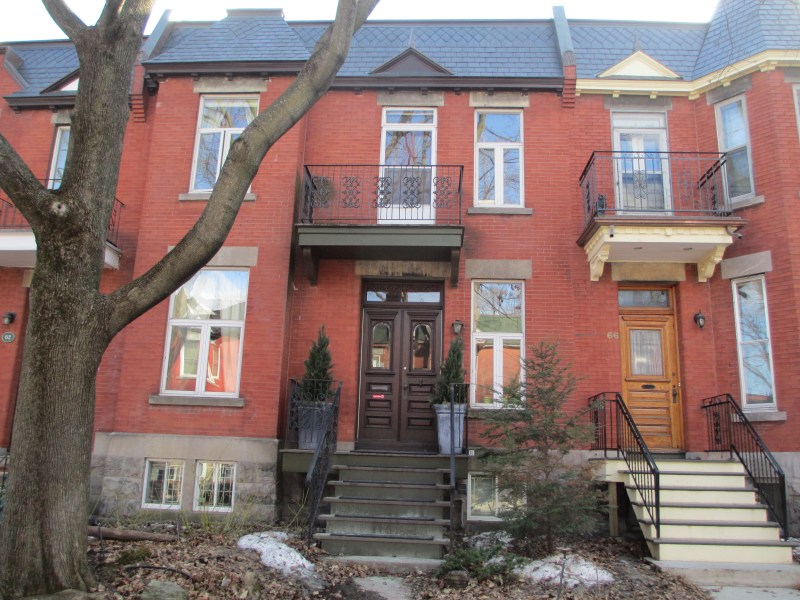
69 Hallowell Ave.

69 Hallowell Ave.

Harry Brown residence (1899) secretary-treasurer of the Montreal Lumber Company.

Andrew Allan was the president of the Montreal Lumber Company.

From Appletons’ Cyclopedia of American Biography by Aaron Crandall:

“Allan Andrew, Canadian capitalist, brother of Sir Hugh Allan, b. in Saltcoats, Ayrshire, Scotland, 1 Dec., 1822. He emigrated to Canada, in 1839 and in 1846 became a member of the ship-owning firm of which his brother Hugh was partner. In addition to this connection with the Allan line steamship company, he is a president of the merchant’s bank, the Montreal telegraph company, the Manitoba and N. W. railway company, the Canadian rubber company and the Montreal lumber company.”

The company was located at 1712 Basin Street – now a derelict building.