
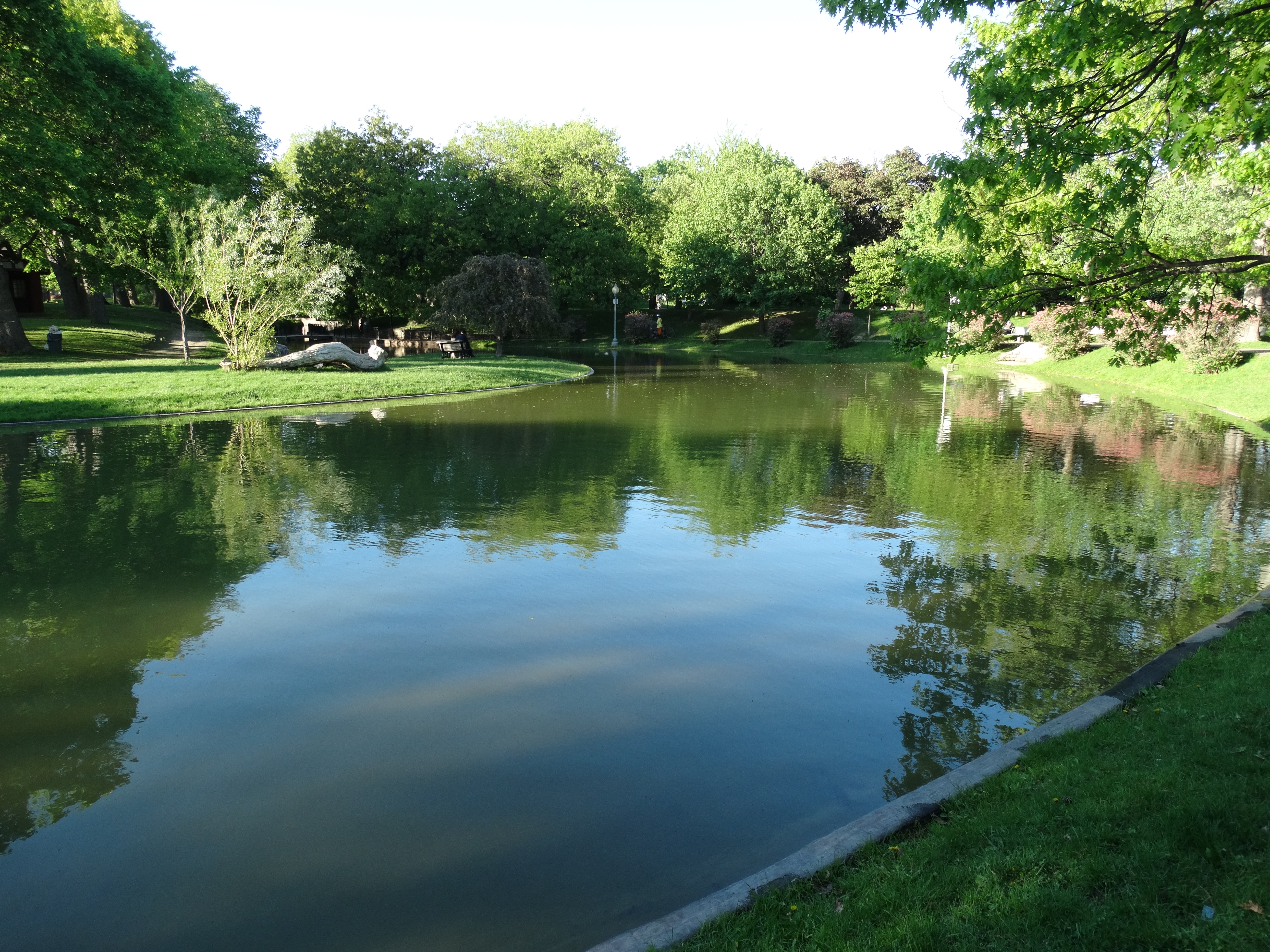

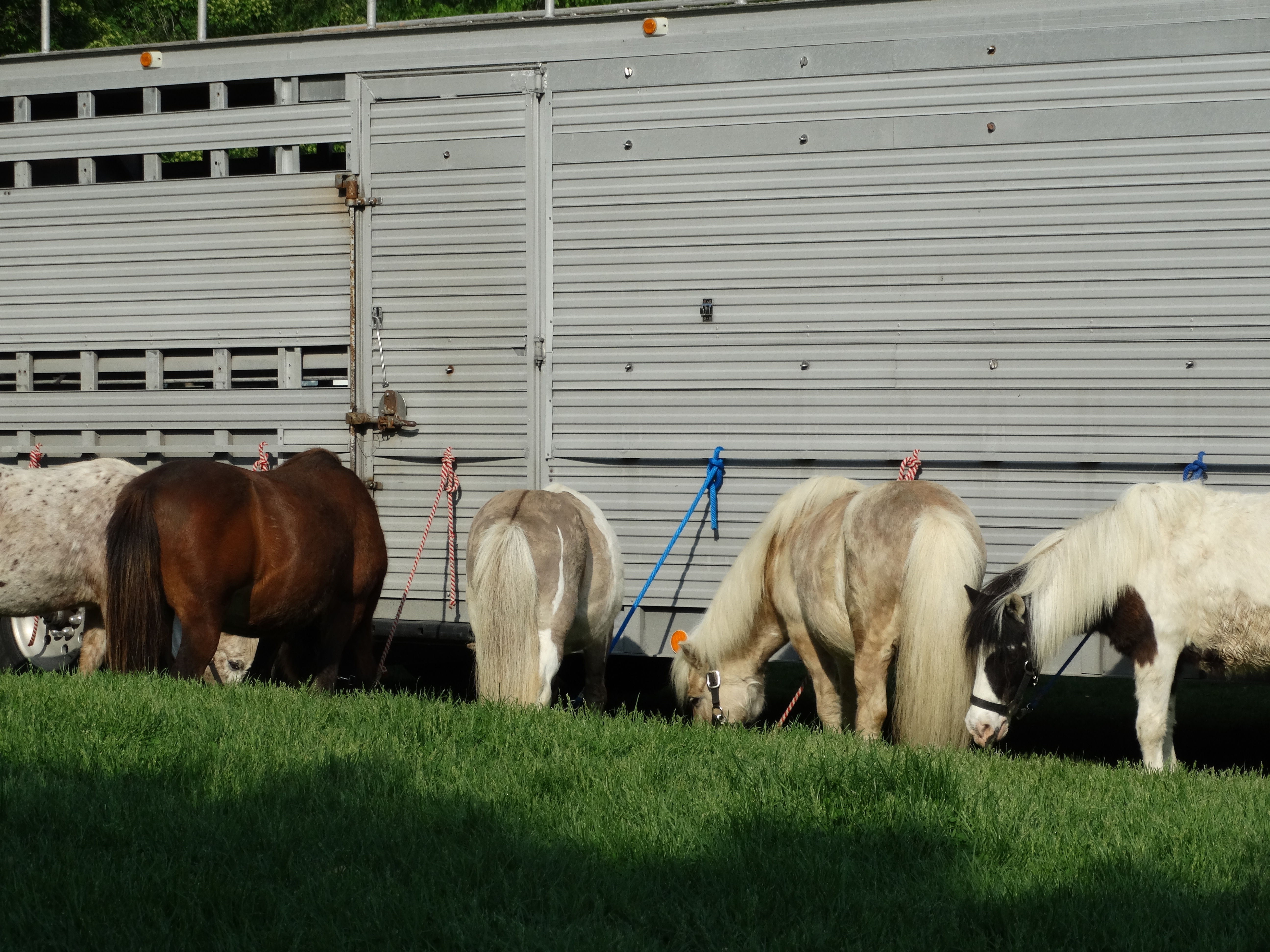
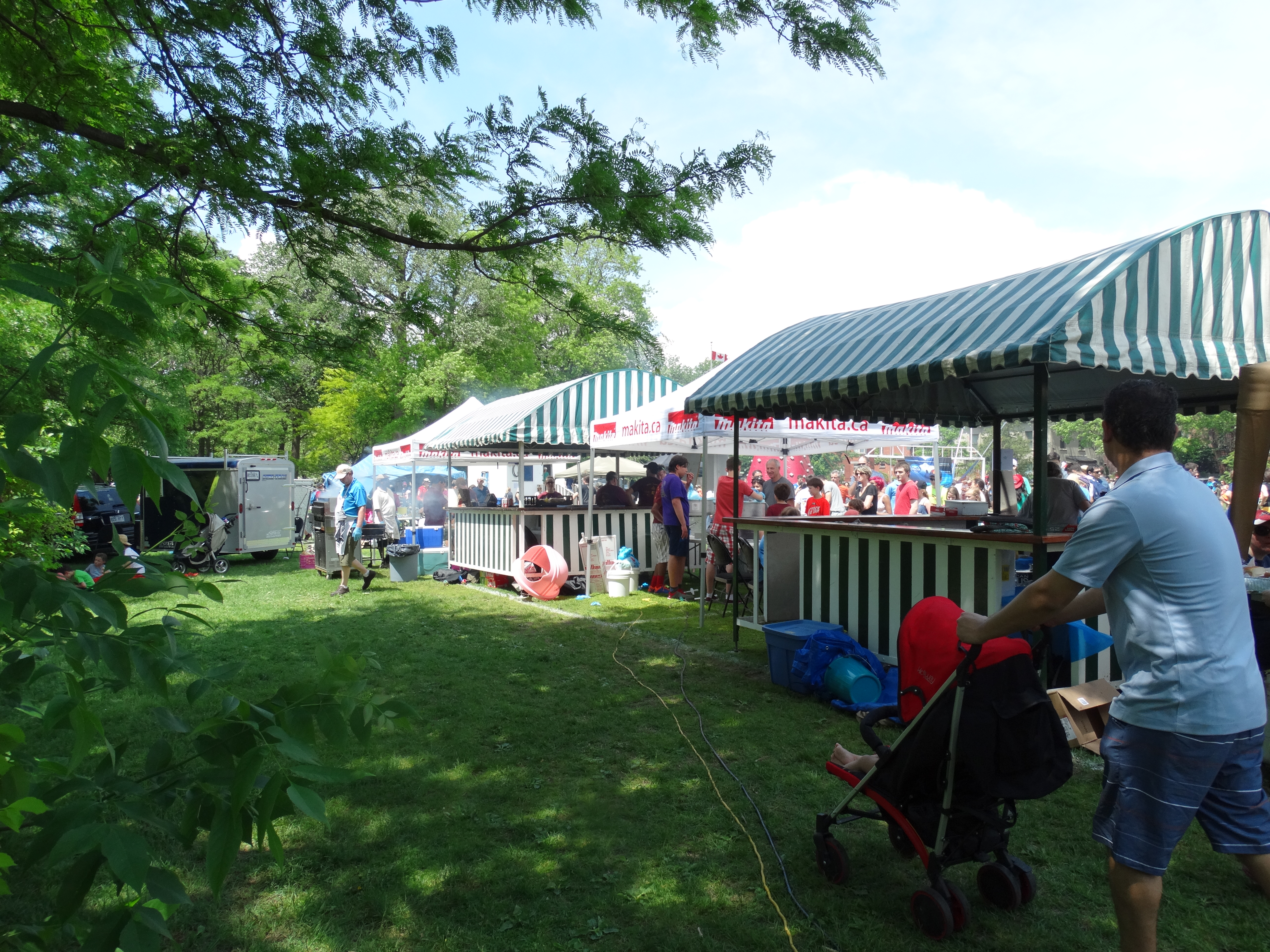
Family day, an annual Westmount tradition, on a (very) warm Saturday:
A version of this article appeared in the Westmount Independent, June 23, 2015
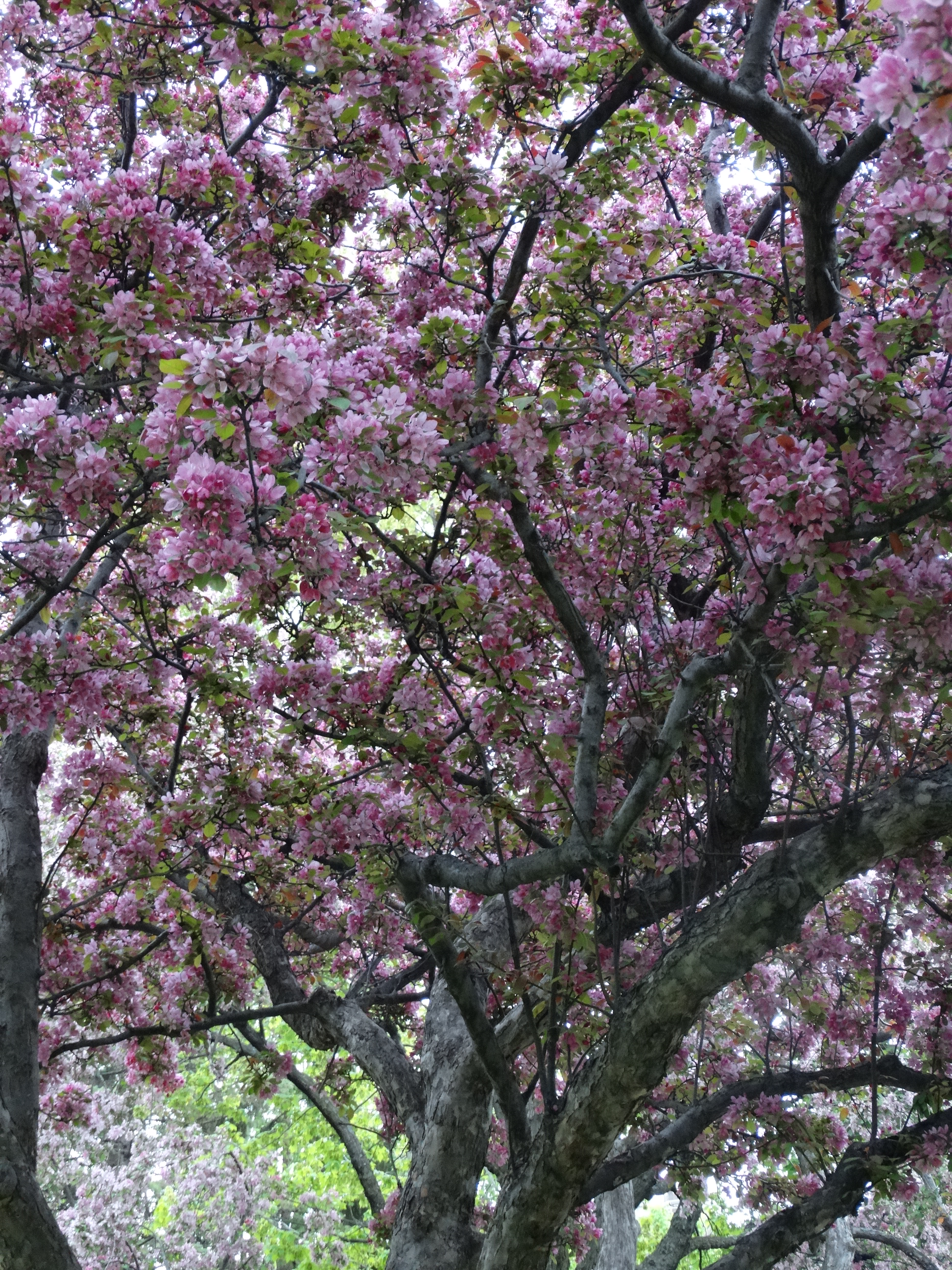
Did you enjoy Westmount Park’s unofficial “apple blossom festival”? Throughout the world, the arrival of spring is heralded by brilliant colour displays from blossoming trees.
In Japan’s Honshui Island’s Hirosaki Park, sakura (cherry blossoms) numbering in the millions bloom in early spring. In Washington warmer temperatures are marked with the blossoming of thousands of Yoshino (cherry) trees (given as a gift of friendship, in 1912, from Japan).
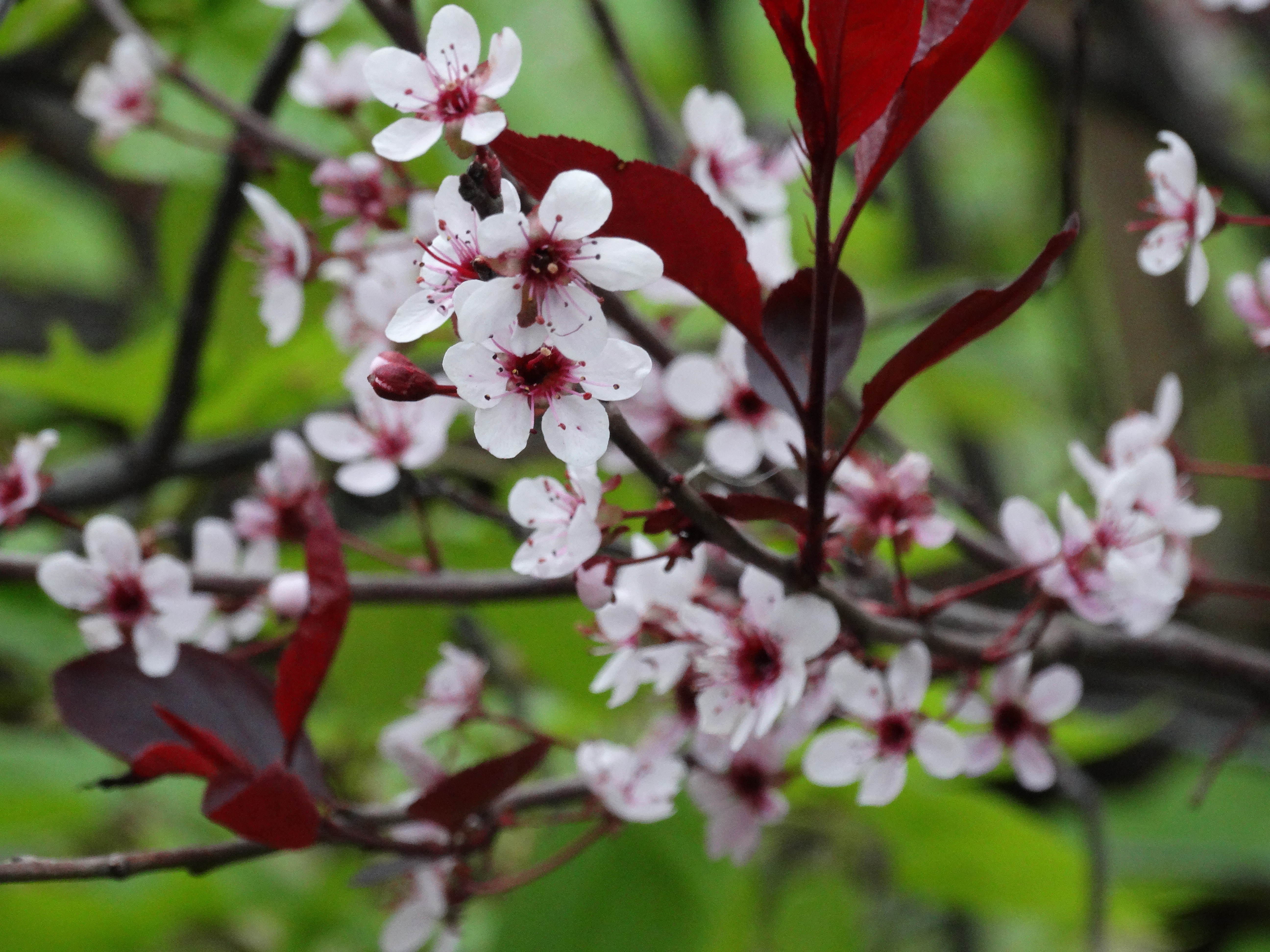
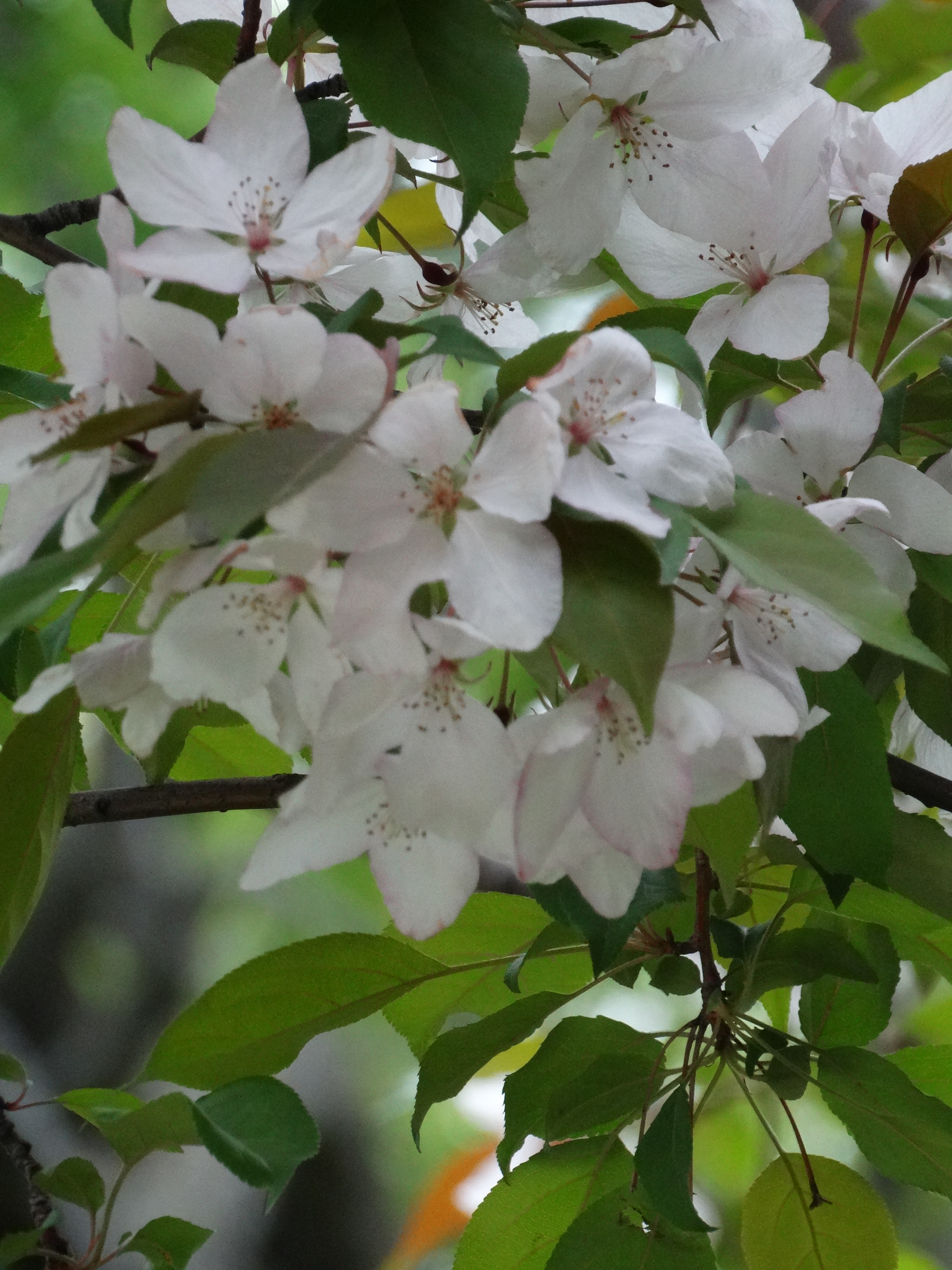
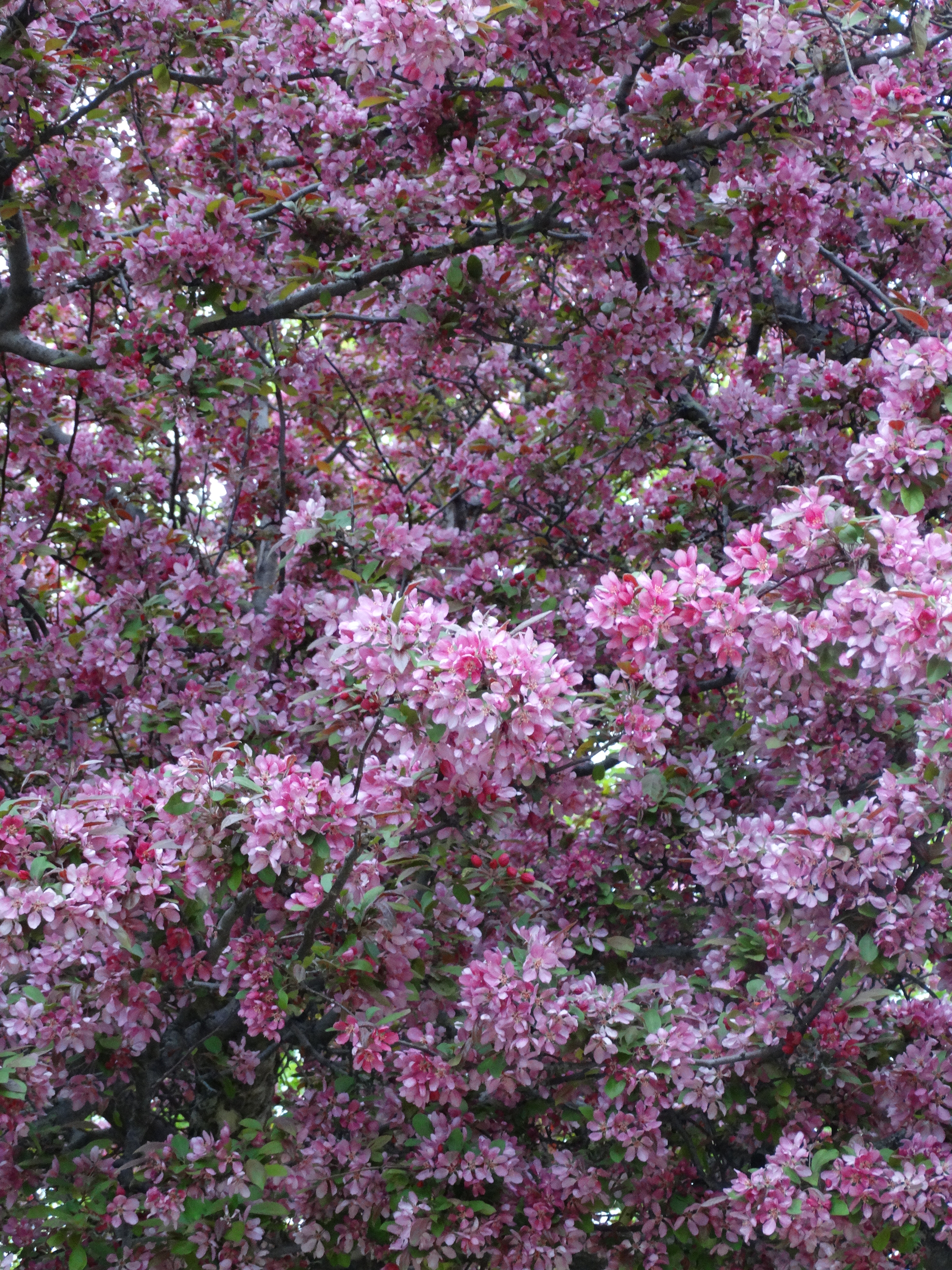
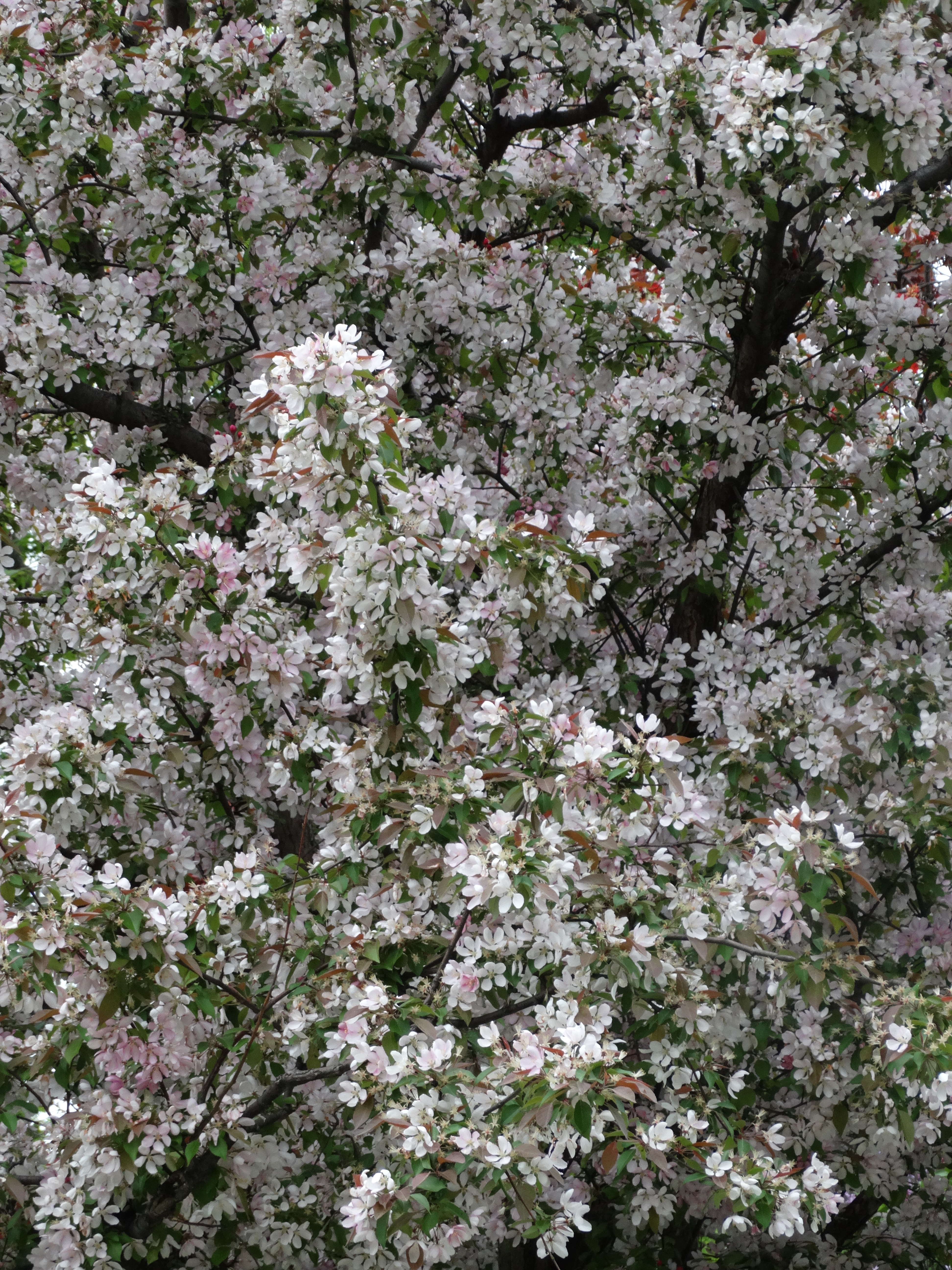
Westmount cannot compete with either location, but in our own small way, we did have a spectacular, head-turning, display of thousands of flowers, albeit for only two short weeks, from the park’s sweet crab apple (Malus coronaria) trees. During that time the park was ablaze with white and pinkish coloured blossoms that filled the air with a beautiful sweet fragrance.
Crab trees are native to Britain (originally introduced by the Romans) and are the ancestors of today’s cultivated (cultivar) apples. The tree’s name “crab” originates from the Norse word for scrubby: “skrab”.
The path from ancient crab trees to today’s domesticated apple cultivars is a fascinating story. (No it wasn’t solely “Johnny Appleseed” as we were taught in school).
The story starts with the Old Silk Roads – ancient trade routes from the Caspian Region (Black Sea) to Western China – established in the Neolithic (10,000 B.C.) period.
Trains of pack-animals would spread seeds from ingested fruit along the route causing new hybrids to develop from previously isolated species. The invention of grafting techniques (by either the Persians or Chinese) and used by the Greeks created new apple cultivars as described in the botanical works of Theophrastus (around 300 B.C.).
The Romans brought apple cultivars to Britain where they flourished and hybridized, amongst themselves, to such an extent, that by the nineteenth century every town and village in central and southern England could lay claim to a local apple.
Apples were introduced to North America by the colonists in the sixteenth century in the form of seeds (grafting was rarely practiced). In fact, entire apple orchards were started with seeds (pips) that allowed hybridization with local crab trees to produce new species of cultivars in a fashion described as a “vast experimental station”.
Next time you are walking through Westmount Park, where the paths are lined with crab apple trees – think back over seven centuries to Bartholomeus Anglicus who, in 1240, in one of the earliest botanical books describes “’Malus the Appyll tree” as containing “dyurs blossomes, and floures of swetnesse and Iykynge: with goode fruyte and noble… some beryth sourysh fruyte and harde, and some ryght soure and some ryght swete, with a good savoure and mery”.

A version of this article appeared in the Westmount Independent, June 2, 2015
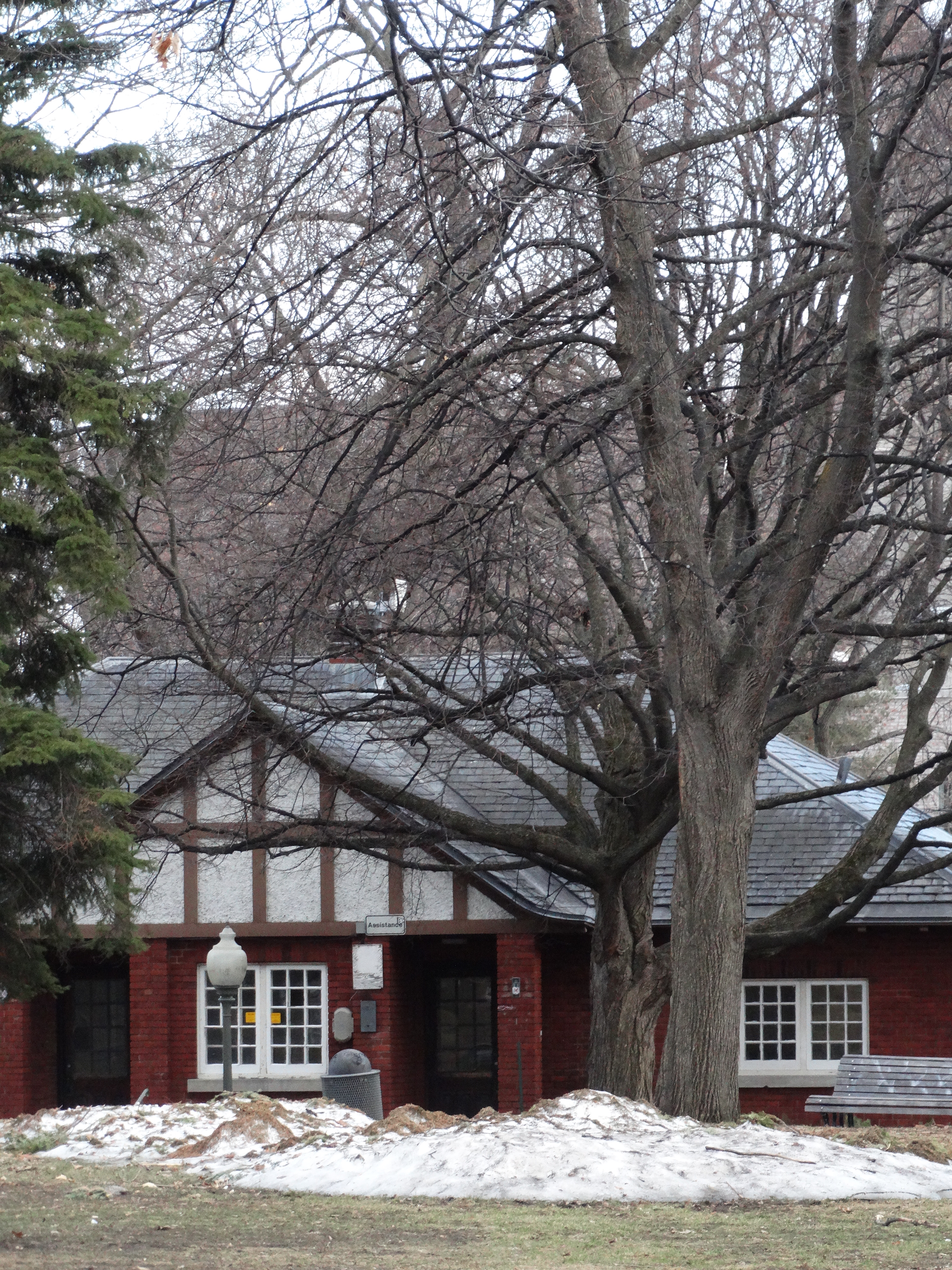
I have always been intrigued with the conifer, next to Westmount Park’s gazebo, that has four trunks. The tree’s long slender needles (attached in bundles) make it a pine. One can tell it is a Red Pine (Pinus resinosa) by its reddish-brown bark in armour-like plates, the needles being attached in bundles of two; and interestingly, their ability to break if one wraps them around a finger!
The species is commonly known as Norway Pine – although native to North America – it never grew in Norway.
The four trunks are an interesting story. This is commonly known as coppicing (from French couper). It is the ability of a tree, if damaged, to regenerate from a stump (“main stool”).
One can only speculate that either severe weather or insect damage caused the park’s Red Pine to lose its main trunk (the thick bark is resistant to surface fires of moderate intensity).
Coppicing produces a self-renewing source of wood (that can last for hundreds of years) and, in the past, was a sustainable form of lumber production. In fact, in Britain, the oldest trees are coppice stools that date well over 1,000 years.
This form of lumber production dates to the Neolithic (stone age) era evidenced by ancient wooden tracks, from coppiced trees, across the peat moors in Somerset Levels England.
Along the Anatolian coast (present-day Turkey), a honey is produced from Red Pines. One specific insect (Marcheliana hellenica) burrows under the bark, concealed in whitish secretions, and produces a sugary pinkish coloured honey-dew that is collected by bees.
Native Americans (particularly the Ojibwe people) used the trees’ needles to make dancing figures. The needles were cut to form a dress and arms, then placed on a sheet of birch bark – that when tilted – gave the appearance of the figures dancing.
Finally, the reverence Native Americans had to pine trees is reflected in the poignant Haudenosaunee (Iroquois) legend that tells of seven dancing brothers that one day rose from earth to become stars. One of the brothers looked back and saw their mother crying – in doing so, he fell back to earth. At the point where he entered the ground, a towering pine tree grew that pointed to the location of the other brothers in the sky.
The Mallard ducks are back in the park’s lagoon – this appears to be a Spring ritual!

It is quite remarkable, that in the space of two weeks, the park’s trees have transformed from having no foliage to full bloom. It is a spectacular show of colours.

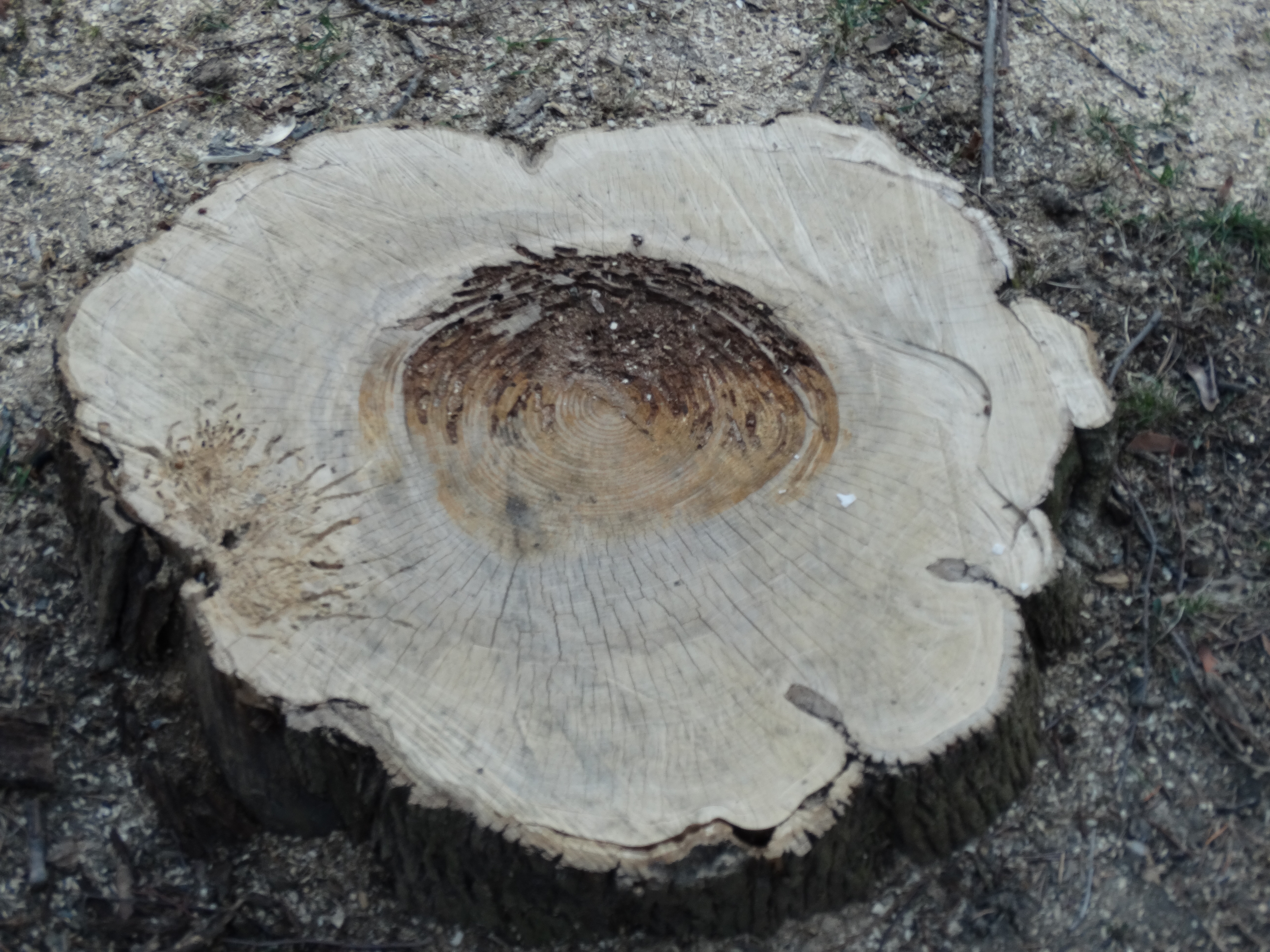
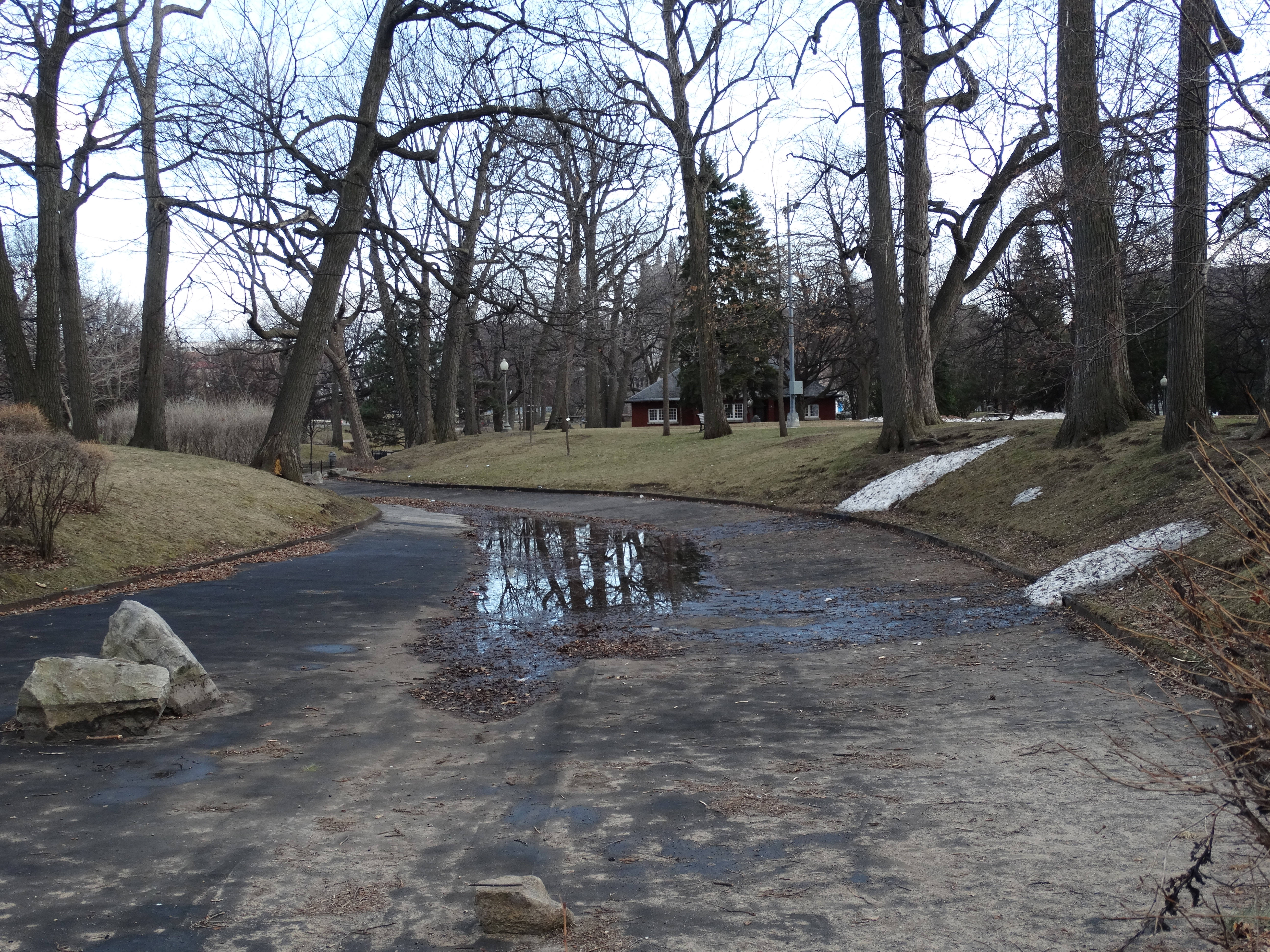
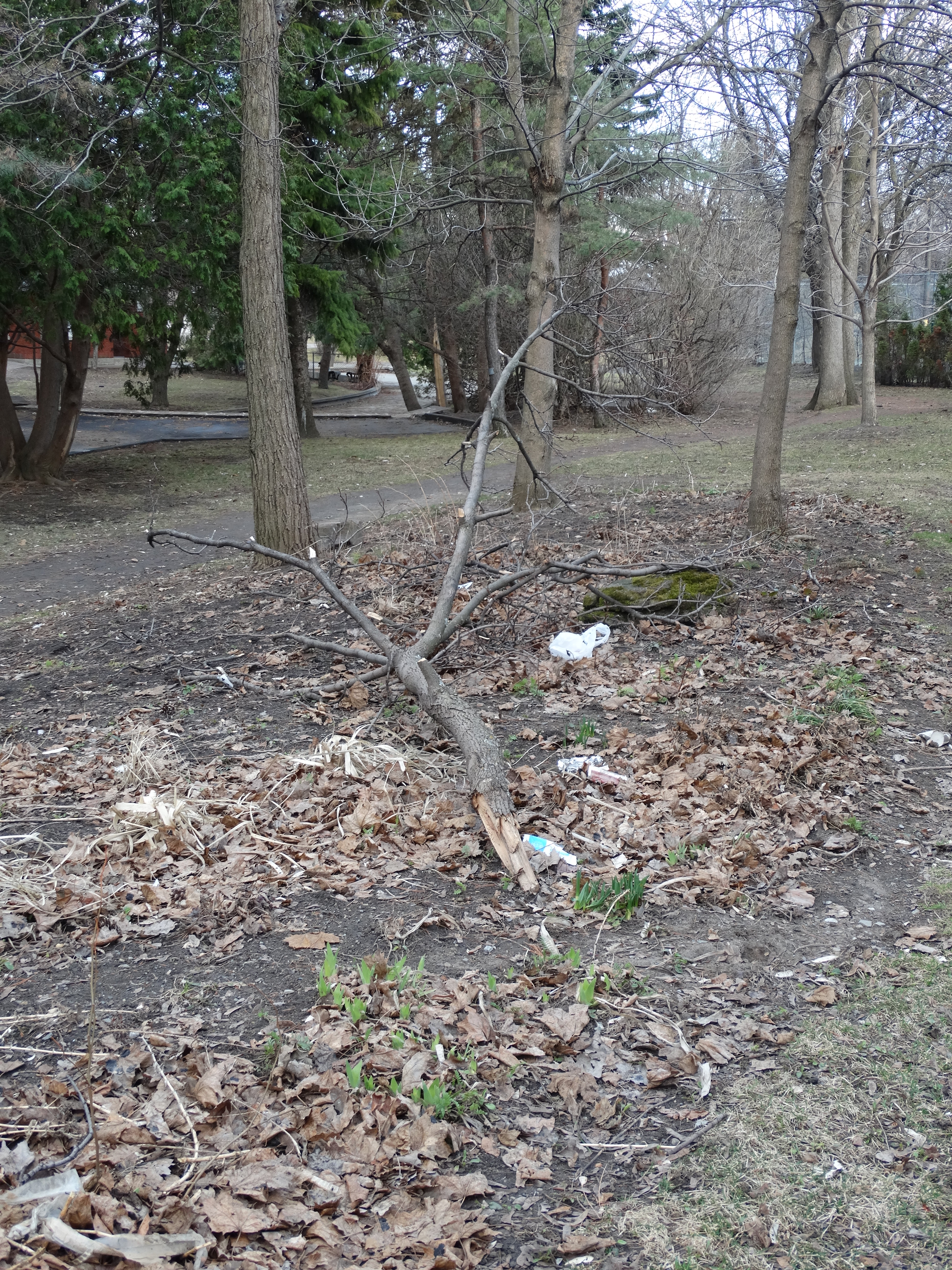
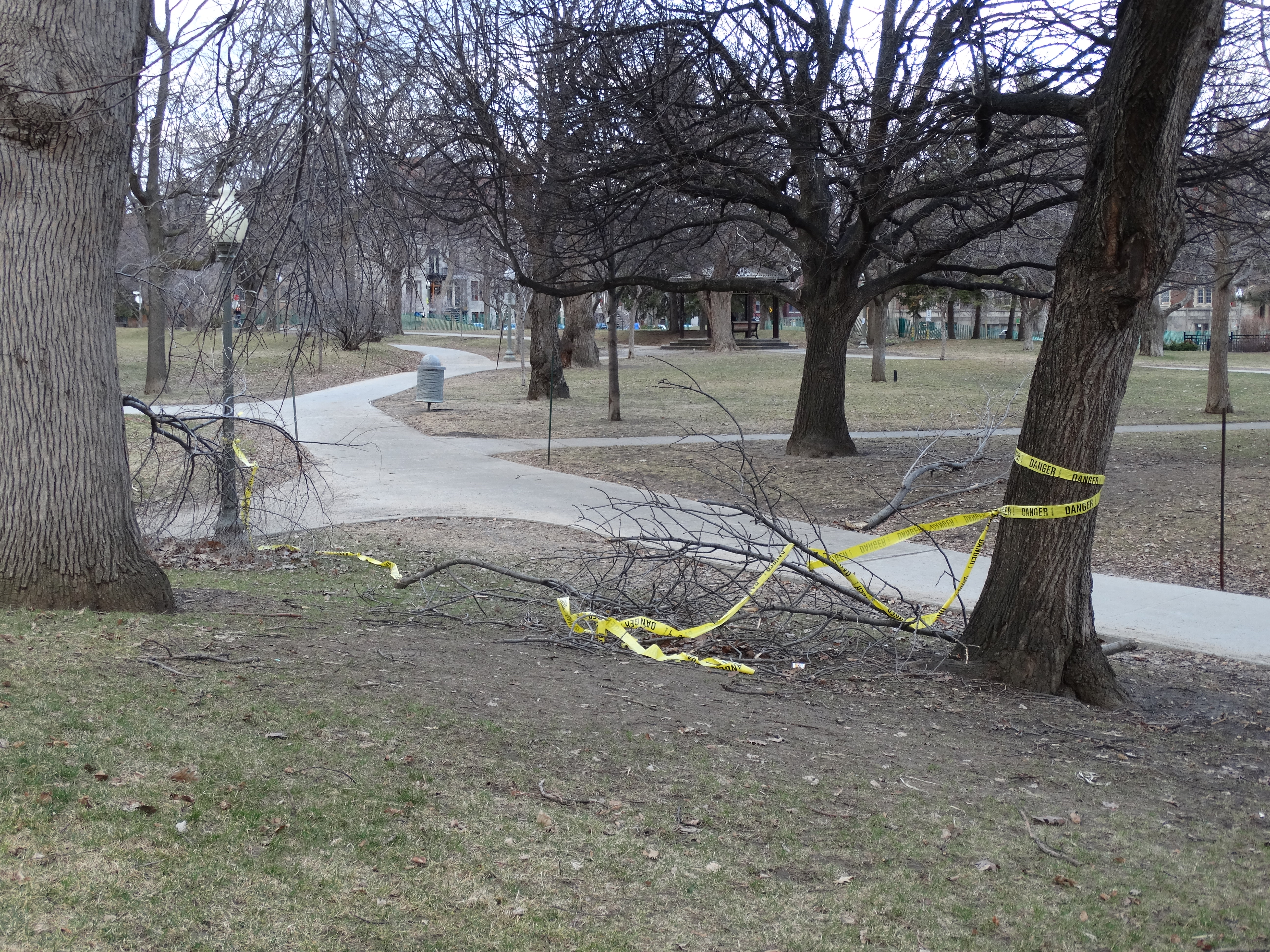
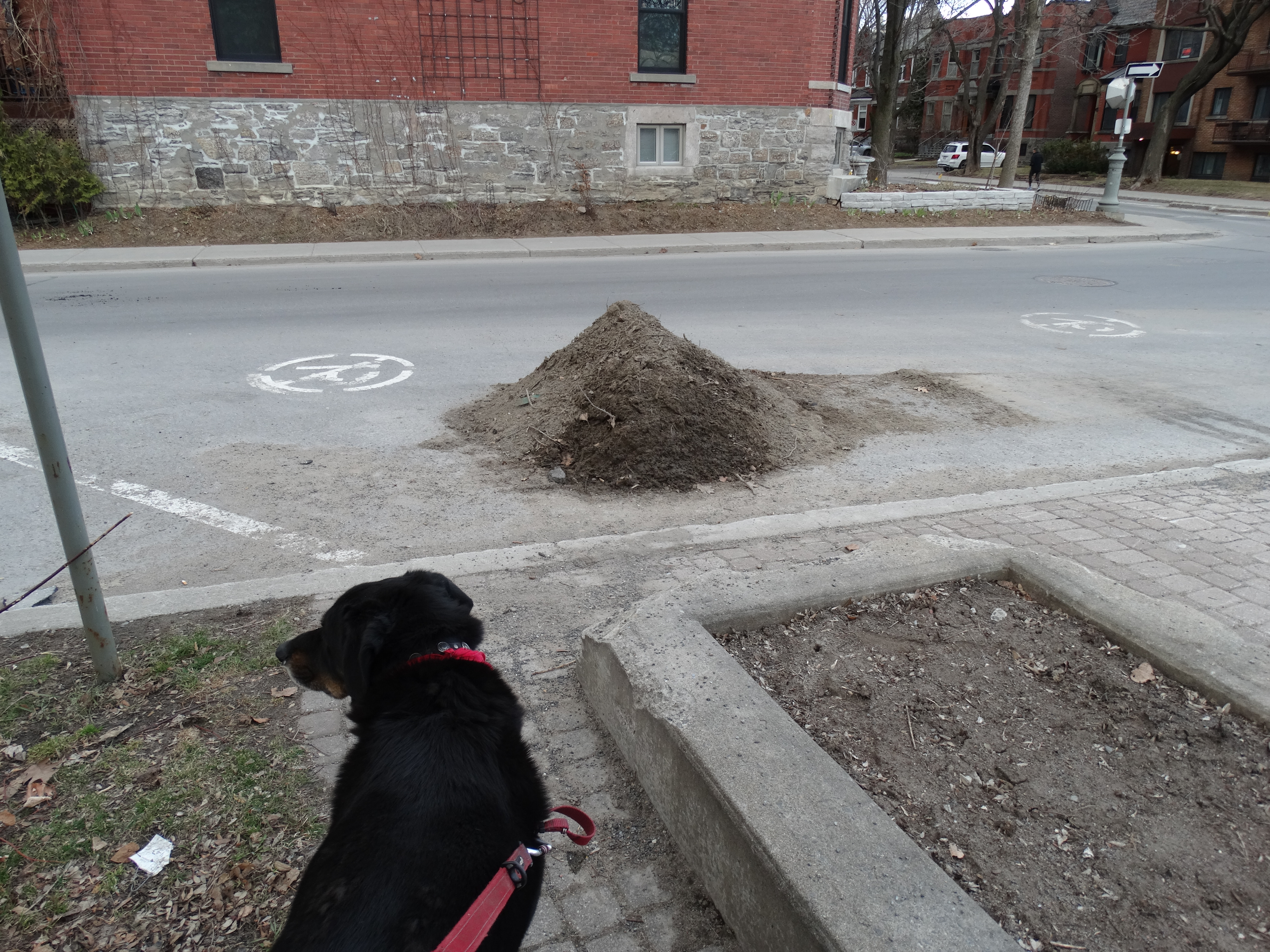
After another chilly day, walking our dog, in Westmount Park, winter’s “wrath” is evident. These trees, recently cut down, were (I think) Sugar Maples – I counted well over 100 rings in each stump.


A version of this article appeared in the Westmount Independent, April 21, 2015
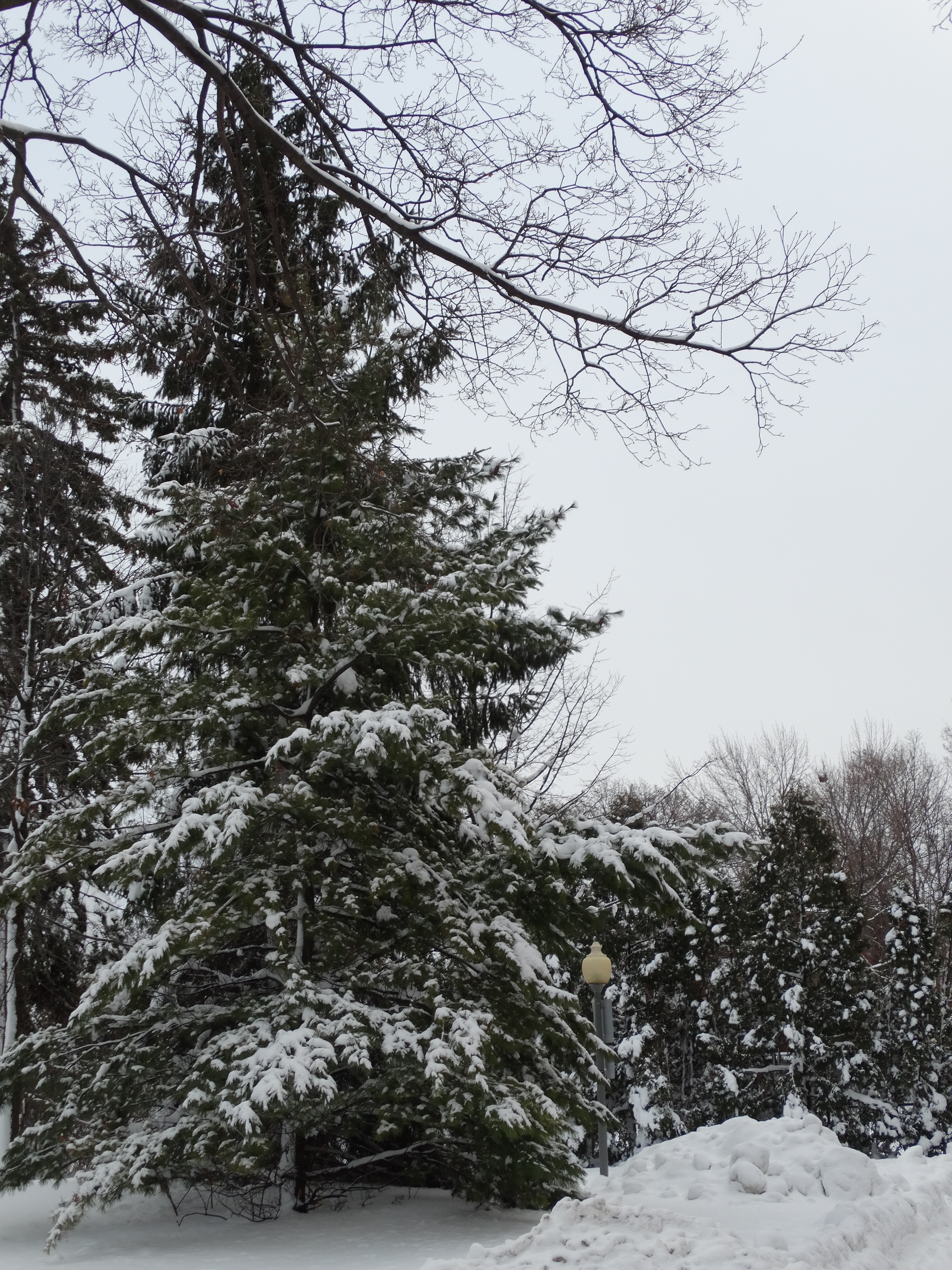
Have you noticed the “snow caves” in Westmount Park? This is our dog’s favourite area to explore during the winter season. They are located in a stand of six beautiful silver firs (Abies alba) adjacent to Westmount Park’s clay tennis courts. This time of year their boughs are downward-sloped creating a wall of snow containing snow-free areas.
Silver firs (also known as Sapin pectiné or Weißtanne) have a striking silver colour from the needle’s underside containing two parallel white lines (comprised of stomates) adjacent to their midribs. The bark is a greyish silver bearing upright barrel-shaped cones (as in all “true firs”) on the highest branches. The cone’s scales fall off at maturity leaving the empty portion attached to the tree. Their crowns are initially conical and flatten over time – often referred to as “storks’ nests”. The tree’s shape has been described as a “Chinese pagoda” with large cones that “hang like bells”.
The trees’ native habitat are the mountainous areas of central and southern Europe. Here, their snow caves offer snowshoe hares protection during the winter season. Large groves of silver firs still exist in the Vosges Mountains in France’s Alsatian territory – protected within the Parc naturel régional des Ballons des Vosges.
In Northern Europe, the silver fir is regarded as a birth-tree. In Old Irish, the tree is named “ailm” – relating to the word “palm”, the birth-tree of the Middle East, from which the Phoenix (a bird that undergoes a fiery death and then rises again from the ashes) is born. In Greek, the tree is named “elate” from Eileithyia (Elate-Thuia) the goddess of childbirth that symbolically wields a burning pine-torch.
Greek mythology tells the story of Pan (god of the woods and pastures) pursuing the nymph Pitys who avoids capture by turning into a fir tree. Unable to catch his quarry, Pan removes a bough from the tree and, from that day on, always wore it as a crown. Pitys’ mournful songs; however, are still heard when the wind blows through the tree’s branches.
In the past people believed that these trees could impart healing powers. For example, in Sonnenberg Germany gout sufferers would tie a knot on a bough and say “god guard thee noble fir, I bring thee my gout.” In Bohemia, poachers had a more insidious use: rendering themselves invisible by ingesting the cone’s seeds before dawn on St. John’s Day.
The species has a myriad of uses: Its family name “Pinaceae” (a tree family dating to the Triassic period – 200-250 million years ago) is derived from the Burgundy pitch (from boiling tar) it produces. The Egyptians used pitch in their embalming and mummification processes as early as 2200 BCE.
In medieval times Strasbourg turpentine also known as “Tuscan olio di abezzo” (named after a forest of silver firs in the Hockwald) was manufactured from this species. It was used as a varnish on oil and tempura paintings – many artists utilized the less expensive Venice turpentine (from the larch). Strasbourg turpentine was also applied as a protective varnish, on sculptures, against verdigris (green pigments) that occur when certain metals oxidize.
In the 18th century, pitch was used for caulking and as a protective agent on rigging, in ocean vessels, against the detrimental effects of salt spray. A 1700s book describes the value of pitch as (it) “…will not only preserve the Health of her Men, by Lodging them warm and in good Order, but it will also add to the Motion of the Machine, and make her to Sail much swifter”.
By the 1800s, the Prussian and Austrian governments, encouraged the use of a skin plaster made from Burgundy pitch as a prevention from epidemic cholera.
The tree’s cones are used in the production of Templin oil, a pine, balsamic and sweet orange fragrance, also used as an additive found in cold and arthritis remedies. The wood is also used in the manufacturing of violins – it produces excellent resonance. (The Norway spruce is more commonly used).
Finally, while standing amongst these trees in Westmount Park – watching our dog explore these snow caves – I am reminded of a quote from the German philosopher Friedrich Nietzsche:
“The pine-tree seems to listen, the fir-tree to wait: and both without impatience:
they give no thought to the little people beneath them devoured by their impatience and their curiosity.” Der Wanderer und sein Schatten (The Wanderer and His Shadow)
A version of this article appeared in the Westmount Independent, March 10, 2015
While taking pictures in Westmount Park, I have been asked on several occasions if I am the person that “writes about trees” and how this interest developed.
This started as a young Biology student working as part of a research project, sponsored by the Canadian Forest Service, investigating the devastating effect the white pine weevil had on this species. Weevil damage was causing the abandonment of pine reforestation efforts and had a huge economic impact on lumber production.
It wasn’t until many years later, that I became the aware of the historical and spiritual significance of these trees. Did you know that the white pine was the catalyst for the American Revolution as well as the basis of Constitution of the United States of America? (Space constraints prevents a discussion of the latter).
To begin, the white pine (Pinus strobus) is easy to recognize: it is the only conifer with needles in bundles of five and possess remarkable crowns that reach well past any surrounding trees.
In Westmount Park, there is a beautiful white pine east of the clay tennis courts, with a girth of only sixty-eight centimeters, it towers, like a ship’s mast, over the children’s library.
In fact, that is exactly what the English explorer George Weymouth envisaged, in the 1600s, when he saw large forests of white pines along the coast line of New England. (In England they are still known as Weymouth pines). The trees were over sixty meters in height, their trunks contained no knots and they would bend, rather than splinter, in high winds. To that end, they would make ideal masts for the Royal Navy. Upon this discovery, the British Crown laid claim to all white pines wider than sixty centimeters and within sixteen kilometers of a navigable waterway. These were marked, on their trunk, by the “King’s Broad Arrow”: three hatchet marks – a vertical line with an inverted “V”. (This is the origin of today’s roads named King’s Wood and King’s Pines). These trees provided the Royal Navy with masts for the next 125 years.
Needless to say, the colonists were outraged by the British Broad Arrow Policy denying them the use of these trees. The policy was largely ignored by the colonists and not fully enforced by the governors of New England. This initial challenge to royal authority, known as the “Pine Tree Riot”, in the 1700s, laid the framework for the “Boston Tea Party” and eventually the American Revolution. The white pine’s importance in the American revolutionary cause was symbolized in its inclusion on a number of flags (named Pine Tree Flags) used in New England in the 17th and 18th centuries.
Next time you are near the children’s library, take a moment to appreciate how this tree, with a small girth, can support such a great height. In fact, the species has been described as “inhabiting two worlds” – “earthly life and the realm of the divine”.
Finally, with Quebec and Maine sharing a common border, one can only speculate, that the park’s tree might be a distant descendant of an extant ancient white pine, located deep in the New England woods, that still bears the King’s Broad Arrow markings.
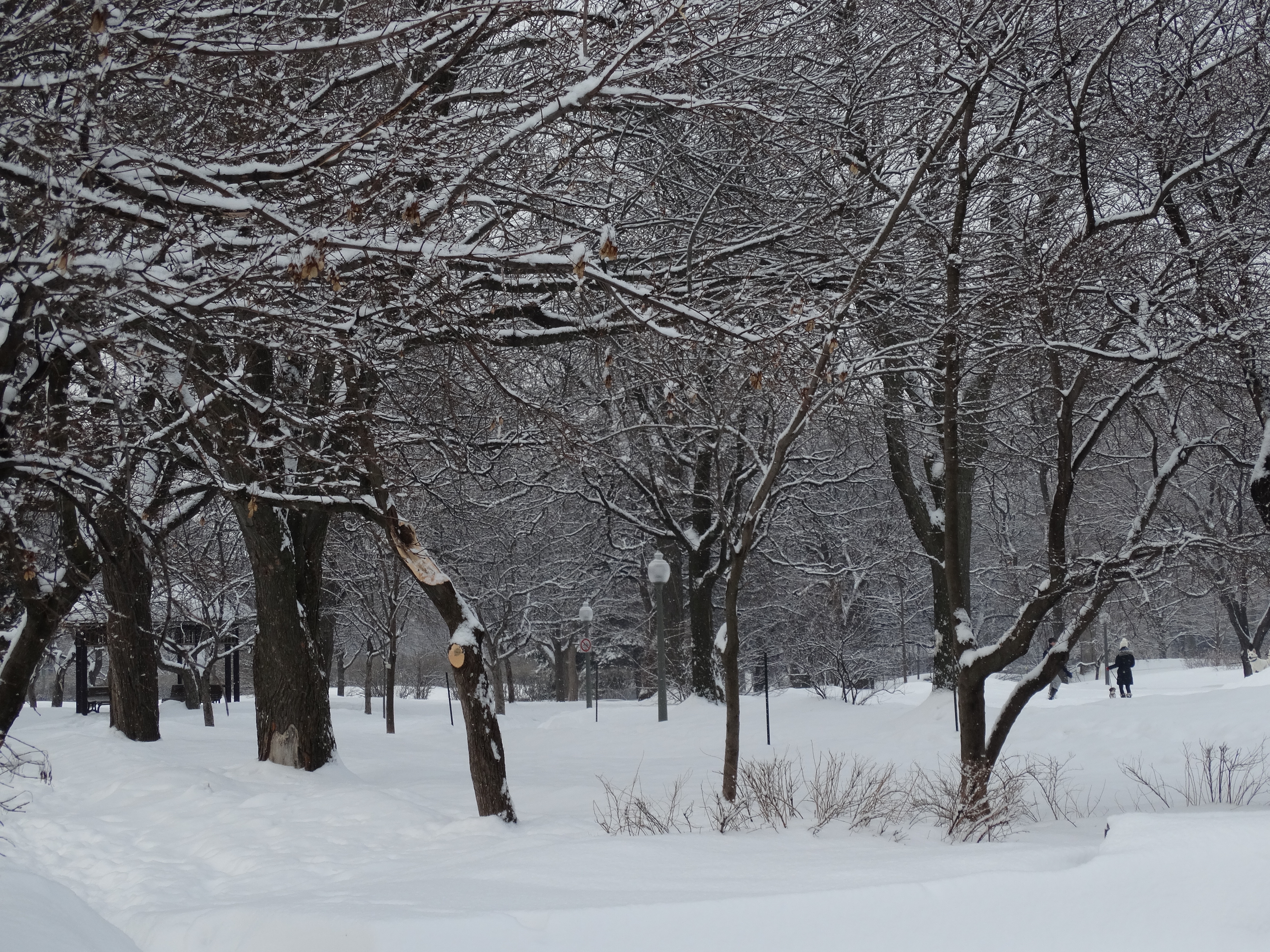
Another fresh blanket of snow, covering the park, on an early Sunday morning.
 Westmount Overlooked