
Another update on the Mallard ducklings – the female was not too far away.
Another update on the Mallard ducklings – the female was not too far away.

A Highland Dancing practise, on the former asphalt tennis courts, in Westmount Park.
From http://www.electricscotland.com/dance/intro.htm
“In previous centuries, Scottish regiments used Highland Dancing as exercise to keep the troops in shape, and ready for battle. The dances are indeed excellent exercise; for example, in a typical six-step Highland Fling, a dancer will jump vertically 192 times, while performing complicated and intricate footwork, and using the muscles from head to toe. Highland dancing is therefore akin to sprinting, with dancers using fast-twitch muscle, which is also required by soldiers.
Today, Highland Dancing is one of the premiere events at Highland Games throughout the world; for example, in Canada, Japan, Scotland, South Africa, and the United States of America. Until the early 1900’s, only men entered Highland Dancing competitions. However, the tradition changed during the World Wars, as women wanted to preserve their rich culture and history, while the men were defending their homeland.”

Another update on the ducklings in the lagoon. Sunday morning, and “all is well”.
The female seems to be a “single mom” – one wonders about the whereabouts of the male Mallard.
There are some of us that wonder about “such things”!
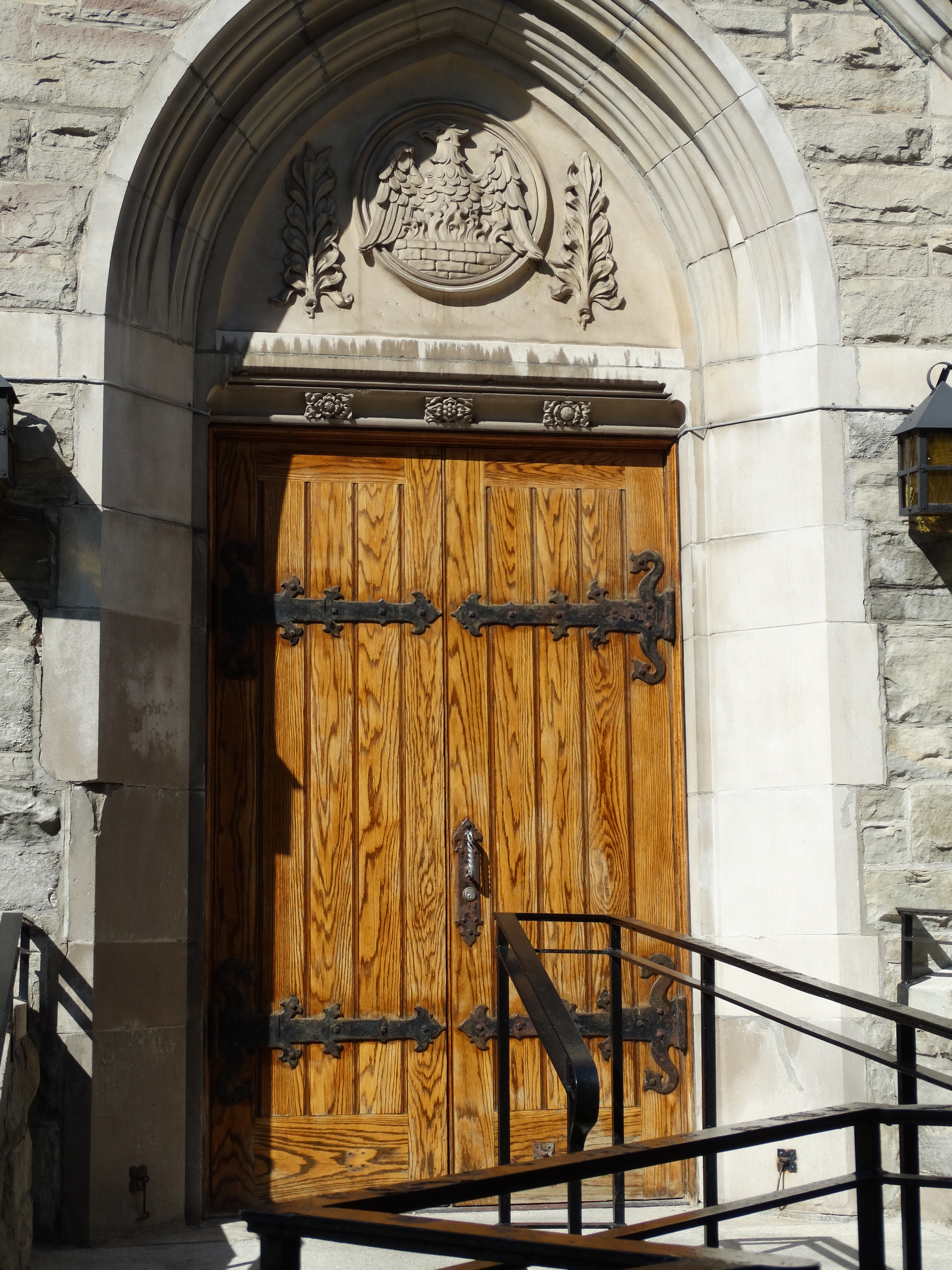
Ascension of Our Lord Parish – side door.
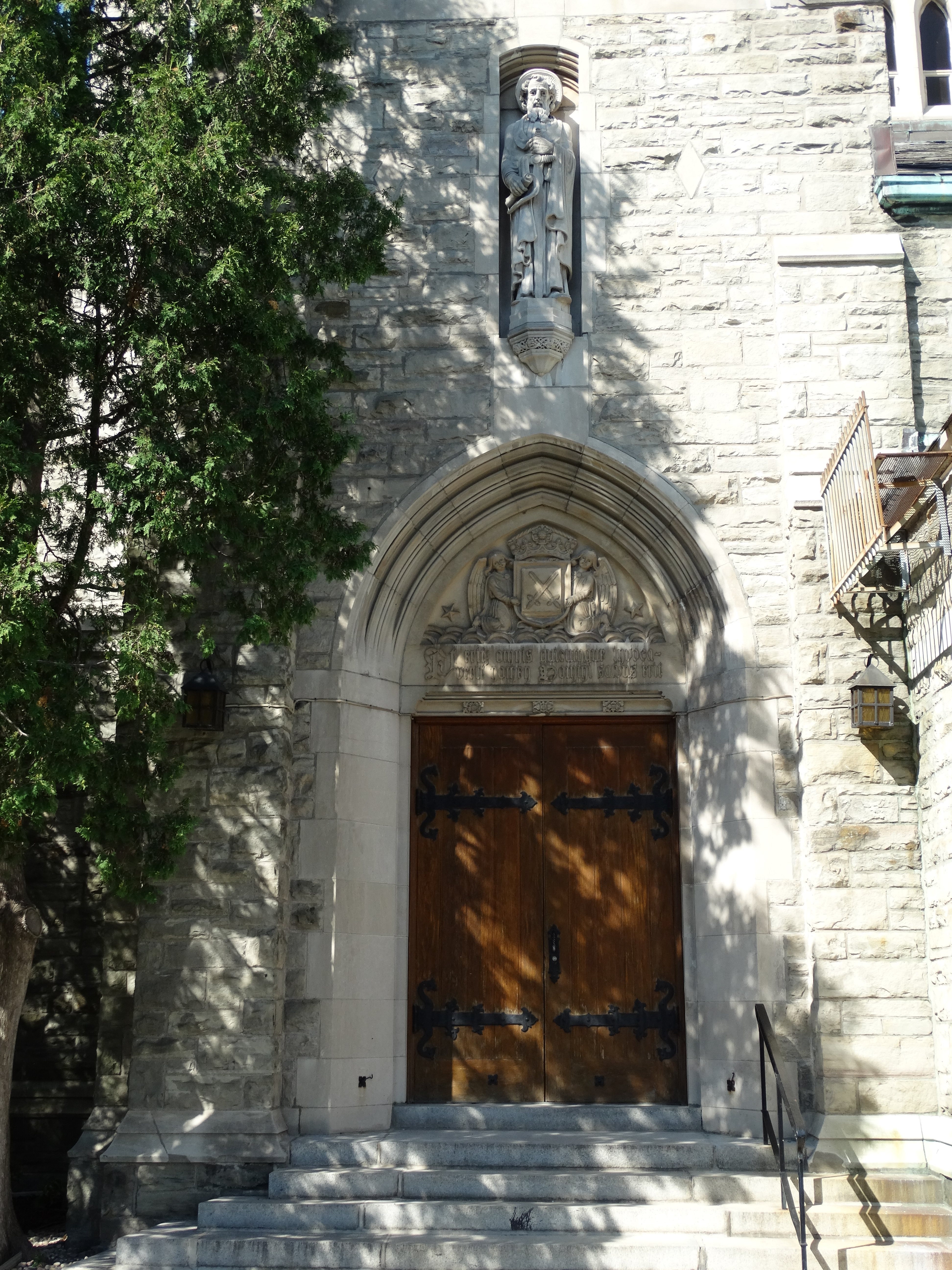
Ascension of Our Lord Parish – side door.
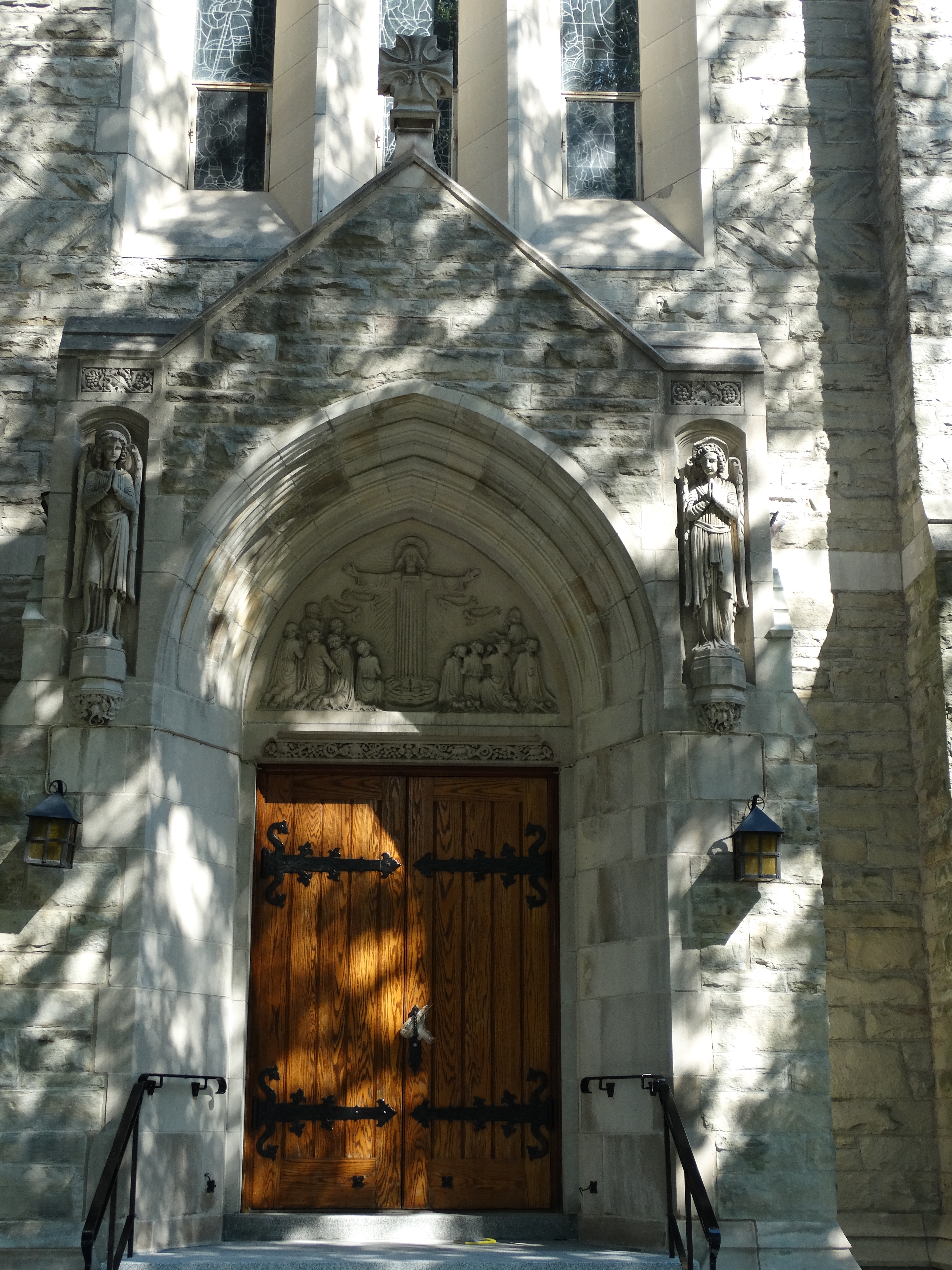
Ascension of Our Lord Parish – main entrance.
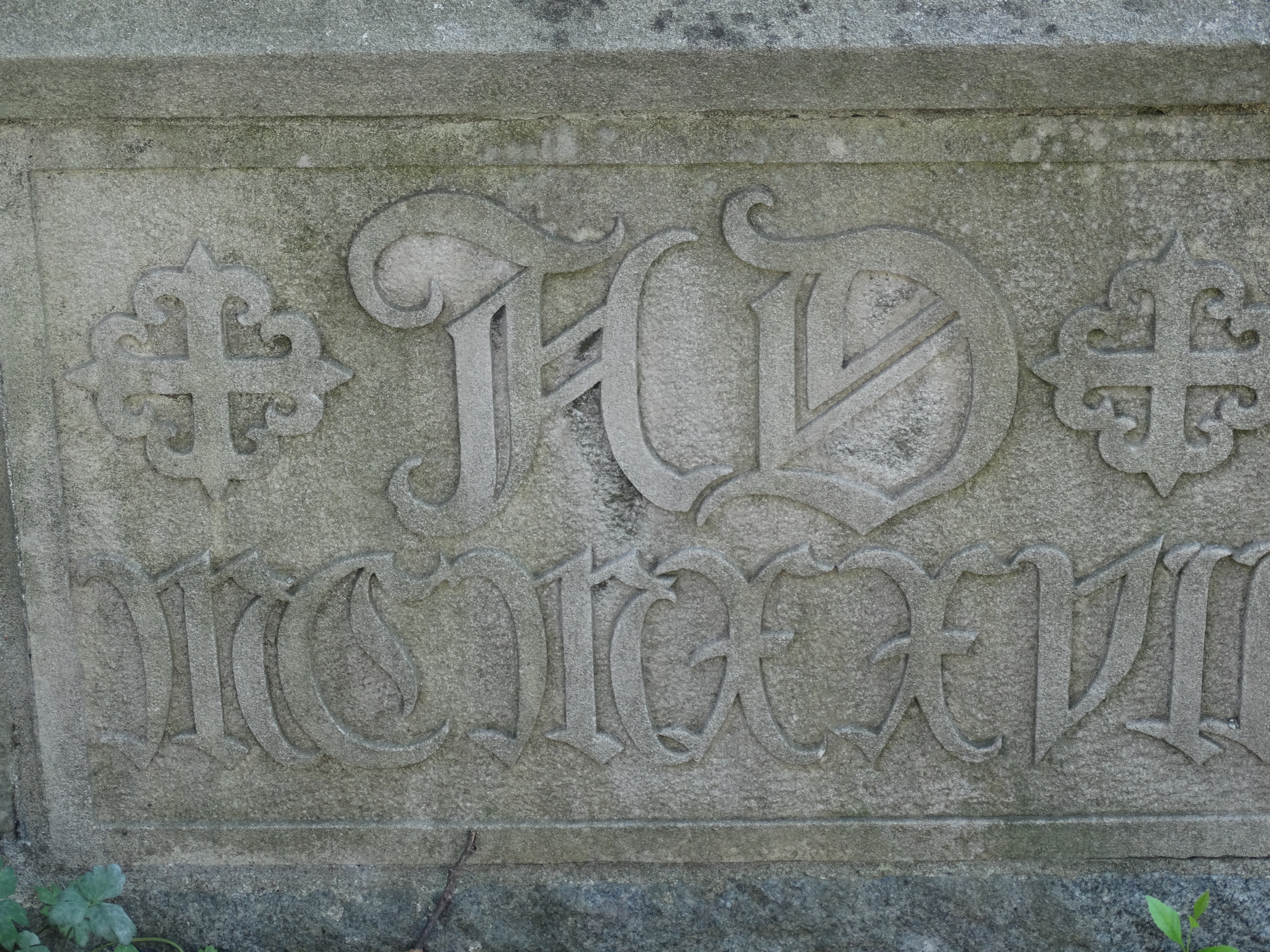
If one has ever wondered why there are two churches, on the same street, this is the story:
From: http://www.ascensionofourlord.ca/Our-history.htm
“Thanks to its well-deserved reputation for stability and peace, it might come as a surprise that the Church of Ascension of Our Lord was launched in controversy and got underway with a whiff of acrimony still in the air.
In 1926, when a group of resolute Irish Catholic Westmount parishioners applied to the Archbishop of Montreal for permission to build their own church – because until then they had been going to church services at the St-Leon de Westmount French parish – They were turned down.
Undeterred, they set sail for the Vatican and many weeks later returned home triumphantly with a Papal Deed of Erection.
Trumped by the Holy See, the Diocese of Montreal exercised its right to name the new parish’s first pastor.
Its selection was Monsignor Wilfrid Emmett McDonagh, age 42, a man of uncertain mettle who was in disfavour with the hierarchy at the time. (He was; however, one of the leading figures in the founding of St. Mary’s Hospital).
Predictably, there were Anglos against this project (“We don’t need another church,”) but work on it went full-steam ahead anyway.
Financed by a bank loan and pledges, the trustees searched for an appropriate piece of land in Westmount area, eventually they bought a large tract of land from the Grey Nuns, bordered by Sherbrooke Street and Clarke and Kitchener Avenue.
Then they awarded a princely $326,000 contract to John Quinlan & Co. to build a church which was designed by the Boston architectural firm of Maginnis and Walsh, Edward Turcotte of Montreal was associate architect.
The neo-gothic design of the church was quite different from what was usually seen in Catholic churches in Quebec.
Another unusual feature of the 13,483 square foot church was the location of the square bell tower built over the transept crossing with belfry and pinnacles, and not over the entrance of the church as is usually the case in Catholic churches.
This type of construction was more commonly seen in Protestant churches.
Furthermore, there are no bells in the tower.”
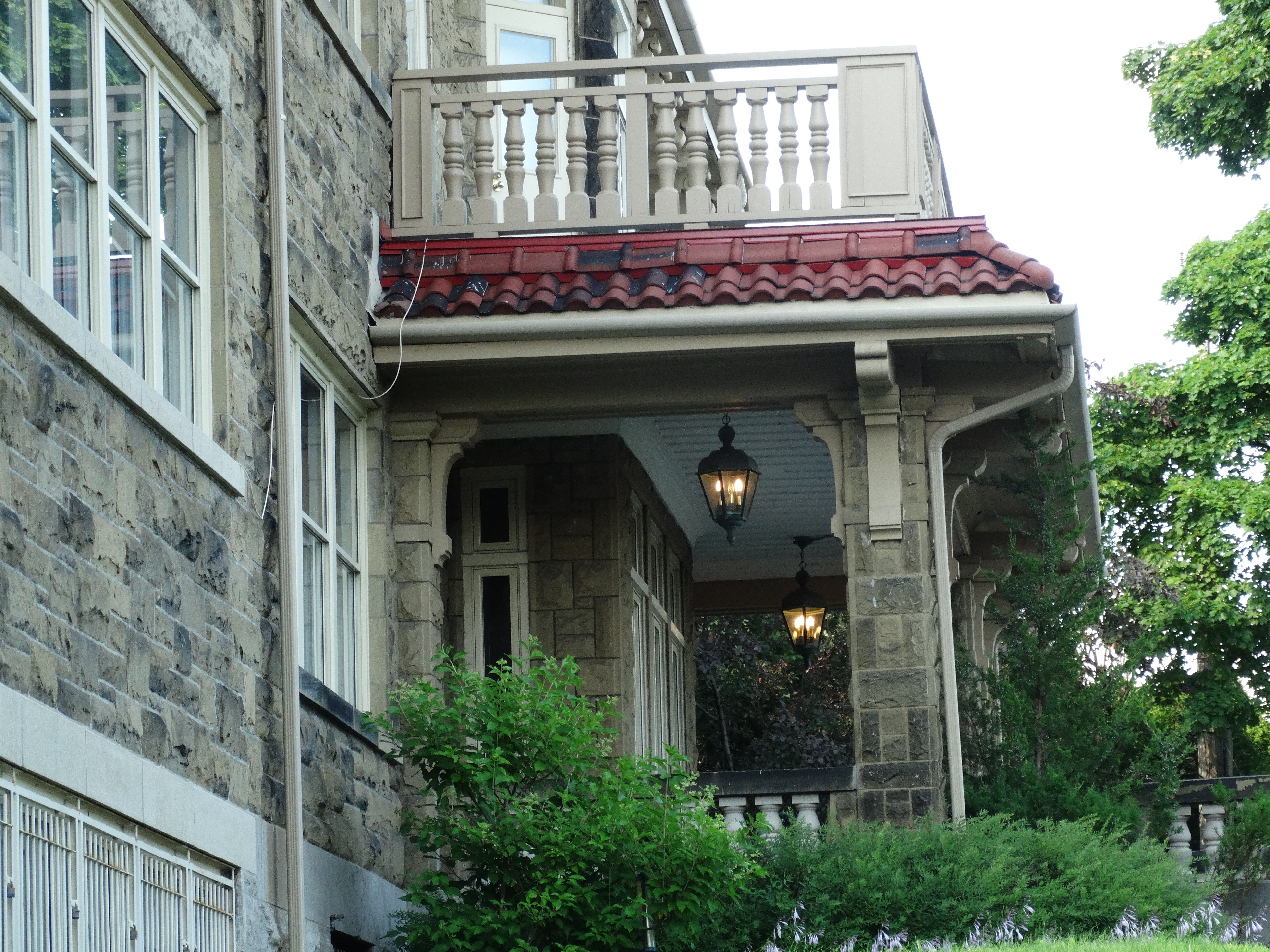
From Wikipedia:
“The Study is a leading Canadian private education all-girls school in Westmount, Quebec. Girls can attend from Kindergarten through to grade 11. The school was founded in 1915, by a young Englishwoman named Margaret Gascoigne.”
Tuition fees, for 2014-2015 run between $16,618 – $17,613, per academic year plus “sundries”.
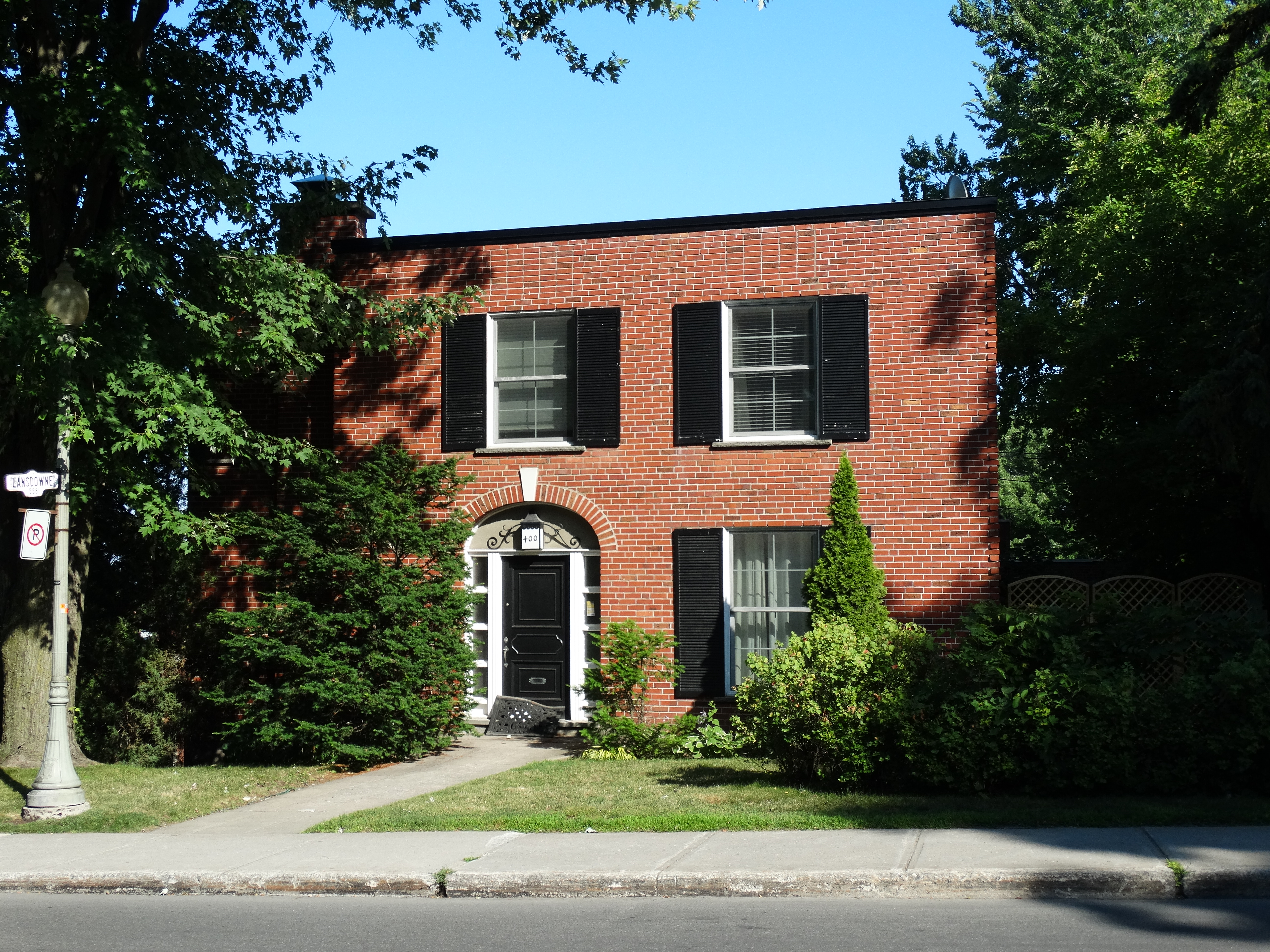
William Greig, manager Warden King & Son (1897). The original residence has been demolished and rebuilt; however, the history of the original building owner’s professional relationship is very interesting.
From: http://www.lib.uwo.ca/programs/companyinformationcanada/ccc-wardenking.html
“Warden King was 29 years old when, in 1852, he read in the Montreal Transcript and Commercial Advertiser an ad that said, “By auction ‘he whole of the St. Mary Foundry tools and stock will be sold on the 30th June . . . the whole of the stock-in-trade of the above establishment . . . And, immediately after the above Sale, will be Sold a lease of the foundry and shops, for the Term of Three or Five years.”
St. Mary’s foundry in old Montreal Warden King and his friend George Rogers, a foreman at the St. Mary Foundry, decided to seize the opportunity. Six weeks later the firm of Rogers and King was born.
In 1855, as the lease to the foundry was running out, Warden King purchased building lots for 100 pounds in the “St. Lawrence suburb”.
This modest advertisement appeared in the Montreal Directory of 1856-57: “Rogers & King have Removed Their Foundry to No. 85 Craig Street Where All Kinds of Castings are done At Reasonable Prices.”
The young company specialized in the potash trade, turning out heavy, cast-iron potash kettles, 45-gallon sugar coolers for farmers making maple syrup, cast-iron railings for cemeteries and private estates, and circular iron stairs. Since the potash trade was conducted almost exclusively by Rogers & King, their name became widely known.
Rogers & King began experimenting in boilers. By 1866, with the help of one of their employees, Archibald Spence, they were ready to market their first hot water heater, the Beehive. This was followed by the Gem and, in 1874, Spence’s Hot Water Boiler. The Warden King slogan, “The Grand Old Name In Heating”, was inspired by these years of pioneering.
In 1870 George Rogers retired and sold out his Interest in the business. The name Rogers & King survived until 1887 when it was changed to Warden King. At about that time Mr. King’s young son, James Cochrane King, went into the foundry to learn the moulder’s craft, as his father had done before him.
Warden King successfully weathered the economic storms of the time, and 1886 marks a memorable date in their story: a new domestic boiler was patented, the “Daisy”.
Thousands were thus introduced to the comforts of central heating. The advertising was calculated to allay the fears of those to whom the word boiler meant a threat. “Hot water is the only absolutely safe system,” they announced, “it is as harmless as the tea kettle on the kitchen stove.”
By 1904, thousands of “Daisies” were in use in Canada, the United States, Great Britain, Germany, France, Australia, and South Africa.
More than 45,000 of these boilers, some converted to oil, still give dependable service today.
In 1888 the name of the firm became Warden King & Son. It was turning out boilers, soil pipe and fittings, feed boxes for horses, wrought iron stall guards, whip racks, hitching posts, dumb waiters, and coil screens for radiators.”

As the weeks go by, the ducklings are getting more “adventuresome”.
 Westmount Overlooked