
The church’s door, facing the Boulevard.
The church’s door, facing the Boulevard.
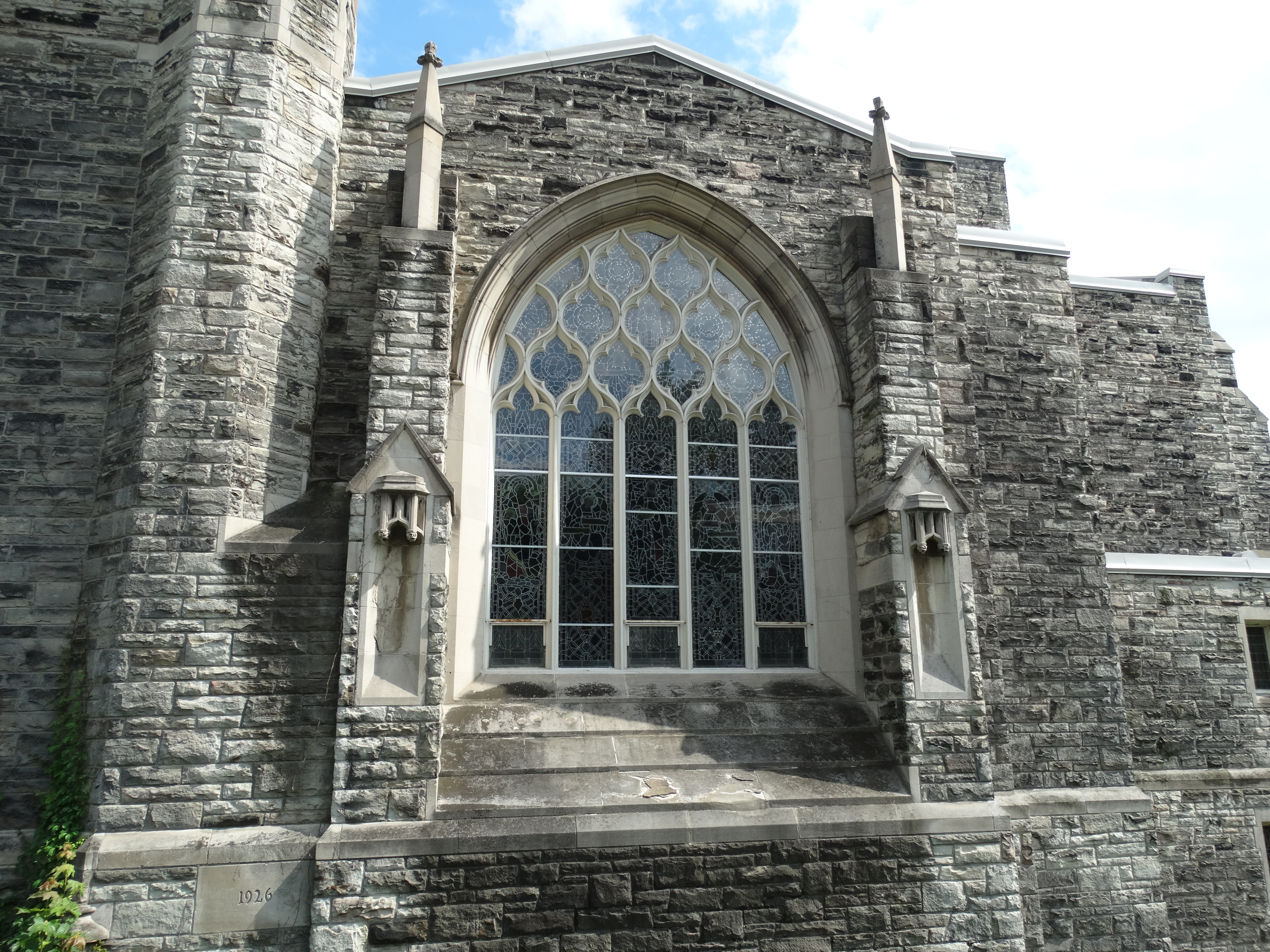
From: http://www.mountainsideunited.ca/history.php
“Our church, Mountainside United, is a union of four congregations whose roots reach back to a growing, nineteenth century Montreal.
The original site of Dominion-Square Methodist Church, dedicated in October 1865, was the southwest corner of Dorchester and Windsor Streets. This property was sold in 1912 to establish a church in the residential area of Westmount on the Boulevard between Lansdowne and Roslyn Avenues. The new church, called Dominion Methodist, opened for services in September 1914.
In 1925, Dominion Methodist joined with Douglas Methodist, a church in a business district at St. Catherine and Chomedy Streets. The two congregations, called Dominion-Douglas, became part of the United Church of Canada, which came into being on June 10, 1925.
The congregation of St. Andrew’s (Westmount), our third church, traces its roots to November 1885 when it was organized as Melville Presbyterian Church on Cote St. Antoine Road at Stanton Street. With the formation of the United Church in 1925, the name was changed to St. Andrew’s United Church. Unfortunately a large part of the church was destroyed by fire in August 1965. A new, more modern building was erected on the same site and dedicated in October 1967. This building was sold in 1985 when St. Andrew’s and Dominion-Douglas Church amalgamated.
On January 6, 1985, the newly united congregation of St. Andrew’s – Dominion-Douglas gathered to worship as one in Christ in the refurbished sanctuary on the Boulevard.
The amalgamation of Erskine and American with St. Andrew’s – Dominion-Douglas on July 1, 2004 created an even longer name! The congregation was invited to submit suggestions for a new name.
Through a series of ballots we arrived at Mountainside United, which is very fitting considering our building is perched on the side of a mountain in Westmount, Quebec. We celebrated both the adoption of Mountainside United as our official name and the 80th anniversary of the United Church of Canada at our Sunday service on October 16, 2005.”

The flower garden in front of the church.

The church’s front entrance.

From: http://www.bethelgospelchapel.net/
“Bethel Gospel Chapel is an assembly of Christians knows as Brethren and is affiliated with the Christian Brethren Churches in the province of Quebec.
The Brethren meet in simple fashion without ritual, robes or procession to celebrate the Lord’s Supper every Lord’s Day (Sunday) in remembrance of the Lord Jesus Christ, to preach the gospel, to teach and study the holy scriptures.”

A Catalpa with its green seed pods emerging. They turn a brown colour, when ripe, and stay on the tree for a year.
A version of this article appeared in the Westmount Independent, August 26th. 2014
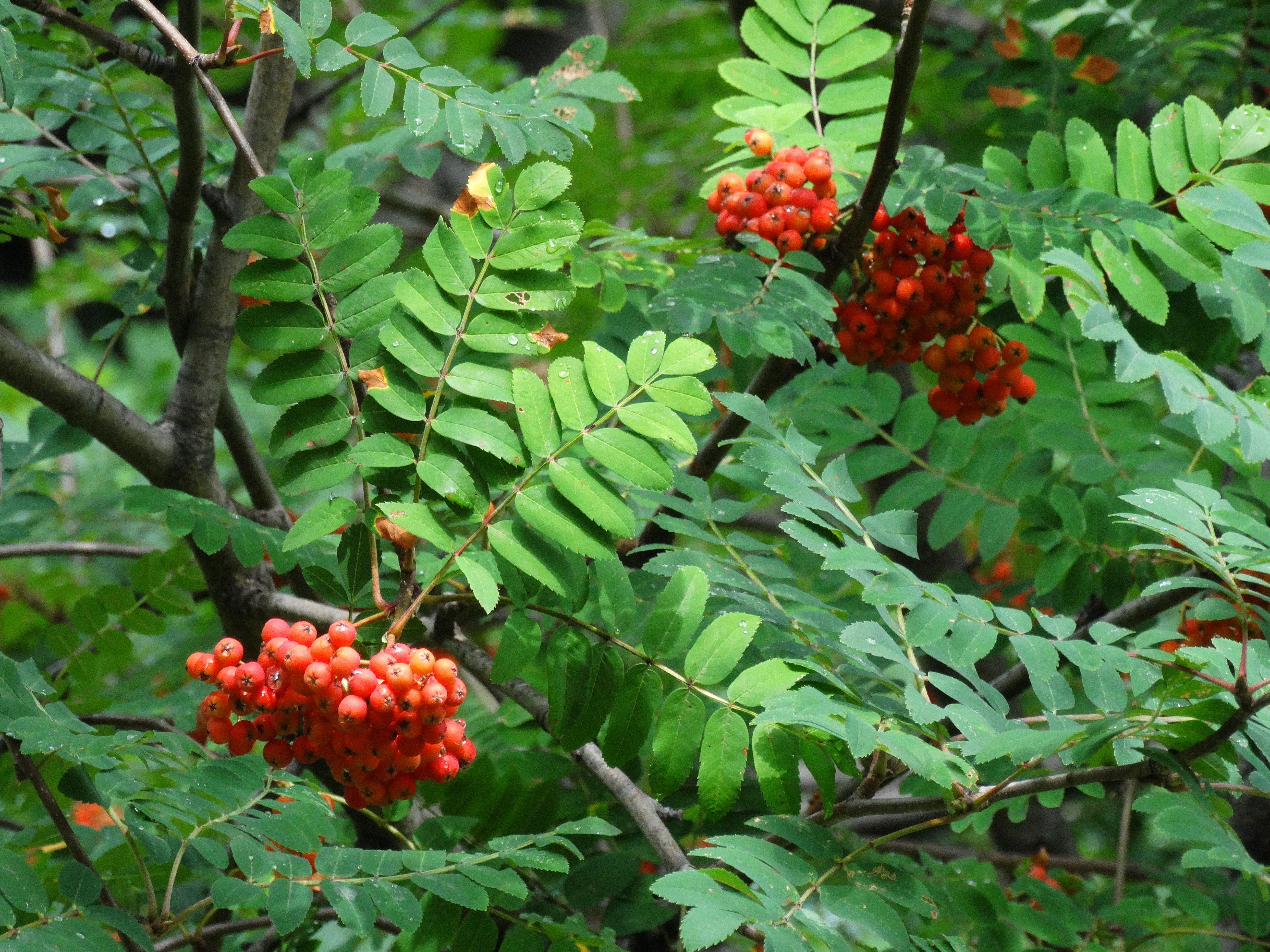
A Rowan tree (commonly known as “Mountain Ash”) in Westmount Park.
The tree has a fascinating history:
From: http://www.treesforlife.org.uk/forest/mythfolk/rowan.html
“The rowan’s mythic roots go back to classical times. Greek mythology tells of how Hebe the goddess of youth, dispensed rejuvenating ambrosia to the gods from her magical chalice. When, through carelessness, she lost this cup to demons, the gods sent an eagle to recover the cup. The feathers and drops of blood which the eagle shed in the ensuing fight with the demons fell to earth, where each of them turned into a rowan tree. Hence the rowan derived the shape of its leaves from the eagle’s feathers and the appearance of its berries from the droplets of blood.
The rowan is also prominent in Norse mythology as the tree from which the first woman was made, (the first man being made from the ash tree). It was said to have saved the life of the god Thor by bending over a fast flowing river in the Underworld in which Thor was being swept away, and helping him back to the shore. Rowan was furthermore the prescribed wood on which runes were inscribed to make rune staves.
In the British Isles the rowan has a long and still popular history in folklore as a tree which protects against witchcraft and enchantment. The physical characteristics of the tree may have contributed to its protective reputation, including the tiny five pointed star or pentagram on each berry opposite its stalk (the pentagram being an ancient protective symbol). The colour red was deemed to be the best protection against enchantment, and so the rowan’s vibrant display of berries in autumn may have further contributed to its protective abilities, as suggested in the old rhyme: “Rowan tree and red thread / make the witches tine (meaning ‘to lose’) their speed”. The rowan was also denoted as a tree of the Goddess or a Faerie tree by virtue (like the hawthorn and elder) of its white flowers.
Rowan has had a wide range of popular folk names, the most well-know being mountain ash. Its old Gaelic name from the ancient Ogham script was Luis from which the place name Ardlui on Loch Lomond may have been derived. The more common Scots Gaelic name is caorunn (pronounced choroon, the ch as in loch), which crops up in numerous Highland place names such as Beinn Chaorunn in Inverness-shire and Loch a’chaorun in Easter Ross. Rowan was also the clan badge of the Malcolms and McLachlans. There were strong taboos in the Highlands against the use of any parts of the tree save the berries, except for ritual purposes. For example a Gaelic threshing tool made of rowan and called a buaitean was used on grain meant for rituals and celebrations. The strength of these taboos did not apply in other parts of Britain it seems, though there were sometimes rituals and timings to be observed in harvesting the rowan’s gifts (for example the rule against using knives to cut the wood, mentioned above).
The rowan’s wood is strong and resillient, making excellent walking sticks, and is suitable for carving. It was often used for tool handles, and spindles and spinning wheels were traditionally made of rowan wood. Druids used the bark and berries to dye the garments worn during lunar ceremonies black, and the bark was also used in the tanning process. Rowan twigs were used for divining, particularly for metals.
The berries can be made into or added to a variety of alcoholic drinks, and different Celtic peoples each seem to have had their favourites. As well as the popular wine still made in the Highlands, the Scots made a strong spirit from the berries, the Welsh brewed an ale, the Irish used them to flavour Mead, and even a cider can be made from them. Today rowan berry jelly is still made in Scotland and is traditionally eaten with game.”

A single-engine piston aircraft, pulling a sign, while circling the park.
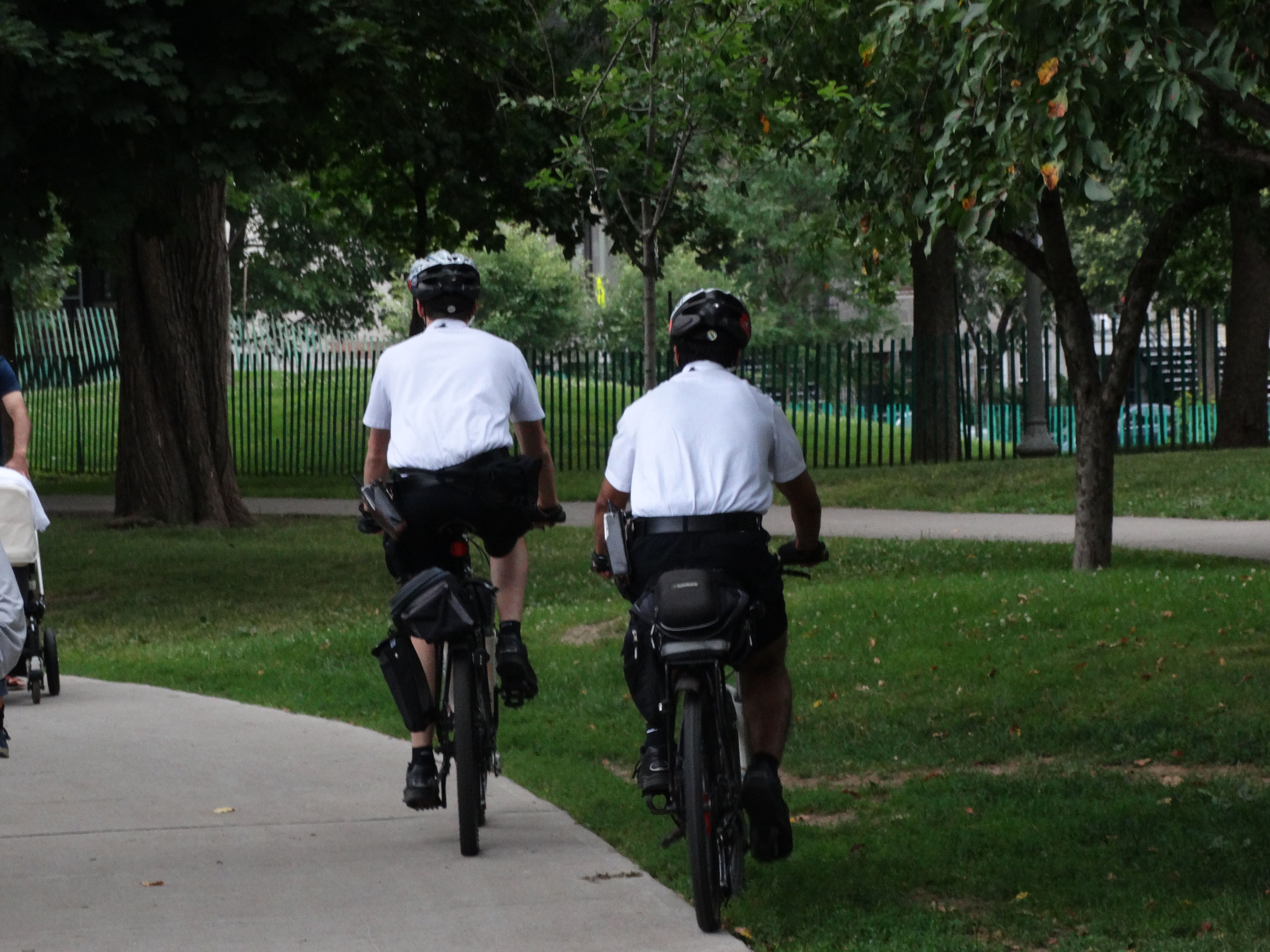
S.P.V.M. cadets on their bicycles, designed for law enforcement, riding through the park.
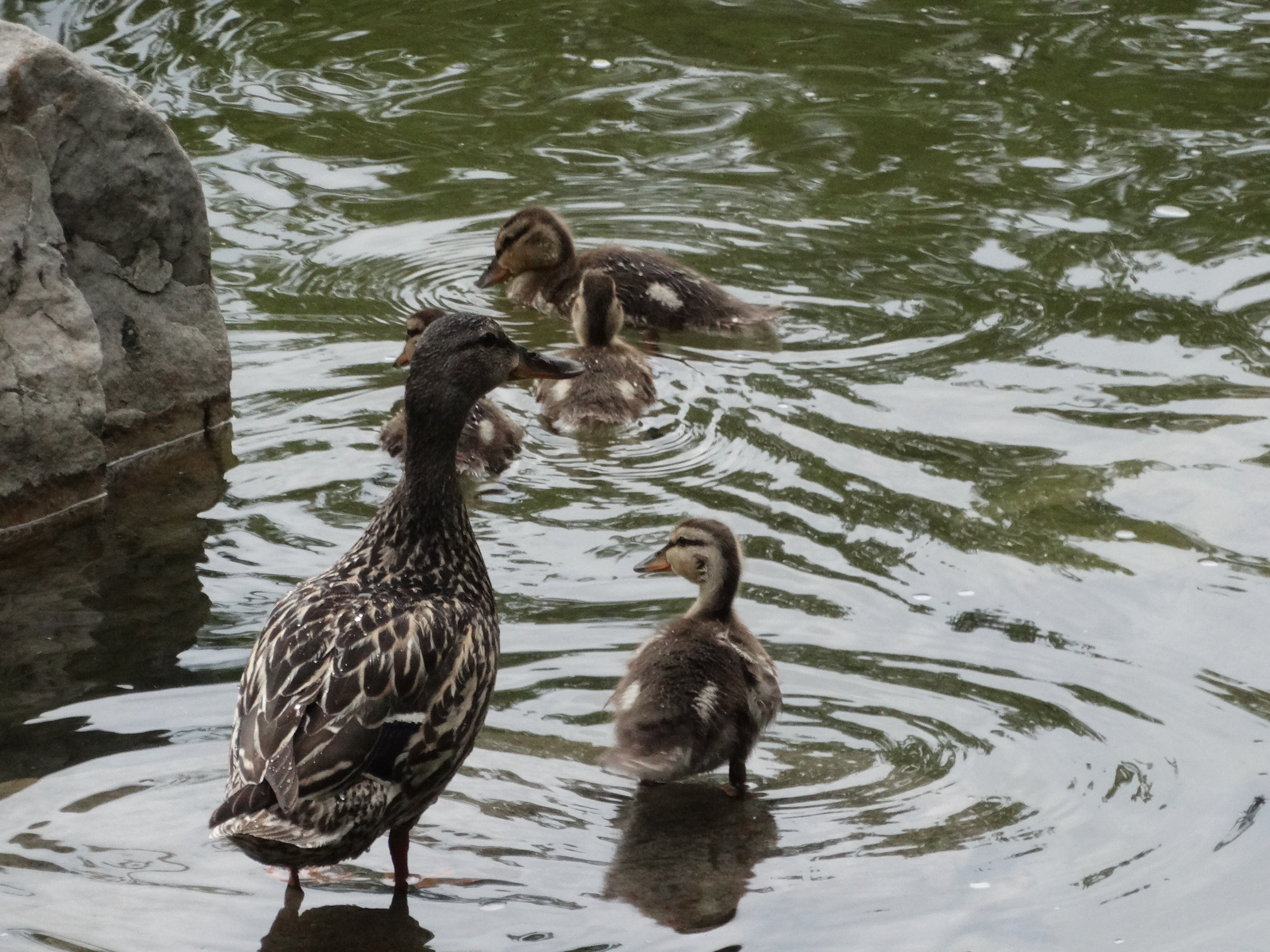
Every day they are growing to resemble their “mom”.
 Westmount Overlooked