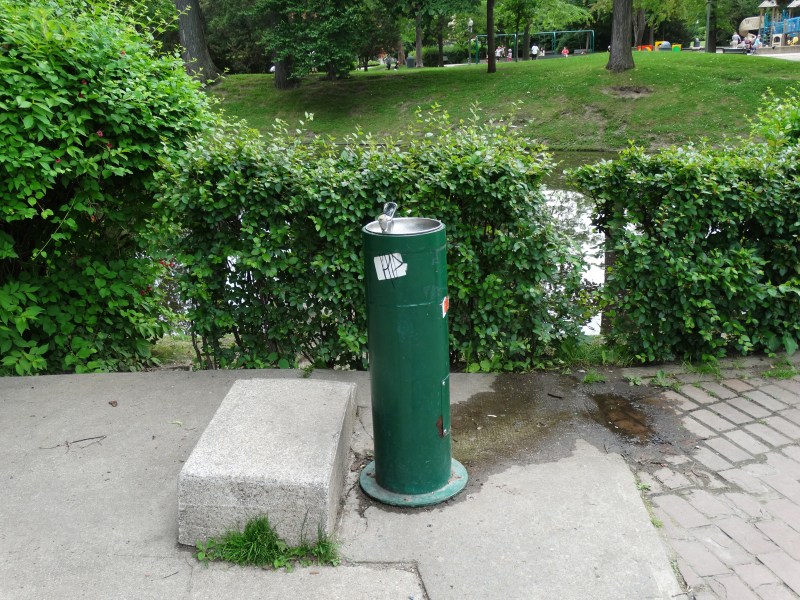
The original (1930s) water fountain in Westmount Park.
Twenty five years ago the City suggested replacing these with newer models. A letter to the Westmount Examiner, at the time, suggested changing the faucet and adding a new water pipe. The City agreed and the original fountains still exist to this day.
As an aside, Mayor Peter Trent’s book (The Merger Delusion: How Swallowing Its Suburbs Made an Even Bigger Mess of Montreal) calls the Westmount Examiner the City’s former “Hansard”. I recall realtors mentioning the paper as one of the “selling points” for one moving to Westmount.
The paper used to be delivered, at minimal cost, once a week.
It baffles me as to what happened – it is now delivered, and not and worth reading, in our “Publi-Sacs” with all the other flyers that go straight into the recycling box.
When our daughter was small, and spent hours in the Children’s Library, I used to enjoy reading the old copies (on paper & microfilm) while waiting. It was an excellent local paper that was well written and truly represented the interests of the City – am I the only resident that mourns its loss?
(TCI Media stopped published the Westmount Examiner on October, 2015)


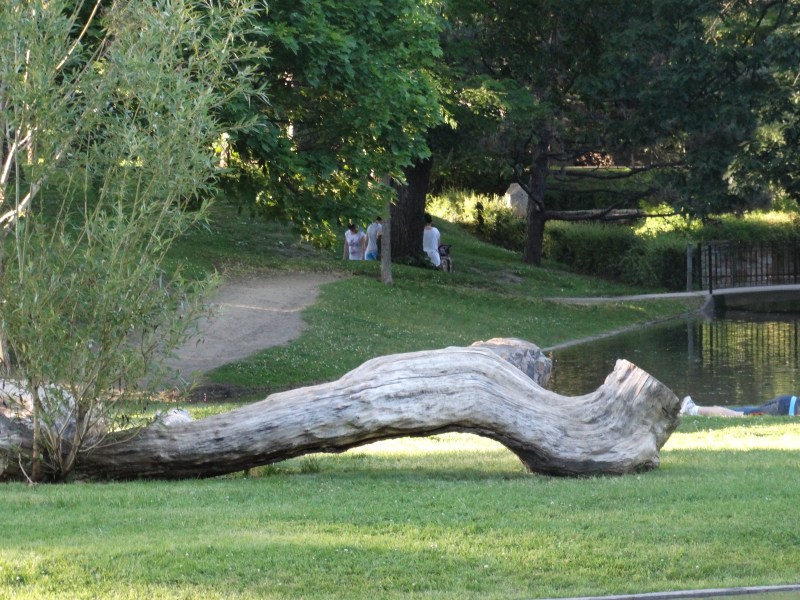
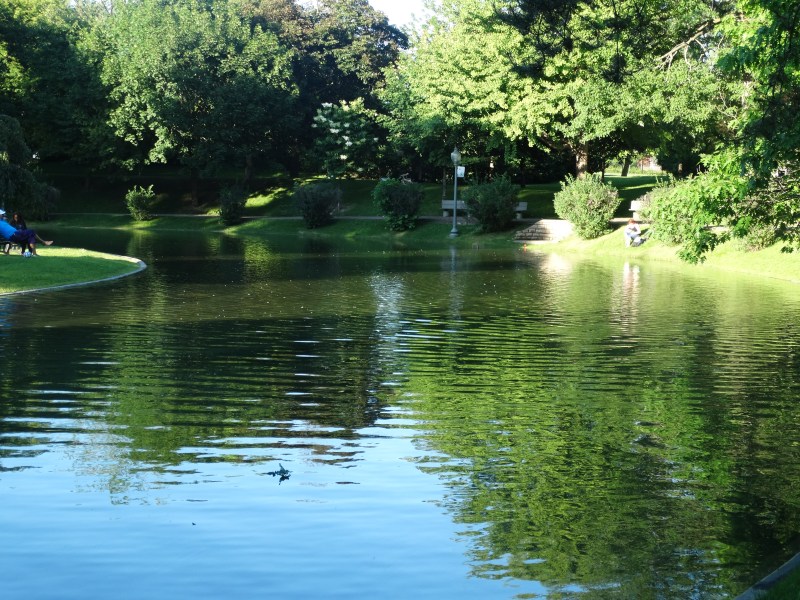
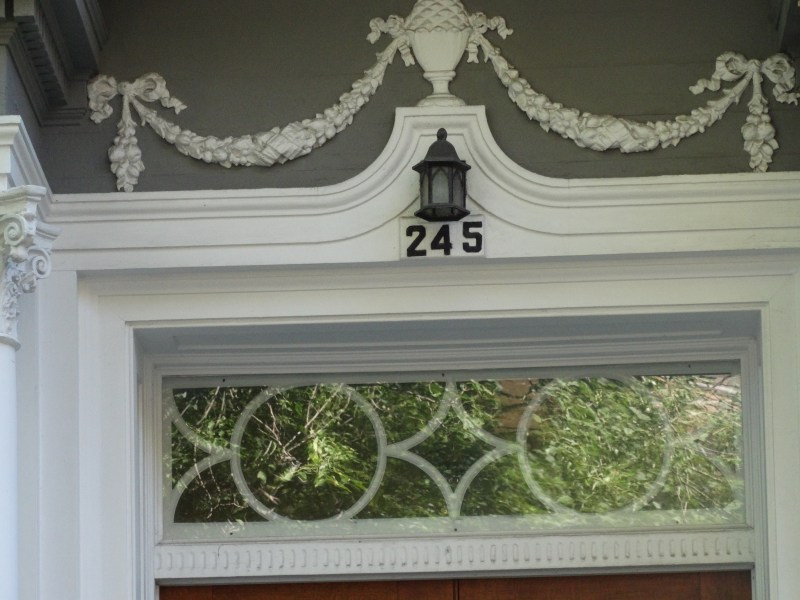

 Westmount Overlooked