
The park’s artificial turf tennis courts.
The park’s artificial turf tennis courts.
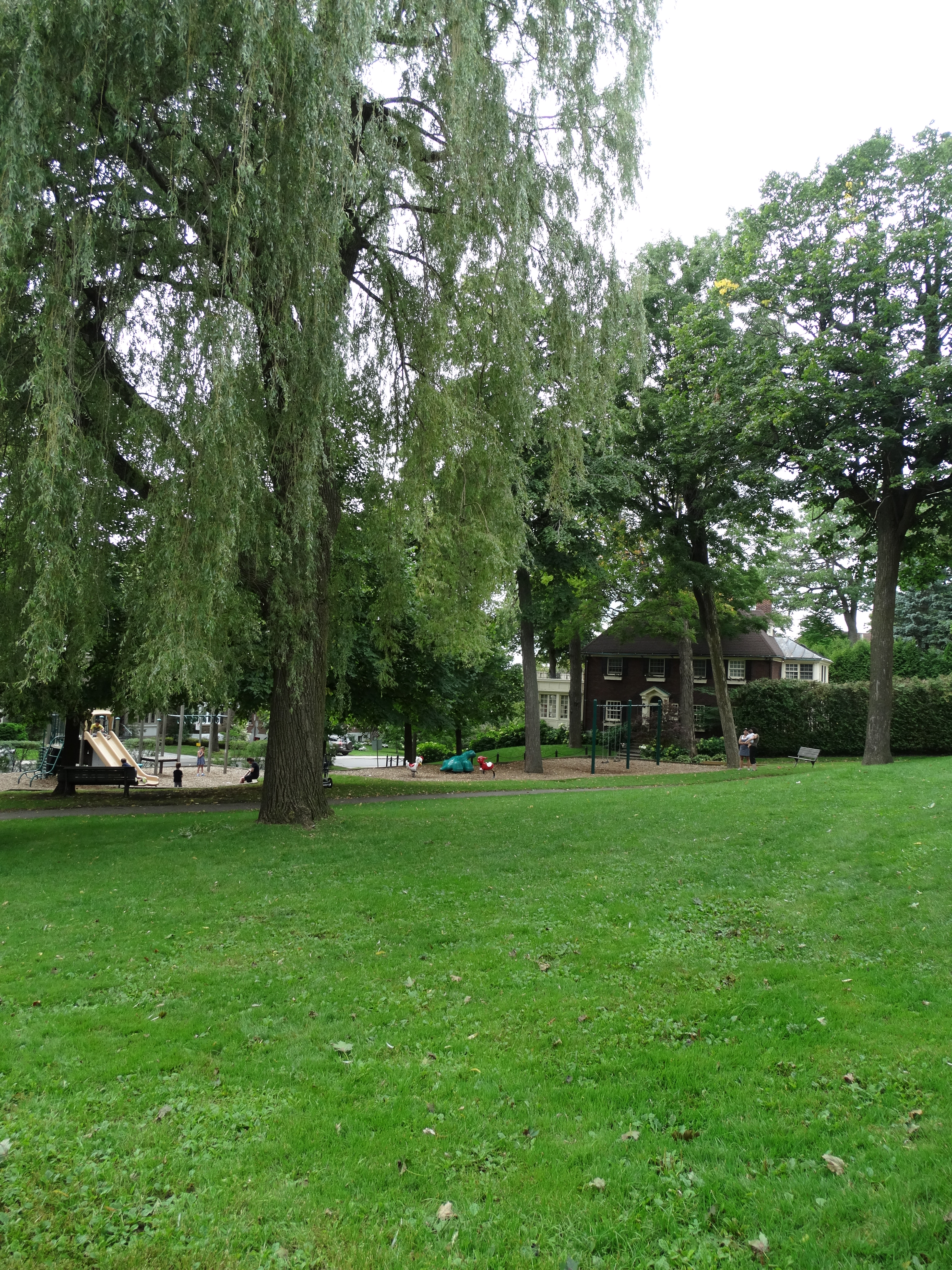
One of Westmount’s best kept secrets: a small “gem” located off Upper Lansdowne.
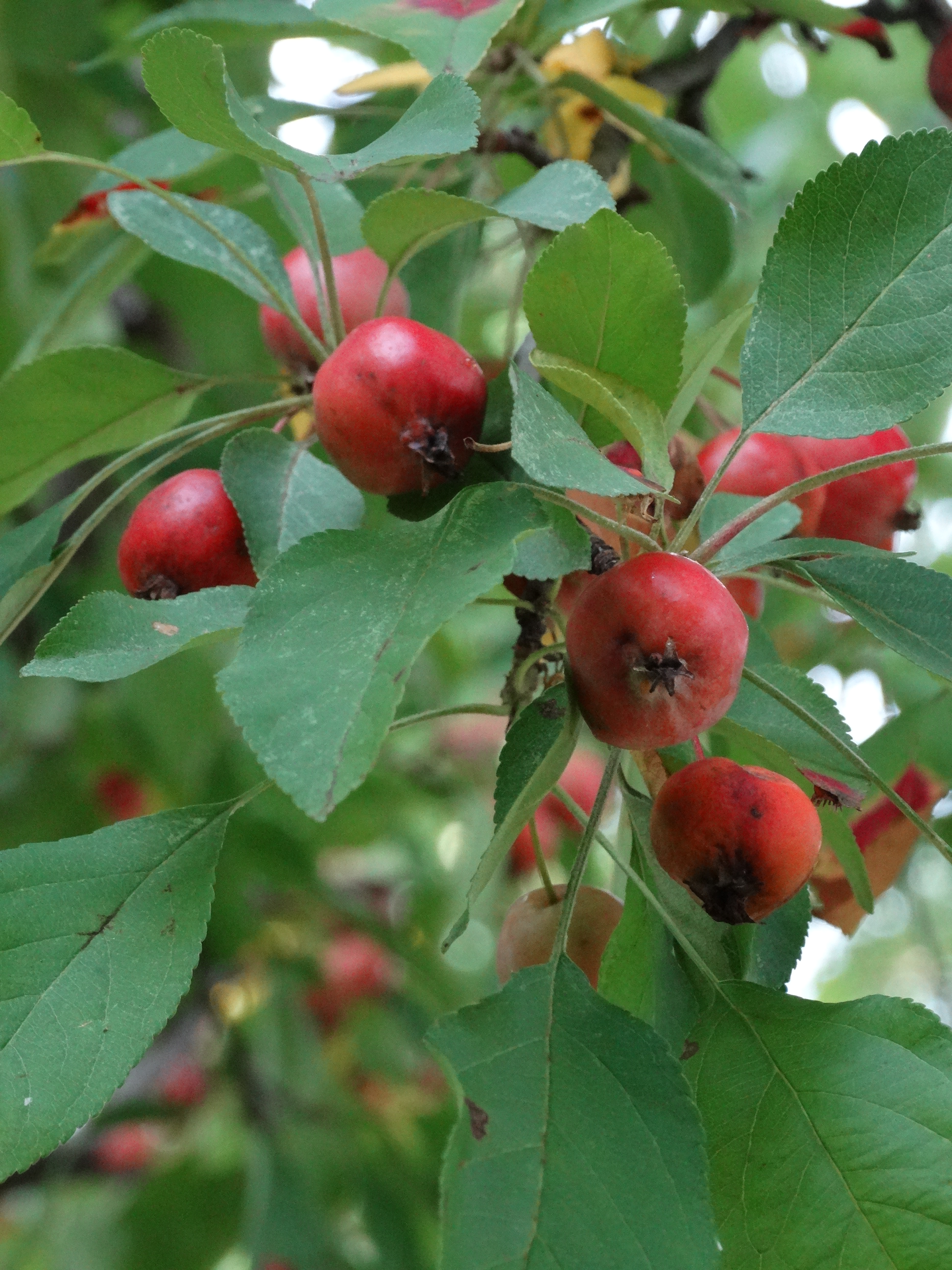
Red fruit on a crabapple (Malus) tree.
From Wikipedia:
“Crabapples are an excellent source of pectin, and their juice can be made into a ruby-coloured preserve with a full, spicy flavour. A small percentage of crabapples in cider makes a more interesting flavour.
As Old English Wergulu, the crab apple is one of the nine plants invoked in the pagan Anglo-Saxon Nine Herbs Charm, recorded in the 10th century.”

A version of this article appeared in the Westmount Independent.
I am sure we all seen this rangy tree by the gazebo and, like myself, never given it a second thought.
For the record, its girth measures 3.5 meter and its neighbour is 2.7 meters. That makes the former well over 300 years old, and the latter (a youngster) at about 230 years! One can just imagine what a different place this was when the trees where saplings.
This tree, now old and diseased, is a Lime (Tilia) commonly known, in North America, as Basswood.
This species dates back to antiquity and was sacred to the Celts. Venus, the goddess of love, is mentioned in the tree’s heart-shaped leaves.
These trees, like sentinels offering shade, form a row on either side of the footpath between the gazebo and the lagoon
If the trees were pollarded (removing the upper branches) they would offer a scent that has been described by one author as “for the first time that embraces me every day with the true, the peerless lime-flower scent, making me skip and pirouette unmindful of my rickety knee.”
Not surprisingly, these trees are measured in centuries. For example, a Lime in Westonbirt Arboretum in Gloucestershire is estimated to be 2,000 year old, another in Naters, Switzerland, still extant, was first mentioned 1357.
Greek mythology tells the story of Zeus and Hermes visiting the land of the mortals and finding that the only house that would offer them shelter belonged to Philemon and Baucis. To reward them for their hospitality the gods granted their wish: to be together after death. When the time came Zeus, true to his word, turned Philemon into an Oak and Baucis into a Lime tree to stay together for eternity.
Perhaps that is the reason that there are many Oak trees are planted adjacent the parks’ Limes!

A beautifully manicured hedge and garden on Elm.

Mrs. Nairn (1899)
T. M. Nairn, Marine Superintendent (1899)
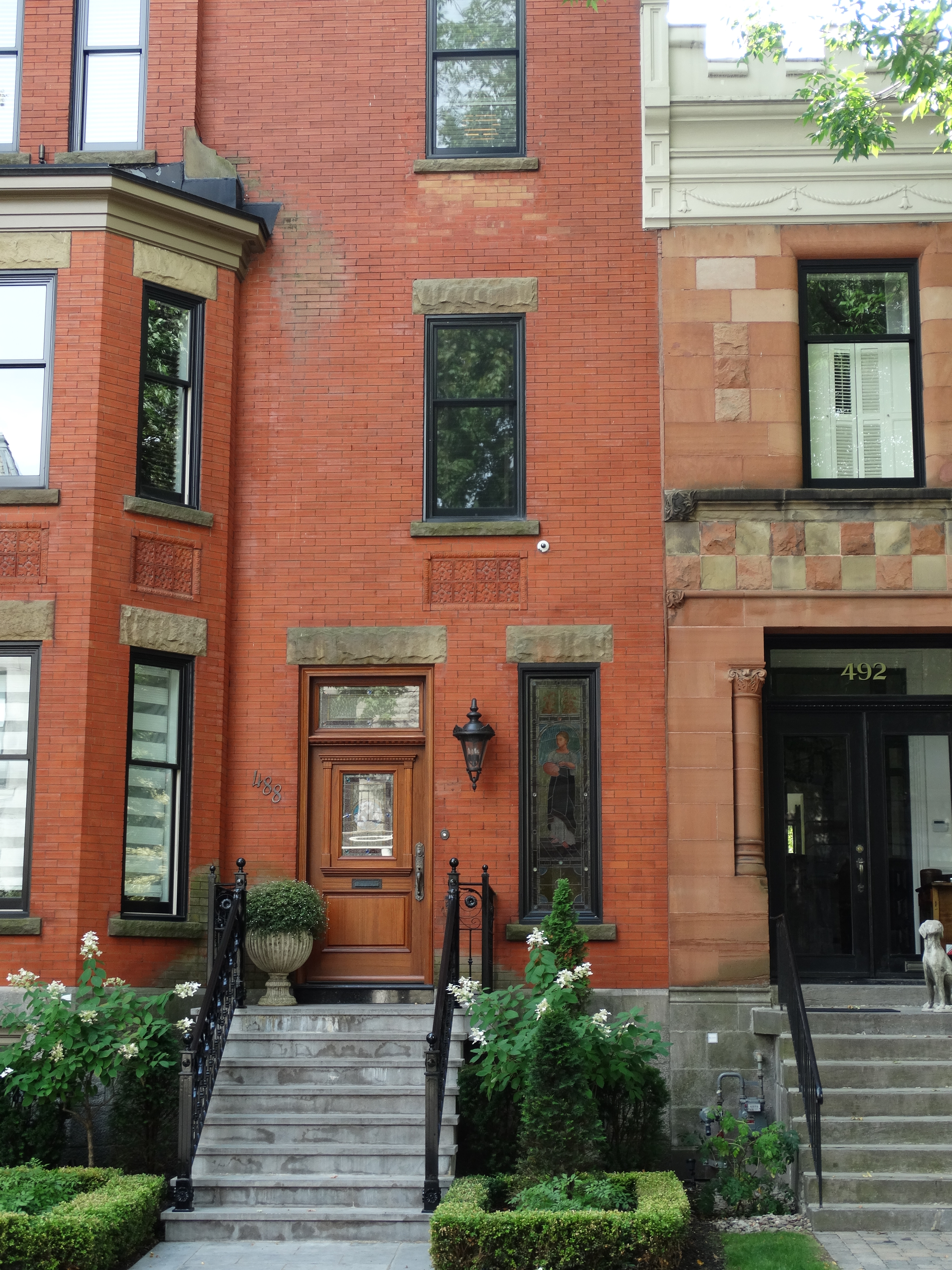
Charles A. Duclos, Atwater & Duclos (1899), Barristors & Solicitors – offices in 151 St. James Street.
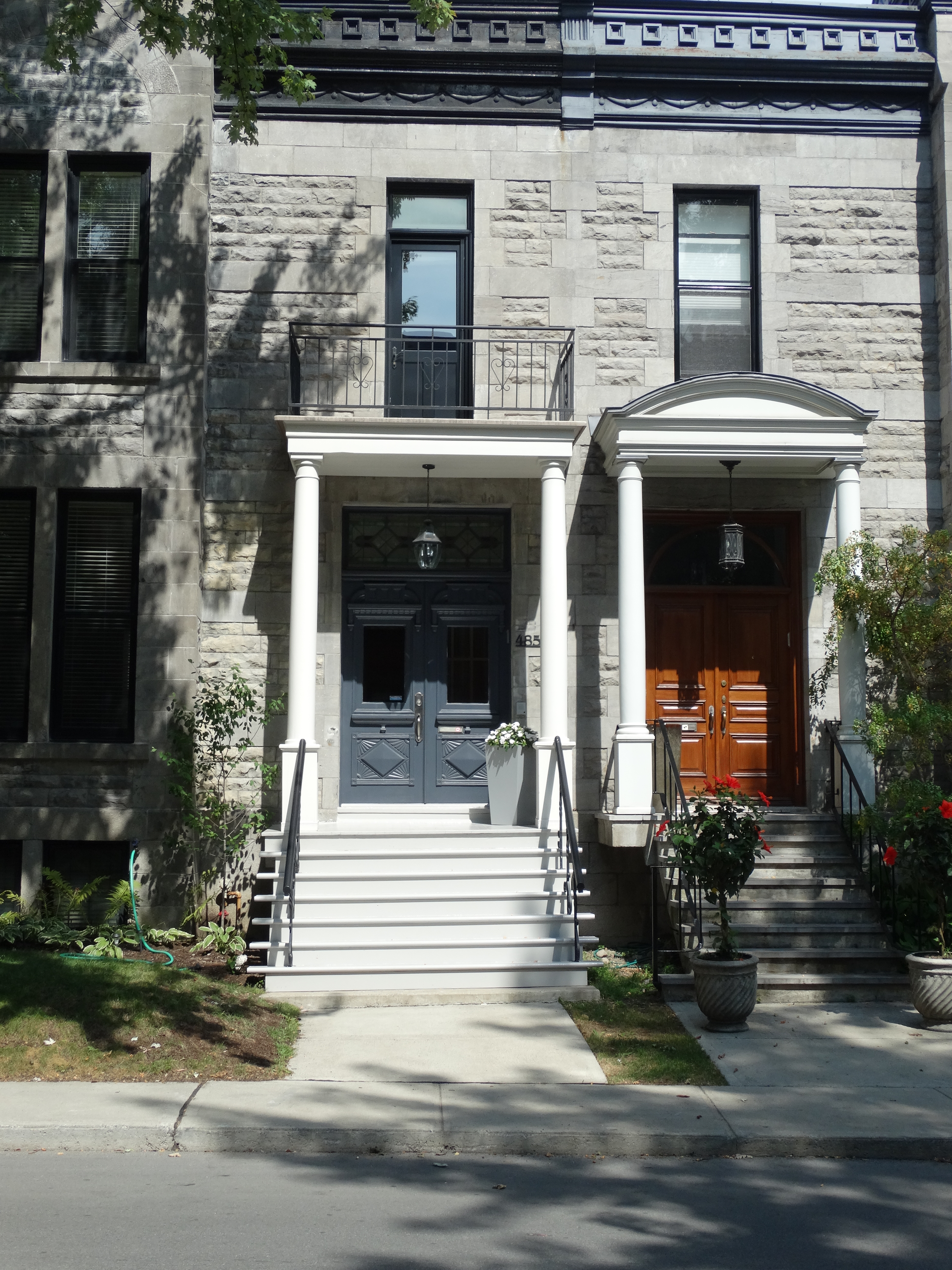
A. M. Allan, A. M. Allan & Co. (1899) – Dry goods and merchant tailors (1909 Notre Dame Street).
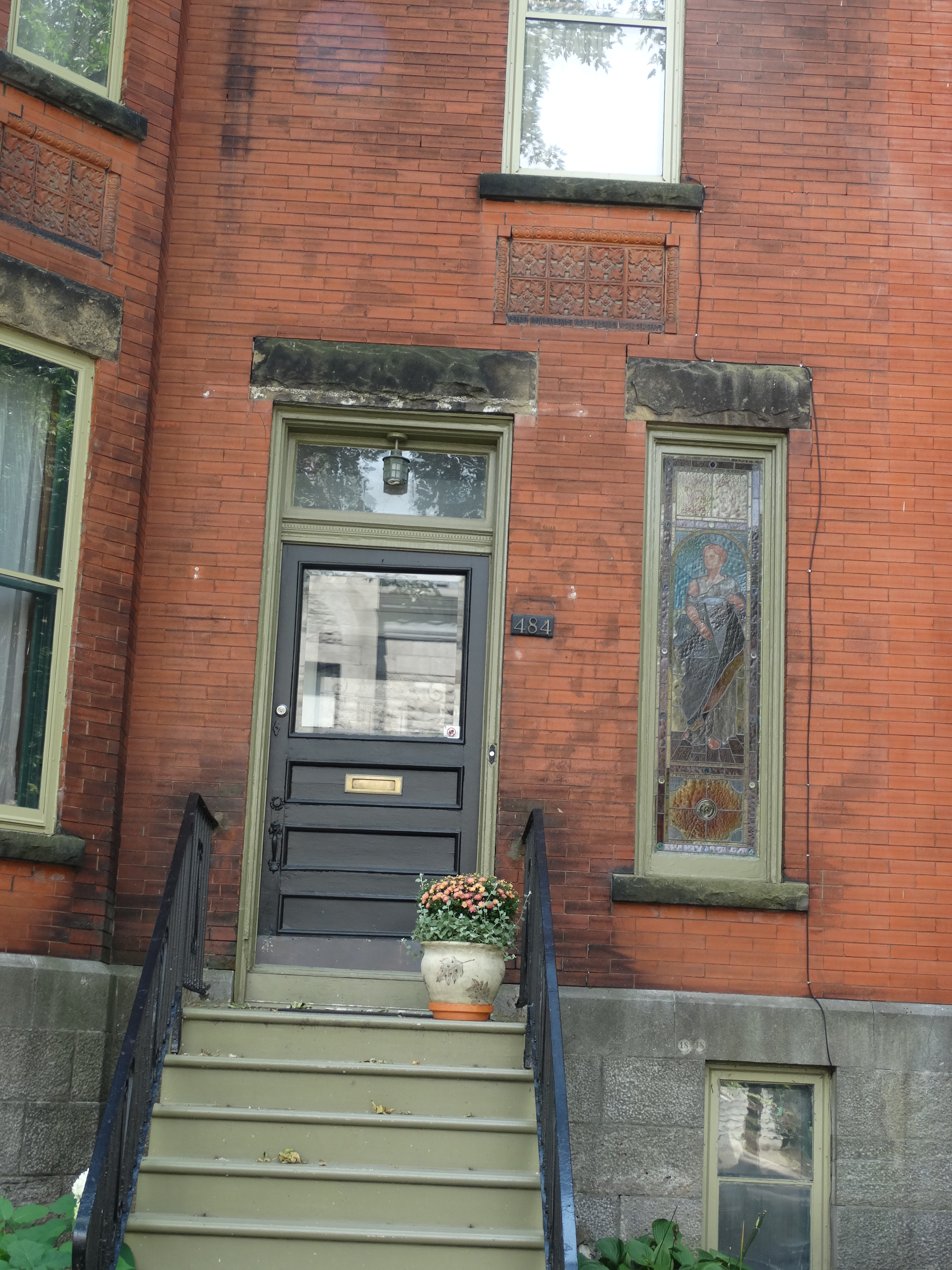
John Ogilvy, James Ogilvy & Sons (1899)
One needs to enlarge this picture to appreciate the stained glass front window.
“The 1870’s were years of expansion for the Ogilvies. In 1872, at John’s behest, a mill with a 250 barrel capacity was built at Seaforth, Ontario. Two years later, a mill with twice the capacity and an elevator were built at Goderich. The elevator served the dual purpose of storing local grain as well as the water-born shipments from Western Canada.
Later that year, John Ogilvie ventured to the Dakota Territory and purchased the first parcel of hard spring wheat to be shipped to Eastern Canada. The 800 bushels proved to be of magnificent quality. The success of this experiment led the Ogilvie’s to push for the growing of hard wheat in the Canadian West. For ten years John Ogilvie was a lonely visionary to the potential bread-basket available on the Canadian Prairies.
In 1881, a mill was begun in Winnipeg and the first elevator in Manitoba appeared at Gretna. This was a calculated move for the arrival of the first Manitoba hard wheat in Britain had been a sensation. The early tests on the Manitoba product confirmed a grain of unsurpassable quality.
The first export of wheat from Western Canada occurred in 1885 when the Ogilvie’s sent a small shipment from the Winnipeg Mill to Scotland. The company received a staggering offer from British military for a half million dollar shipment. An order that far outstripped the companies ready supply but was a harbinger of the untapped economic potential in the Canadian West. By 1887, the Ogilvies held two million bushels of Manitoba wheat in their elevators prompting competitors to complain that the company was out to corner the market. The future was so bright that not even the death of John Ogilvie in 1888 could dampen the desire to push westward.
As the century drew to a close, new and well-equipped mills began to spring up in many British ports. This practice permanently effected the market for imported flour as four out of every five bags of flour consumed in Great Britain were ground locally. The fifth bag was invariably used as a blend. One of the companies lucky enough to cut into that final 20% share of the market was Ogilvie. G.R. Stevens used this quotation from the British Baker’s Manual of 1898 to illustrate the high regard with which Ogilvie flour was held in the article, “Popular Penny Cakes for Counter Tray and Window”: “For these lines there is something about Vienna flour which absent from nearly all of the others. There is only one flour that comes near it. That is made by Ogilvie’s Royal Mill in Canada.”
“These words would have made fitting epitaphs for the two remaining Ogilvie brothers. After nearly a century in the milling business, the family was about to undergo a radical transformation. On January 12, 1900 William Watson Ogilvie died suddenly. In a fitting tribute the Montreal Stock Exchange suspended operations for the day. Obituaries from across Canada stressed the prominent roll that “The Miller King” played in the development of the North-West Territories.
Two years later on March 31, 1902, Alexander Walker Ogilvie died. The Montreal Gazette had this to say, “… the death of few men would leave a deeper feeling of regret, or recall more sincere esteem and respect.
On May 30, 1902, the executors of William Watson Ogilvie sold the flour mills and seventy country elevators to a Canadian owned syndicate.”

J. E. Dickson, Union Assurance Society of Toronto (1899)
 Westmount Overlooked